
Opting Out of Music's Biggest Night: John Summit, Drake, BTS and the Grammys' Legitimacy Problem
Updated:
On the morning of November 16, 2026, the Recording Academy unveiled the nominations for the 69th Grammy Awards, and the headline it wanted was easy to write. Women dominated every major category: Raye topped the field with 11 nominations, Rosalía followed with nine, and Ella Langley, Olivia Rodrigo, Phoebe Bridgers and Miranda Lambert had seven each (Digital Music News). Beyoncé, with a nod for "Morning Dew (Donk)," became the first artist ever to reach 100 career nominations (The Hollywood Reporter).
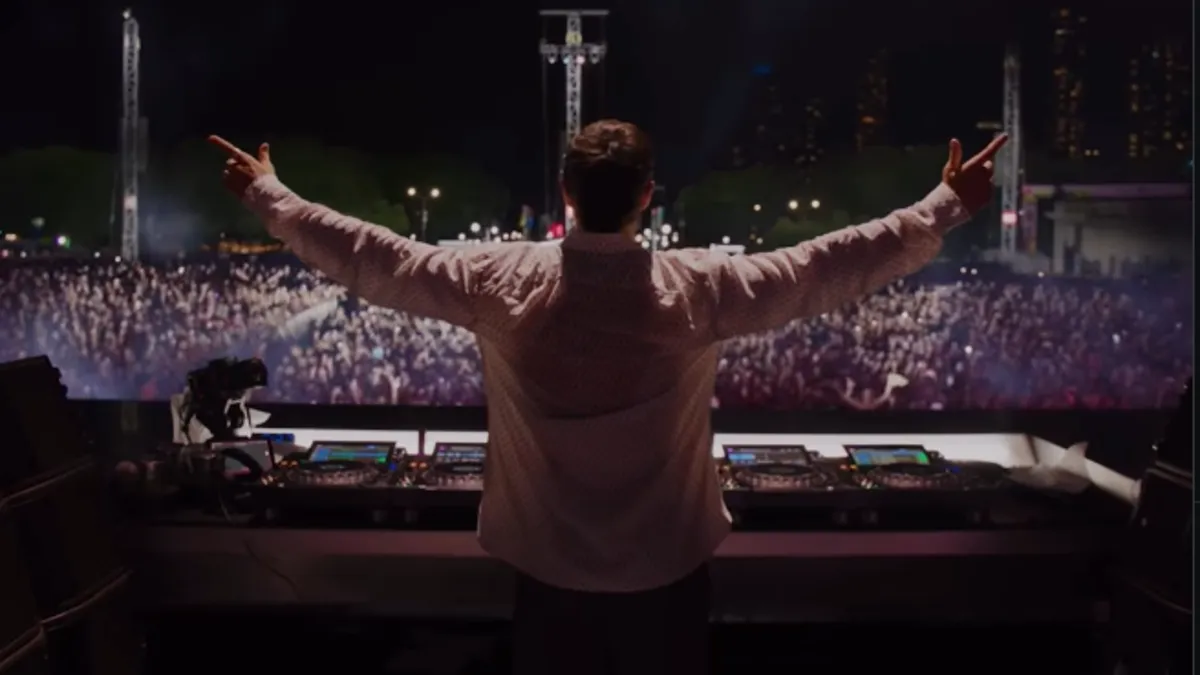
John Summit. Photo credit: John Summit / Instagram
Within hours, a different headline was competing for attention. John Summit, one of the most popular DJs in American dance music, posted on X that he was "never submitting to the grammys again unless shit changes," calling the whole thing a joke and arguing that the dance category had been taken over by "music industry fueled pop stars" (The Hollywood Reporter). Digital Music News framed him as the latest name on a growing list of artists refusing to take part, alongside BTS, Drake, Zach Bryan and Stray Kids.
That list is the real story. Individually, each refusal can be explained away as a snub, a feud or a branding decision. Taken together, they come from dance music, hip-hop, country and K-pop, and the reasons they give barely overlap. That makes them a harder problem for the Academy than any single angry superstar: the question is no longer whether one genre feels slighted, but whether opting out has become a normal career move for artists powerful enough not to need the trophy.
Who Is Out, and Why: Checking the Roster
Boycott lists spread quickly and lose their qualifiers along the way, so it is worth taking the names one at a time and separating what each artist actually said from what has been attributed to them.
The Weeknd (2021–2025) — transparency. The modern template. After After Hours and "Blinding Lights" received zero nominations for the 2021 show, he tweeted that "The Grammys remain corrupt" and demanded transparency, then announced he would stop submitting (The Hollywood Reporter). He ended the boycott with a surprise performance at the February 2025 ceremony, introduced by Academy CEO Harvey Mason jr. himself.
Drake (on and off since 2020) — no official reason this time. In 2020, Drake wrote that "what once was the highest form of recognition may no longer matter" to today's artists. He withdrew his nominations in 2022, skipped 2023, submitted only his collaboration album with 21 Savage in 2024, and sat out 2025 and 2026 (Stereogum). For 2027, Billboard reported, as relayed by Stereogum, that none of his three 2026 albums — Iceman, Habibti and Maid of Honour — was submitted. The only on-record signal is a lyric from "Make Them Know," the closing track on Iceman: "This album, I'm never submittin' it" (MusicRadar). Speculation links this round to the five Grammys won in 2025 by Kendrick Lamar's "Not Like Us," but Drake has not said so.
Zach Bryan (2025 cycle) — discomfort with competition. Bryan is the name on the list that needs the most care. He did not submit for the 2025 awards, and sources cited at the time said he was uncomfortable with awards shows "making music competitive" — notably, months after winning his first Grammy (Digital Music News, Stereogum). The DMN piece on Summit links to that 2024 report. We found no reliable reporting confirming whether Bryan submitted for 2026 or 2027, so counting him in a "this year" boycott goes beyond what the record shows.
BTS (July 2026) — the new Asian Pop category. BTS said in a statement that it would not submit for the 69th Grammys, adding that it hoped its music could be heard without being divided by region or language (Variety). The statement did not name the category, but it came a month after the Academy created Best Asian Pop Music Performance (Digital Music News). HYBE told regional outlets it was not "a company-wide boycott."
Stray Kids (August 2026) — unexplained. JYP Entertainment confirmed the group let the August 21 submission deadline pass, but gave no reason and would not say whether the Asian Pop category played a part (Variety). "Boycott" is the media's word; it is not JYP's.
John Summit (November 2026) — genre drift. Among this cycle's refusers, Summit is the only one who explained his decision in detail and in public, and he did it right after being shut out. His complaint is specific: the nominees are not bad artists, they are "just not dance music, they're pop," and "no dj is playing that music in the clubs" (The Hollywood Reporter).
The K-pop side of this story — how the Asian Pop category was designed and why it offended the very artists it was meant to court — is covered in depth in our earlier piece. Here it matters as one front in a wider pattern.
Three Grievances, One Underlying Question
Line the reasons up and three distinct complaints emerge. The Weeknd objected to process: who picks the nominees, and whether that happens out of view. Summit and, by most readings, BTS object to borders: which box an artist is placed in, and who gets to define the box. Bryan objected to the premise: whether art should be ranked at all. Drake's motives are the hardest to pin down; on The Breakfast Club, Charlamagne Tha God argued that Drake "cares more about internet validation than he does the Grammys" (Digital Music News) — an opinion, not a reported fact.
What the three share, in our reading, is a dispute over authority. The Grammys sell themselves as music's only peer-voted honor. Each boycott, from a different angle, questions whether the peers voting are the right peers. A house DJ asks whether the people who vote in the dance categories actually work in clubs. A Korean group asks why its music is filed under geography. A streaming-era rapper with a fanbase that measures success in real time asks why a voting body's verdict should outrank that.
Summit's case also shows how hard these complaints are to settle. He has a point: the Academy created best pop dance recording in 2023 precisely because mainstream acts were crowding traditional DJs out of the dance field (The Hollywood Reporter). Yet this year's best dance/electronic recording nominees — Madonna, Fred again.., Slayyyter, Tame Impala, Tinashe and underscores — are not interlopers. As The Hollywood Reporter noted, Madonna, Slayyyter and Tinashe have released dance music throughout their careers. "Real dance music" turns out to be a border that dance musicians themselves draw in different places.
What the Academy Has Already Changed
The Recording Academy has not ignored this kind of criticism. Its record since 2021 is one of real procedural change.
Nominations committees abolished. In April 2021, months after The Weeknd's "corrupt" tweet, the board voted to eliminate the nomination review committees that had picked the final nominees in the general field and most genre fields behind closed doors. Since then, nominees in those categories have been chosen by the votes of the full voting membership (The Hollywood Reporter).
A remade electorate. The Academy has invited thousands of new members each year. Its 2025 class added more than 3,800 people, of whom 50% were 39 or younger, 58% were people of color and 35% identified as women; for the first time, all Latin Recording Academy voting members were also invited (Recording Academy). Introducing The Weeknd in 2025, Mason said the Academy had added more than 3,000 women voting members and that the electorate was now "nearly 40 percent people of color" (The Hollywood Reporter).
More categories, new ballots. For 2027, the Academy added five categories, including Best Asian Pop Music Performance. It also introduced "Ballot Plus," an opt-in system that lets voters with verified credits across several genres vote in up to 15 categories, and it lowered the share of new recordings an eligible album must contain from 75% to 66% (Recording Academy).
Did it work? Partly. The Weeknd came back, and the 2026 album of the year went to Bad Bunny for the first Spanish-language album to win the category (The Hollywood Reporter). But the 2027 boycotts point to a side effect. The reforms answered the process complaint by opening up the vote and answered the recognition complaint by adding categories. Every new category, however, is a new border, and borders are exactly what Summit and BTS are now fighting over. The Academy's main tool for inclusion has become a new source of grievance (this is our assessment, not the Academy's).
Do Boycotts Actually Hurt the Grammys?
If a legitimacy crisis showed up anywhere in hard numbers, it would show up in the TV ratings. The data does not support a simple story. Nielsen figures put the 2021 telecast, held during the pandemic, at a record low of 9.2 million viewers, down 51% from 18.7 million in 2020 (AP via News4JAX). The audience then recovered to a post-pandemic high of 17.09 million in 2024, before easing to 15.4 million in 2025 and 14.41 million in 2026, the last year on CBS (The Hollywood Reporter).
In 2024, the strongest year of the recovery, The Weeknd was still boycotting; his return in 2025 coincided with a decline, not a bump. The 2026 telecast lost about 6% of its audience, roughly the same as the Golden Globes, which suggests a broader slide in awards-show viewing rather than a Grammy-specific revolt. Meanwhile, the 2026 show drew 302.5 million video views and 78.4 million social interactions, according to CBS (The Hollywood Reporter). On the evidence available, no single boycott has measurably moved the ratings. What the audience appears to follow is who performs and who wins on the night.
The broadcast business also gives no sign of a franchise in trouble. The Grammys move to ABC, Disney+ and Hulu in 2027 under a 10-year deal with Disney, ending more than 50 years on CBS (The Hollywood Reporter). A media company does not sign a decade-long contract for a property it thinks is collapsing. We found no reliable public data on how much a nomination or win lifts streams or bookings in the current market, so we make no claim about the commercial cost to the boycotters themselves.
The risk is slower and harder to measure. Drake, BTS and the members of Stray Kids are not only potential nominees but also, according to reporting, voting members of the Academy (Digital Music News); all eight Stray Kids members were invited to join as voters this year (Variety). When artists are inside the electorate but keep their own work out of the running, the Academy's claim to be "music's only peer-recognized accolade" weakens, even if the ratings hold.
The Case Against Calling It a Crisis
There are strong reasons to read the boycott wave more modestly.
The nominations themselves argue for range. A field led by Raye, Rosalía and Ella Langley, with Bruno Mars the only man among the album of the year nominees (Digital Music News), is not the profile of a body stuck in the past. Best new artist includes the French-Canadian duo Angine de Poitrine, Geese, Sienna Spiro and the Womack Sisters. The Asian Pop category the K-pop majors stayed away from still produced a field from three countries: IVE and KiiiKiii from Korea, BINI and SB19 from the Philippines, and LiSA and Babymetal from Japan (The Hollywood Reporter).
The Academy has answered on the record. Confirming the Asian Pop category would continue, Mason acknowledged the opposition directly: "We understand this conclusion will not satisfy everyone, and that never feels good." He added that the Academy was "confident it's the right conclusion for the music community overall," citing a "robust" number of first-year submissions (Variety).
It is a superstar's move. Every name on the list already has a global audience, chart dominance or both. Artists like these can afford to treat a Grammy as optional. For mid-career and niche musicians — the jazz, folk, gospel and craft-category nominees who never trend on X — a nomination can still mean a festival booking, a sync deal or a press cycle they could not otherwise buy. Seen from there, a boycott is a privilege of artists who don't need the Grammys, and the institution's value runs mostly to the much larger group who still do (this is our interpretation).
Snubs are not the same as protests. Harry Styles, Gracie Abrams and Hilary Duff were also shut out this year, and Noah Kahan landed a single nomination (The Hollywood Reporter). None of them announced a boycott. Summit's departure came after his own shutout, which inevitably shapes how his critique is received, even if parts of it are fair.
Conclusion: A Legitimacy Problem, Not a Collapse
Put the evidence together and "crisis" overstates the case. The ratings track the wider awards-show market. A new broadcaster has signed on for ten years. The nominations are broad by any reasonable measure. What has changed is narrower and more lasting: walking away has become an accepted option for top-tier artists, and they now do it for completely different reasons. Not long ago, a boycott was a rare act of protest. In the 2027 cycle alone, four acts across hip-hop, K-pop and dance have sat out or vowed to, a fifth from country is routinely added to the list, and the Academy is answering each on its own terms.
The Academy's toolkit — open the vote, widen the membership, add categories — has fixed the problem it was built for, the closed-door committee. It is less suited to the problem it faces now: artists who reject the categories themselves, or the idea of competing at all. The first ABC broadcast on February 7, 2027 will not settle that argument. It will show whether a Grammys without Drake, BTS, Stray Kids and, by his own promise, John Summit is still the night the rest of the industry shows up for. On current evidence, it probably is.
Sources
- Original article: Ashley King, "Grammys, We Have a Problem: Superstar DJ John Summit Joins BTS, Drake, Zach Bryan, and Stray Kids In Boycotting 'Music's Biggest Night'," Digital Music News, Nov. 16, 2026 — https://www.digitalmusicnews.com/2026/11/16/grammys-boycott-john-summit-comments/
- Digital Music News, "Raye Heads the Charge in the Women-Led 2027 Grammy Nominations" (nomination counts, best new artist field) — https://www.digitalmusicnews.com/2026/11/16/2027-grammy-nominations/
- Digital Music News, "BTS Announces 2027 Grammys Boycott…" (BTS statement, HYBE comment, category context) — https://www.digitalmusicnews.com/2026/07/29/bts-grammys-boycott-2027/
- Digital Music News, "Who's Next? Grammys Navigating Drake, BTS, and Stray Kids Boycotts" (Drake history, Charlamagne Tha God's comments, voting membership) — https://www.digitalmusicnews.com/2026/10/08/grammys-navigate-drake-bts-stray-kids-boycotts/
- Digital Music News, "Zach Bryan is Boycotting the Grammys…" (2025 non-submission and stated reason) — https://www.digitalmusicnews.com/2024/10/06/zach-bryan-grammys-boycott/
- Stereogum, "Zach Bryan Declines To Submit For 2025 Grammys" — https://www.stereogum.com/2283115/zach-bryan-declines-to-submit-for-2025-grammys/news/
- The Hollywood Reporter, "John Summit Blasts Grammys After Dance Snub" (Summit's posts, dance nominees, pop dance category) — https://www.hollywoodreporter.com/music/music-news/john-summit-blasts-grammys-after-snub-1236756281/
- The Hollywood Reporter, "Beyoncé Becomes First Artist to Receive 100 Grammy Nominations" — https://www.hollywoodreporter.com/music/music-news/beyonce-grammys-history-100-nominations-1236756177/
- The Hollywood Reporter, Asian Pop category nominees (IVE, BINI, KiiiKiii, SB19, LiSA, Babymetal) — https://www.hollywoodreporter.com/music/music-news/grammys-2027-asian-pop-performance-nominations-1236754517/
- The Hollywood Reporter, 2027 snubs and surprises — https://www.hollywoodreporter.com/music/music-news/grammys-2027-snubs-surprises-harry-styles-noah-kahan-1236756402/
- The Hollywood Reporter, "TV Ratings: Grammys Draw 14.4 Million Viewers…" (2024–2026 ratings, social metrics, Disney deal) — https://www.hollywoodreporter.com/tv/tv-news/2026-grammy-awards-tv-ratings-1236494111
- The Hollywood Reporter, "Grammys: Recording Academy Cuts Nomination Review Committees" (2021 reform) — https://www.hollywoodreporter.com/news/grammys-recording-academy-cuts-nomination-review-committees
- The Hollywood Reporter, "The Weeknd Makes Surprise Grammys Performance After Past Boycott" (2021 tweet, Mason's 2025 remarks, electorate figures) — https://www.hollywoodreporter.com/news/music-news/the-weeknd-return-2025-grammys-boycott-performs-1236125487/
- Recording Academy, "Five New Categories and Rule Updates Take Effect for 2027 Grammys" — https://www.grammy.com/news/2027-grammys-new-categories-rule-updates
- Recording Academy, 2025 New Member Class acceptance announcement — https://www.grammy.com/news/2025-new-member-class-acceptance-announcement/
- Variety, "Stray Kids Join BTS in Sitting Out Grammy Awards" (JYP confirmation, Mason statement) — https://au.variety.com/2026/music/news/stray-kids-bts-not-submitting-grammy-awards-40964/
- Stereogum, "Drake Is Boycotting the Grammys Again" — https://stereogum.com/2513699/drake-is-boycotting-the-grammys-again/news
- MusicRadar, "'This album, I'm never submittin' it': Drake joins BTS and Stray Kids…" — https://www.musicradar.com/artists/singles-albums/this-album-im-never-submittin-it-drake-joins-bts-and-stray-kids-in-snubbing-next-years-grammys
- Associated Press via News4JAX, "Grammy Award ratings drop 51 percent to record low" (2021 ratings) — https://www.news4jax.com/business/2021/03/16/grammy-award-ratings-drop-51-percent-to-record-low/