
More Than Half of Uploads, Less Than 3% of Plays: The Real Fight Over AI Music Isn't in the Studio
Updated:
In July 2026, the French streaming platform Deezer published a number that works as a dividing line: AI-generated tracks had, for the first time, passed half of its new daily uploads, averaging roughly 90,000 a day in June. Deezer's own announcement put it plainly — on that platform, machines now hand in more new songs each day than people do.
But the same material contained a second set of figures that most of the coverage skipped: those AI tracks account for only 1%–3% of the platform's total streams, and roughly 85% of those streams were flagged by Deezer as fraudulent and demonetized.
More than half of supply, single digits of demand. That gap is the starting point for understanding where AI music actually stands in 2026 — and it shows that this contest stopped being about "can AI write a good song" some time ago.
1. On pure listening, humans have lost — and deservedly so
Start with the least contested part.
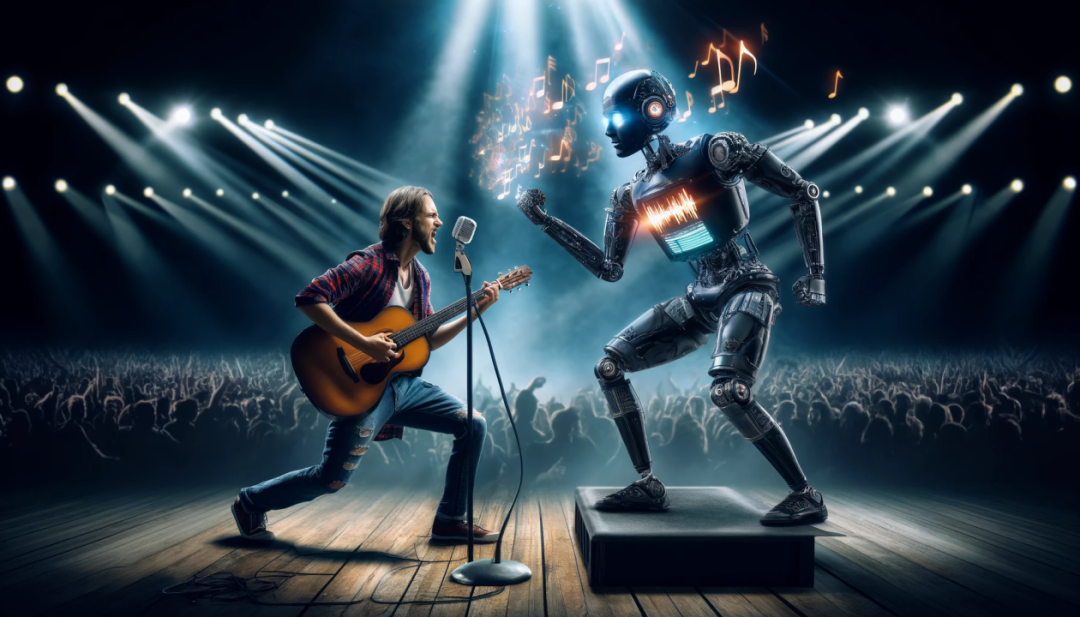
In November 2025, Deezer and Ipsos Digital surveyed 9,000 adults aged 18–65 across eight markets, with fieldwork running from 6 to 10 October 2025. In the blind-listening section, respondents heard two AI tracks and one human track; 97% could not identify which was AI-generated, and 71% said they were surprised by the result.
That means claims like "AI music has no human warmth" or "you can hear the machine in AI arrangements" no longer hold up as technical judgments about sound. They may still describe real flaws in particular tracks, but they can no longer be treated as a property of the category. Any career plan resting on "listeners will eventually be able to tell" is built on a premise that has already been falsified.
What makes the same survey interesting is the rest of it: 52% said they were uncomfortable about not being able to tell, 80% agreed that fully AI-generated music should be clearly labeled, and 45% of streaming users said they would like to filter it out altogether.
Can't tell, but care. That contradiction is the real entrance to everything that follows.
2. "Does an AI label cost you?" — the research is messier than you'd expect
If listeners can't tell blind, what happens the moment you put a label on it? This is the question creators care most about, and it is also where the evidence is most contradictory.
There is plenty of support for the idea that labels cost you. An MIT Media Lab study on functional music perception ran correct-label, incorrect-label and no-label conditions. Among unlabeled participants who preferred the AI-generated "Calm" music, 94.1% misidentified it as human-composed; among those who misidentified it, 79.1% preferred the AI version, against only 14.3% of those who identified it correctly. In other words, what looked like a preference for AI was actually a preference for music the listener believed a human had made. The study also recorded listeners reading small imperfections as evidence of authenticity — one said the tiny flaws made the music "feel alive."
But contrary evidence exists too. An experiment published in Computers in Human Behavior: Artificial Humans played pop songs to 64 Singaporean university students and found that versions labeled as AI-generated scored higher on positive emotional dimensions including happiness, interest, awe and energy. The authors flagged the limits of the sample themselves: small, single-country, students only. Earlier literature reviews show this "composer bias" has never been stable — significant bias has been measured among folk practitioners but not in general pop samples, and expert listeners are consistently harsher than casual ones.
The conclusion cuts both ways, and it flatters no one: an AI label will not automatically destroy a song, and a human label will not automatically save one. The intuition in the source article — that human warmth is the moat — earns only a "depends" in the lab. What is stable is not the bias but the demand to be told. That is what the 80% figure means.

3. The real risk isn't replacement, it's dilution
Move from aesthetics to the ledger and the picture gets much sharper.
In December 2024, CISAC (the International Confederation of Societies of Authors and Composers) commissioned PMP Strategy to produce the first global estimate of the economic impact. It concluded that about 24% of music creators' revenue would be at risk of loss by 2028 — roughly €4 billion in 2028 alone and about €10 billion cumulatively over five years. Over the same period, the market for AI-generated music and audiovisual content is projected to grow from around €3 billion to €64 billion.
Two scope caveats have to be stated or the number gets misread: by "music creators" the report mainly means songwriters, and it did not assess the impact on record companies and music publishers. So 24% is not an industry-wide figure — it is the figure for the link in the chain with the least bargaining power.
Meanwhile, the overall pie is not shrinking. IFPI's Global Music Report 2026, published in March 2026, put 2025 global recorded music revenue at US$31.7 billion, up 6.4% year on year and an eleventh consecutive year of growth. Paid subscription accounts reached 837 million, streaming made up 69.6% of revenue, vinyl grew for a nineteenth straight year (up 13.7%), and China overtook Germany to become the world's fourth-largest market on 20.1% growth. IFPI singled out streaming fraud as a growing threat.
Read the two reports together and the shape of the threat emerges: the numerator is growing, but the denominator is growing faster. On CISAC's projection, by 2028 AI-generated music could account for about 20% of streaming platform revenue and about 60% of production-music library revenue — and the library side goes first, because advertising, short video and game background music never cared who the author was.
Platform behavior confirms the dilution pressure. In September 2025 Spotify announced it had removed more than 75 million "spammy" tracks over the prior 12 months and launched filters targeting mass uploads, duplicates, SEO gaming and artificially short tracks. Its stated reason was explicit: left unchecked, these behaviors dilute the royalty pool and divert attention from artists who follow the rules. Deezer introduced parallel rules in July 2026, removing AI tracks with no plays in six months along with tracks caught in stream-inflation schemes. CEO Alexis Lanternier framed it as: now that half of all daily uploads are AI-generated tracks, the company is taking additional steps to safeguard the rights of artists and songwriters.
Worth noting: Spotify has explicitly said it does not penalize or down-rank music for being AI-assisted. What platforms are attacking is spam and fraud, not AI. Conflating the two leads to the wrong strategic conclusions.
4. The copyright war is over, but the money didn't reach the creators
In June 2024, Universal, Sony and Warner sued Suno and Udio simultaneously, alleging that the companies had trained their models on vast quantities of copyrighted recordings without permission. Two years on, how the litigation ended may be more instructive than the litigation itself.
In October 2025, Universal settled with Udio and signed recorded-music and publishing licences. In November, Warner settled with Udio and then with Suno; Suno is to replace its current models with licensed ones during 2026 and impose download limits. Shortly before that, Suno had closed a US$250 million Series C at a US$2.45 billion post-money valuation. Sony is still litigating, and fair-use motions in the Suno case are scheduled for April 2027.
Plaintiff turns licensor — that is the real-world version of the source article's optimistic logic about the division of labour producing better integration. But the real-world version came with a consequence that logic did not anticipate.
Forbes columnist Virginie Berger summarized the path as "launch, train, settle", arguing that these deals effectively proved infringement can be commercially profitable: build the model and the valuation on unlicensed data first, then buy out the legal risk with the funding round. The more direct backlash came from the American Federation of Musicians, which has sued Universal and Warner, alleging the labels failed to share settlement proceeds and future licensing revenue with affected artists; both are seeking dismissal. Separate claims from Germany's GEMA and Denmark's Koda are still moving.
There is a very practical reminder here for working musicians: copyright protects rights holders, not necessarily creators. When recording rights sit with a small number of institutions, revenue from AI training licences lands in those institutions' accounts first, and whether it flows down — and on what split — is decided by contract terms, not by anyone's position on technology. The source article's view that AI simply makes the division of labour more efficient holds at the level of production efficiency; but the division of the proceeds has never been automatically fair, and technology does not fix that.
5. "Is this AI?" is turning from a talking point into a legal field
The source article got one thing right: the "AI or not" label is becoming part of the fight for attention. But by 2026 it is no longer just a talking point — it is hardening into a compliance field.
In China, the Measures for Labeling AI-Generated and Synthetic Content, issued jointly by the Cyberspace Administration of China, the Ministry of Industry and Information Technology, the Ministry of Public Security and the National Radio and Television Administration, took effect on 1 September 2025, and audio is explicitly within scope. Service providers must add explicit labels (text, audio or graphical cues the user can plainly perceive) and implicit labels in file metadata covering the content's generated/synthetic status, the provider's name or code, and a content identifier; where download, copy or export functions are offered, the exported file must carry a conforming explicit label. The accompanying national standard, Cybersecurity Technology — Labeling Method for AI-Generated Synthetic Content (GB 45438—2025), took effect the same day and standardized label formats and application scenarios. Xinhua reported that six major domestic social platforms simultaneously rolled out "AI-generated" badges and implicit metadata tagging, and prohibited deleting, altering or concealing the labels.
Internationally, the route is industry standards. In September 2025 Spotify announced an integration with DDEX's AI disclosure standard, letting uploaders declare AI use item by item — that a single instrument was AI-generated, for example, can be disclosed separately and shown in a track's credits. Sam Duboff, Spotify for Artists' global head of marketing and policy, said AI use "is going to be a spectrum" and that the standard avoids forcing tracks "into a false binary where a song either has to be categorically AI or not AI at all."
This area is moving fast, and some details currently appear mainly in industry roundups rather than in unified first-party announcements — Apple's Transparency Tags becoming a delivery requirement in March 2026, Spotify's DDEX channel entering beta in April 2026, and the EU AI Act's Article 50 transparency obligations becoming enforceable on 2 August 2026. Those dates come from a single aggregated source and should be cited with that caveat.
For creators, the direction is clear: a work's provenance is becoming a machine-readable, verifiable, searchable structured field. It used to be copy. From here it is data.
6. The route that already works: a human writes the words, the AI sings them
Rather than stay theoretical, look at a case that has actually made money.
Xania Monet is the project of Telisha "Nikki" Jones, a poet from Mississippi. She writes the lyrics, generates the vocals with Suno, and the persona's image is AI-made. In the chart week dated 20 September 2025, Monet debuted on Billboard's rankings — "Let Go, Let God" at No. 25 on Emerging Artists and No. 21 on Hot Gospel Songs, while "How Was I Supposed to Know" topped R&B Digital Song Sales. Hallwood Media then signed her to a multimillion-dollar deal, with bidding reaching US$3 million. In the chart week dated 1 November she became the first known AI artist to earn enough radio airplay to enter a Billboard radio chart, debuting at No. 30 on Adult R&B Airplay.
Over the same stretch, the AI country act Breaking Rust debuted at No. 9 on Emerging Artists (chart dated 1 November) and later topped Country Digital Song Sales. Billboard has counted at least six AI or AI-assisted acts debuting across its rankings within a few months, while conceding the real number is probably higher — many projects arrive with murky origins, and the editorial team has had to cross-check them against Deezer's detection tool.
Two points deserve to be pulled out.
First, Monet told CBS that she writes all the lyrics released under the name, with AI handling only the vocals. What the machine took over is the execution layer — singing, arrangement, mixing — not the intention layer. That vindicates the source article's central claim (that the questions of where a work starts and who it is for are what matter), but lands it on a much more concrete dividing line.
Second, the backlash is just as real. The singer Kehlani has said publicly that nothing could justify AI music to her. Even where a project works commercially, "it was made with AI" keeps eroding its legitimacy inside the creator community — which is the real-world echo of that 80% figure from section 2.

7. What's left for humans: provenance, presence, accountability
The source article's answer is that the uniqueness of a personality is the last line of defence. I agree with the core of that, but "defence" is the wrong word — a defensive line exists to keep something out, and uniqueness keeps nothing out. The 97% blind-test figure already shows that uniqueness is not automatically audible.
The more accurate formulation: uniqueness is not a moat, it is a reason to be chosen. And for a reason to carry a price, it has to be attached to something tradeable. Three such carriers are visible right now.
Provenance. As section 5 described, authorship is moving from marketing copy to metadata field. That is good news for human creators: a "made by a human" marker that machines can verify, platforms can filter on and listeners can opt into turns that 80% of stated demand into an addressable market. The condition is that creators actually populate the field and build a traceable record of their work, rather than waiting for a platform to assert it on their behalf.
Presence. The part of a person that cannot be copied is most valuable live. On Statista's definition, global live music ticket sales exceeded US$35 billion in 2025 and approach US$39 billion in 2026; the average US ticket ran about US$144 in 2025, roughly 45% above 2019. IFPI's vinyl figure — a nineteenth consecutive year of growth, up 13.7% in 2025 — points the same way: people pay a premium for the one-off and the physical.
Two limits belong here. First, definitions diverge wildly between sources: Mordor Intelligence uses a broader definition that puts the 2025 live music market at US$51.1 billion, which is not on the same basis as Statista's US$35 billion, so cross-source comparison is meaningless. Second, the growth comes mainly from higher ticket prices rather than more people attending — good for headline artists, not necessarily for mid-tier acts and newcomers, and it raises the cost of entry for audiences at the same time. Treating "go live" as a universal answer requires knowing which tier you're in first.
Accountability. Only a party that can be held liable can be signed. Xania Monet got a multimillion-dollar contract not because Suno's model is good, but because Telisha Jones is a legal person who can sign, warrant the rights, give interviews and be sued. The AFM's suit against the majors is a fight over the same thing — whoever is on the contract is on the distribution schedule. In a market with unlimited content supply, people who can carry responsibility are far scarcer than machines that can produce content.

Closing: turn the consolation into a clause
The source article's line — what AI does is what AI does, what you do is what you do — is philosophically unanswerable. The problem is that it does not take effect economically on its own.
Here is where 2026 actually stands: machines hand in more than half of all new songs each day, and almost nobody listens to them; listeners cannot tell real from synthetic, yet eight in ten want to be told; industry revenue is still growing, while the link in the chain with the least bargaining power faces a 24% risk of loss; the labels went from plaintiffs to licensors, and a union is suing them for not passing the money down; and the AI project that actually reached commercial scale has a person behind it who writes her own lyrics and can sign a contract.
Put those facts together and they do not point to "humans will prevail" or "humans are out." They point to something flatter: uniqueness only carries a price once it is written into metadata, a ticket stub and a contract.
The part that cannot be written in is still worth doing — it belongs to the reasons section 3 never finishes counting. But don't mistake it for a moat. It is a reason, not a barrier.
Sources
- Original article: 万字长文 | AI音乐浪潮下,作为人的我们该去向何方? (ET / Li Yiteng, published by 音乐先声, 24 September 2026)
- Deezer: AI music tops 50% of daily uploads (Deezer Newsroom, July 2026)
- Music streamer Deezer says more than 50% of daily uploads are AI-generated (TechCrunch, 21 July 2026)
- Deezer and Ipsos study: AI fools 97% of listeners (Deezer Newsroom, November 2025)
- Exploring listeners' perceptions of AI-generated and human-composed music for functional emotional applications (MIT Media Lab)
- Do listeners devalue AI-generated pop music? Exploring negative biases in listeners' responses to AI-labelled vs human-labelled pop music (Computers in Human Behavior: Artificial Humans)
- Global economic study shows human creators' future at risk from generative AI (CISAC / PMP Strategy, 4 December 2024)
- Global Music Report 2026: global recorded music revenues grow 6.4% (IFPI, March 2026)
- Spotify has deleted 75m+ tracks in 'spammy' AI music crackdown (Music Business Worldwide, September 2025)
- Warner Music Group settles with Suno, strikes first-of-its-kind deal (Music Business Worldwide, November 2025)
- US musicians' union files amended lawsuit against Universal and Warner over Suno and Udio AI deals (Music Business Worldwide)
- Launch, Train, Settle: How Suno And Udio's Licensing Deals Made Copyright Infringement Profitable (Forbes, 18 December 2025)
- Measures for Labeling AI-Generated and Synthetic Content (Cyberspace Administration of China and three other ministries; in force 1 September 2025)
- Labeling measures take effect as platforms issue content management rules (Xinhua, 9 September 2025)
- AI Artist Xania Monet Climbs the Charts — And Signs a Multimillion-Dollar Record Deal (Billboard)
- How Many AI Artists Have Debuted on Billboard's Charts? (Billboard)
- AI Music Rules 2026: Disclosure, Detection & Rights (Chartlex; industry roundup, single source, used only for the timeline above)
- Live music industry revenue worldwide (Statista)
- Live Music Market Size, Share & Growth Trends Report (Mordor Intelligence)