
Pop Music's Rising Price of Admission: From Outside Lands' Nepo Babies to a UK Government Class Warning
Updated:
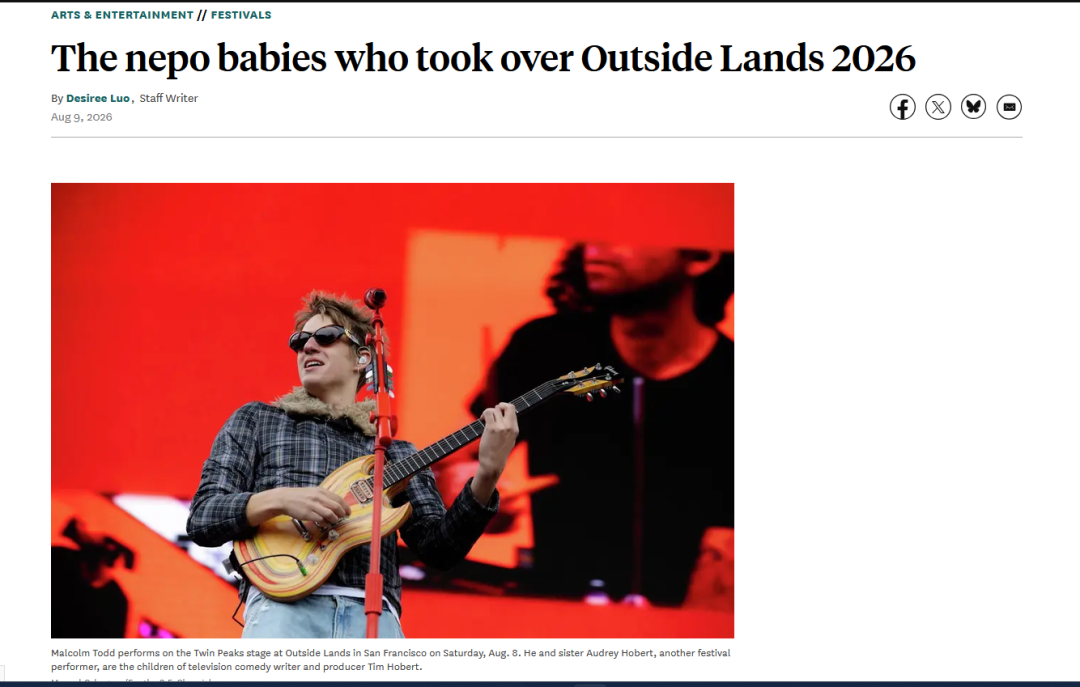
When the 18th edition of the Outside Lands festival wrapped up in San Francisco's Golden Gate Park in August 2026, the San Francisco Chronicle summed up the event's most talked-about story with a slightly barbed headline: the festival had been taken over by "nepo babies" — Cruz Beckham, son of the Beckhams; Magnus Ferrell, son of actor Will Ferrell; and Audrey Hobert and Malcolm Todd, the two children of TV producer Tim Hobert, all took the same stage in quick succession.
A month earlier in London, a very different news item had landed with far less noise. On July 13, the UK government released Turn It Up: Our Plan for Music, the country's first national music-industry strategy. At the launch, Culture Secretary Lisa Nandy left behind one widely quoted line: "But pop is getting posher, and that must change. Talent is everywhere, opportunities are not."
One story is social-media gossip; the other is a Whitehall policy paper. They look unrelated, yet both point at the same fact: the cost of entering the music industry is now systematically filtering who gets to participate. What a family can and cannot provide determines, more directly than at perhaps any time before, how far a young person can go down this road.
From Gossip Word to Industry Diagnosis
"Nepo baby" — a mashup of nepotism and baby — first caught on as a jab at Hollywood's second generation, and in the past few years it has clearly spilled over into music. The story that supercharged it in 2026 involved a 23-year-old newcomer, Stella Lefty. Her single "Boston" rode TikTok all the way into the mainstream; then internet sleuths matched her real name, Stella Lefkofsky, to her father, Eric Lefkofsky — co-founder of Groupon and CEO of the listed AI company Tempus AI. The gap between enormous family wealth and an "unsigned artist goes viral" narrative quickly made her the new target of "industry plant" accusations. A New Yorker column from August 5, 2026 took her case as its opening into the rise of nepo-baby musicians and so-called industry plants.
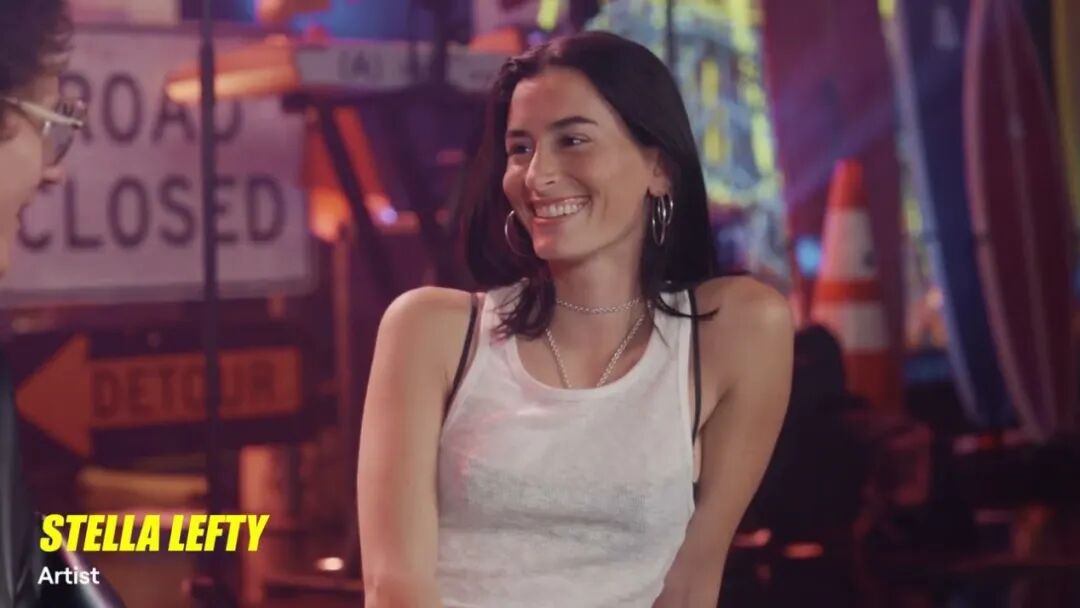
The word, however, is being worn out by overuse. In social-media discourse it is sliding from an industry term describing unequal resource allocation into a vehicle for personal attacks on young artists — and female creators catch the brunt of it. The culture and fashion magazine Dazed has explicitly criticized the toxicity building into nepo-baby discourse. Country singer Kelsea Ballerini once publicly vouched for Stella Lefty from the Grand Ole Opry stage, after Lefty's music had drawn accusations of echoing the melody of Noah Kahan's "Stick Season." In other words: one can fully accept that opportunity in the industry is unfairly distributed, and still find that not every "nepo" label is honestly stuck.
Step back from the individual cases and the real question emerges: is this a morality play, or a structural question that data can test? Britain, as it happens, has been laying out the answer for eight years.
The UK Timeline: Eight Years of Data Catching Up to the Obvious
The UK is one of the few countries that seriously tracks who gets to make music. Line up the reports chronologically and the curve is unusually clear.
In 2018, the Panic! report — published by Create London with Arts Emergency, authored by researchers including Orian Brook, Dave O'Brien, and Mark Taylor of the University of Edinburgh and the University of Sheffield — surveyed 2,487 creative-industry workers: in music, performing and visual arts, only 18.2% came from working-class backgrounds, and across the creative industries as a whole the share was just 12.6%. Meanwhile, 87% of respondents had worked unpaid at some point — and unpaid labor is itself a threshold built out of savings.

In 2020, the UK's Creative Industries Policy and Evidence Centre (Creative PEC) found that only about 16% of creative-industry jobs were held by people from working-class backgrounds, versus roughly a third across the UK workforce as a whole.
In December 2022, a study published in the journal Sociology, built on longitudinal data covering nearly 250,000 people in the UK (reported by The Guardian), delivered a sharper generational contrast: among creative-industry workers born in the 1950s–60s, about 16% came from working-class families; among those born in the 1980s, the share had halved to roughly 8%. People from professional-family backgrounds remained about four times more likely to enter the creative industries.
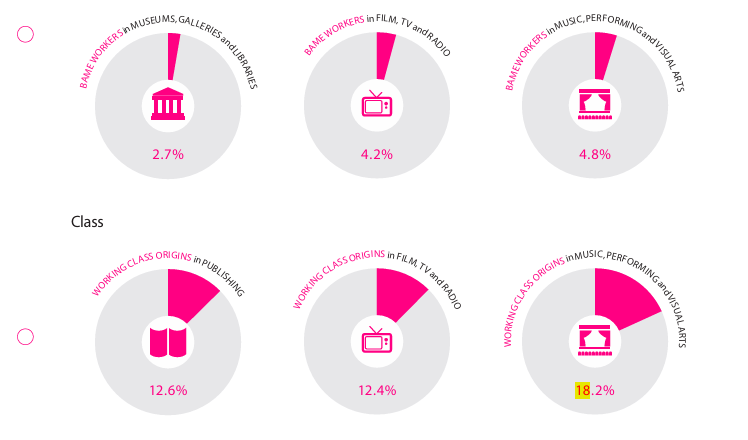
In November 2024, the education charity Sutton Trust's report A Class Act added an age slice: young adults from working-class backgrounds were about four times less likely to enter the creative industries than their more privileged peers.
By 2026, the curve finally traveled from journals to award ceremonies and cabinet rooms. At the Ivor Novello Awards on May 21, the rapper Tinie Tempah warned that without saving small venues, the music industry would shut out working-class musicians; Skye Newman, a rising star from a working-class London community, said the sustained investment a music career requires is pricing out young people without family money (The Guardian). Seven weeks later came Turn It Up — which, per Music Business Worldwide, commits £60 million over three years across music education, live-venue licensing reform, and streaming royalties, among other measures. When a government document itself acknowledges the class gap, it effectively stamps eight years of debate with an official seal.

The Family Spectrum at the Starting Line
Beyond the statistics, arrange today's mainstream artists by family resources and you get a spectrum rather than two fenced-off camps.
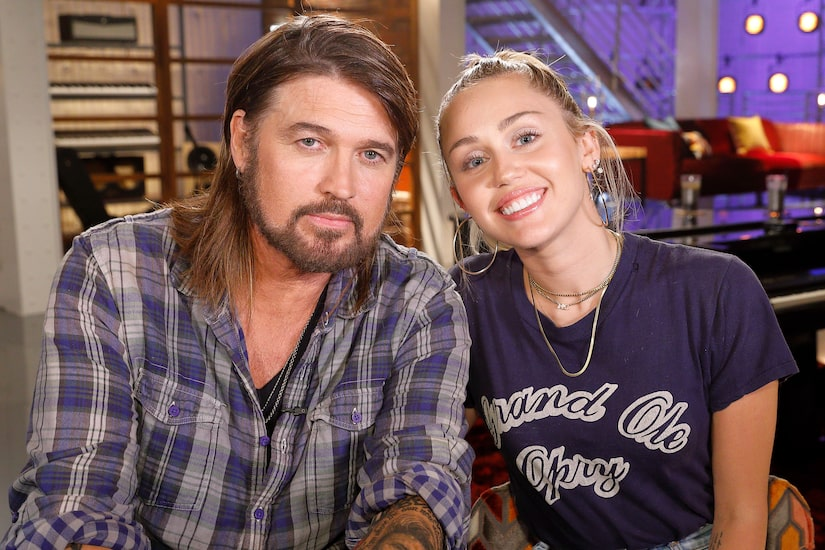
At one end sit the most easily recognizable entertainment families: Miley Cyrus's father, Billy Ray Cyrus, is himself a successful country singer; Gracie Abrams's father is Star Wars director J.J. Abrams and her mother, Katie McGrath, has long worked in film and TV production.
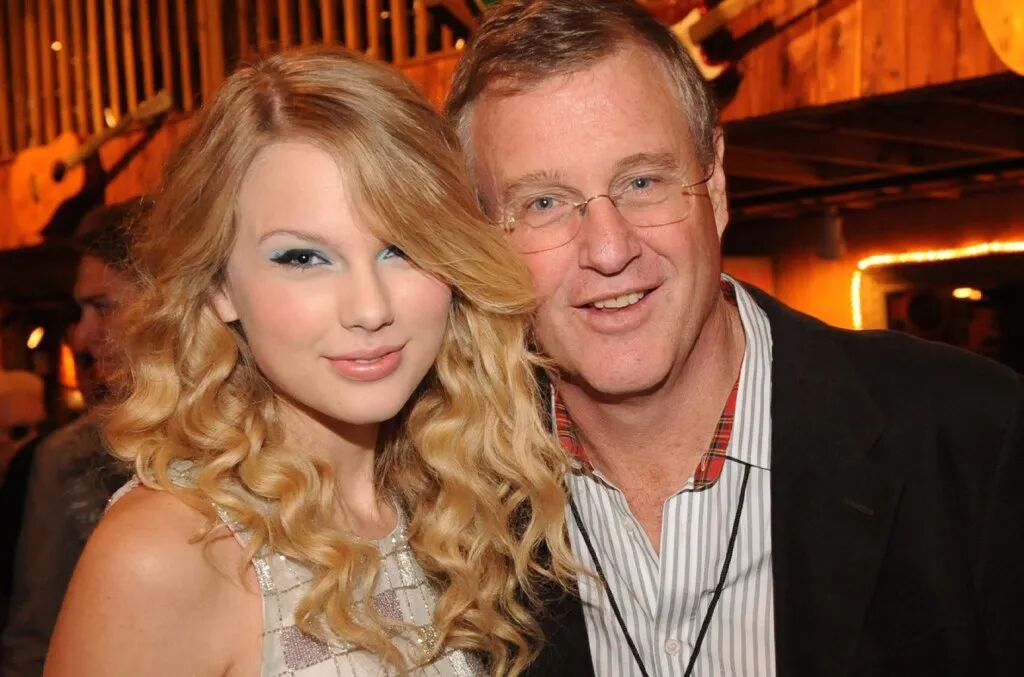
The middle ground belongs to families that are not famous but hold substantial economic and social capital: Clairo's father, Geoff Cottrill, is a veteran marketing executive who moved through Procter & Gamble, Coca-Cola, Starbucks, and Converse; Taylor Swift's father was a Merrill Lynch stockbroker who bought into her first record label, giving her a starting point far beyond an ordinary newcomer's.
Further out is a far larger group of professional middle-class families: Billie Eilish grew up in a household deeply invested in arts education and recorded her early work at home with her brother Finneas; SZA's father was a music teacher and studio engineer, her mother a university administrator. Such families cannot hand over cashable industry connections — but they can hand over time, education, and room to fail.
At the other end, grassroots cases still exist: Justin Bieber was discovered through YouTube covers from a Canadian single-parent household; Bad Bunny studied in Puerto Rico, bagged groceries at a supermarket, and uploaded his music to SoundCloud before fame. The trouble is that individual cases prove the gate hasn't been welded shut — they cannot tell you how wide it stands open. And the British data above is precisely a year-by-year measurement of that width.

Why Now, Specifically?
Privileged families get ahead in every industry. Why has music amplified that advantage, in these particular years, to the point of becoming a public-policy issue? Looking back, pop music actually went through a long "grassroots-friendly" era.
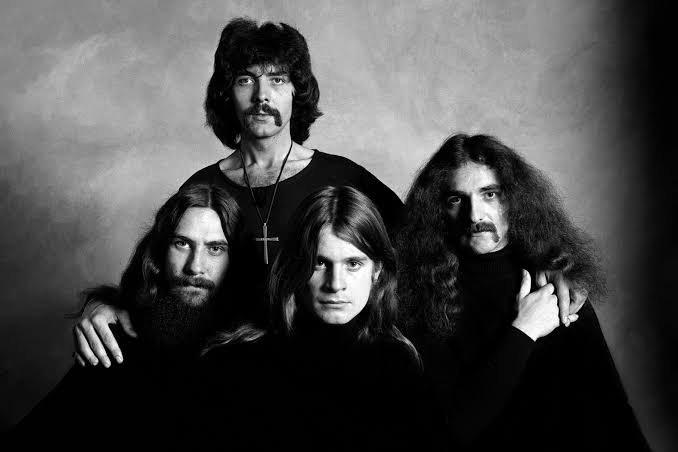
From the postwar decades through the 1970s, the fuel of rock, punk, and heavy metal came from working-class communities and youth subcultures — from The Beatles to Black Sabbath to the punk bands, working-class origins were once the default of Anglo-American pop culture, not the exception. The "ordinary person suddenly heard by the world" story that biopics retell endlessly is the romanticized projection of that history.
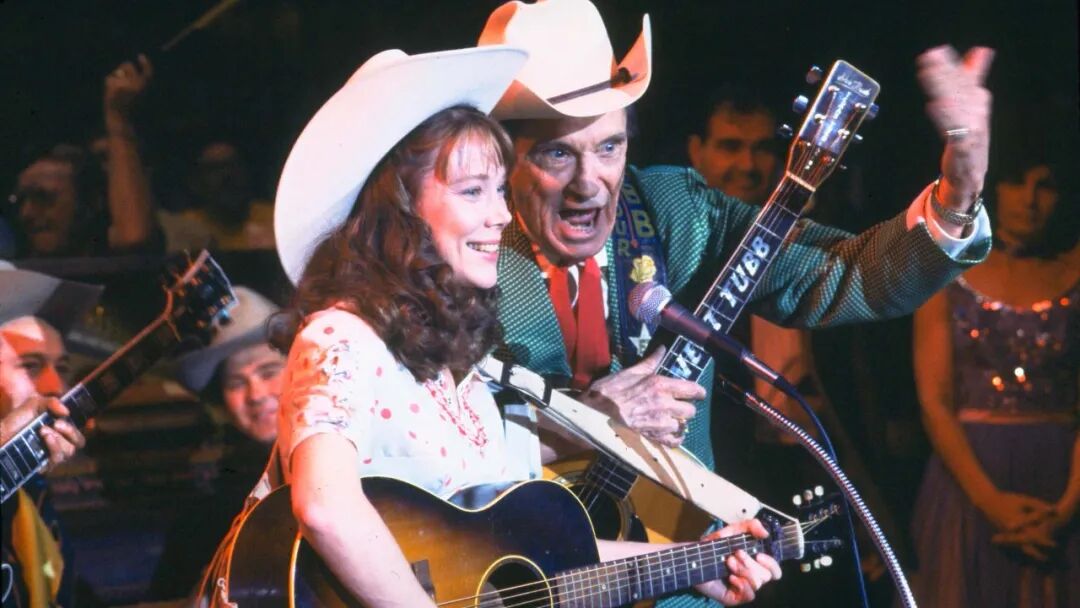
Around the turn of the millennium, TV talent shows partly converted artist scouting — once locked in record labels' A&R departments — into open public competition: middle-class Kelly Clarkson and farm-raised Carrie Underwood were both products of that machine. Local scenes incubated and pre-filtered talent, indie labels discovered it, and major labels carried the capital risk of turning potential into stardom. Not fair, exactly — but the path was visible, and someone else paid the upfront costs.

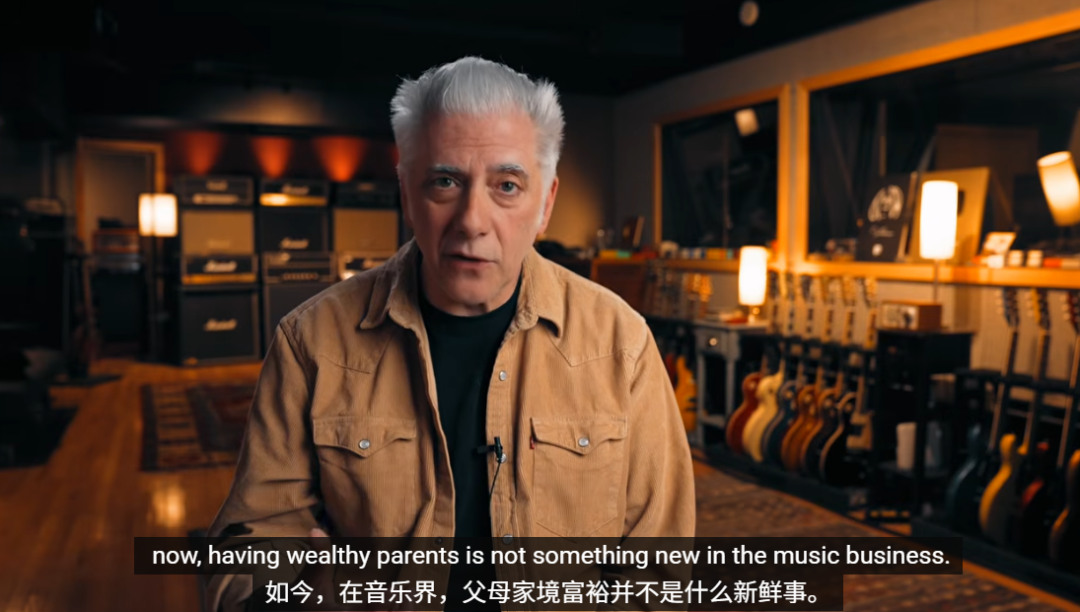
The change happened where the collapse of recorded-music profits overlapped with social media taking over distribution. In May 2026, veteran producer and YouTube educator Rick Beato published the video "Why Only Rich Kids Make It In Music Today," arguing from his industry observation that since roughly 2012, the young artists breaking through increasingly come from families able to buy professional songwriting, production, and touring support early.
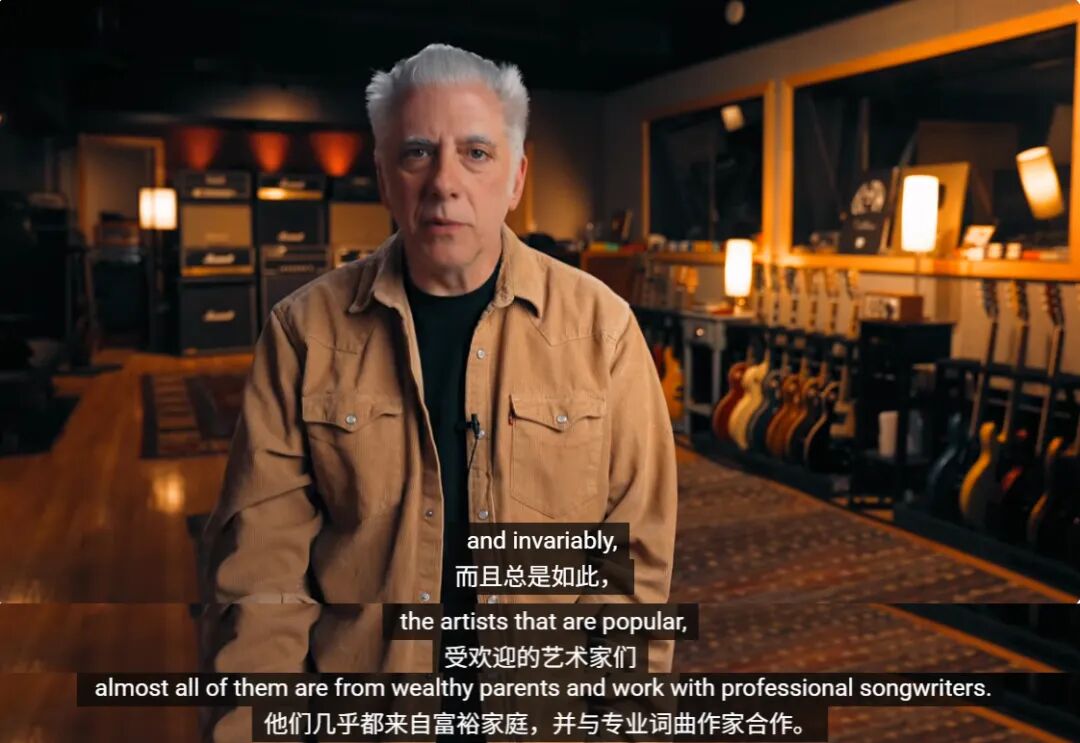
Beato's observation can be unpacked into three interlocking structural shifts. First, record sales no longer generate their old profits; labels' development budgets have contracted, so producers, engineers, and mixers naturally prefer clients who can pay directly or sign large advances — money itself becomes the door-knocker. Second, social media has internalized marketing costs onto the artist: releasing a song is only the start; content planning, fan operations, data reviews, and brand partnerships are your own job from day one — roles the old system paid employees to do.
Third, and least visible: the unpaid phase at the front of a music career has stretched dramatically. Algorithmic distribution demands continuous output before anyone sees you; "burn two or three years first, then wait for a shot" has become normal. That is precisely where family money becomes most concrete — not necessarily as connections, often simply as a cushion that can absorb failure: two or three years without stable income, still writing songs, self-funding tours, upgrading equipment, running the accounts. Others, equally talented, come home to the bedroom after eight-hour shifts and pay for recording, visuals, and promotion out of pocket. On an algorithmic feed, two songs get what looks like the same upload button; the opportunity cost behind the buttons is entirely different (this is the author's synthesis of multiple sources).

The Other Side: Don't Call It a Rich Kids' Game Just Yet
This anxiety about the "middle-class-ification" of music has its critics — and not all of them are wrong.
The musician Michael Musco, in a response essay, conceded that Beato is "right about most of it," but pointed out the missing half of the picture: recording and distribution tools are cheaper than ever — a bedroom studio can now achieve what once required booked studio time; independent release and sync licensing routes bypass the label gatekeepers; and the 1990s industry had its own gates anyway — the filter back then was simply gatekeepers' taste and bias, and nostalgia for it comes with a romanticizing lens.
Second, the nepo-baby discourse itself is producing collateral damage. Dazed's commentary noted how easily the discussion slides from attacking structures to attacking people — and lands disproportionately on women; the intensity of scrutiny aimed at Stella Lefty says as much about gender layered on class as about class alone.
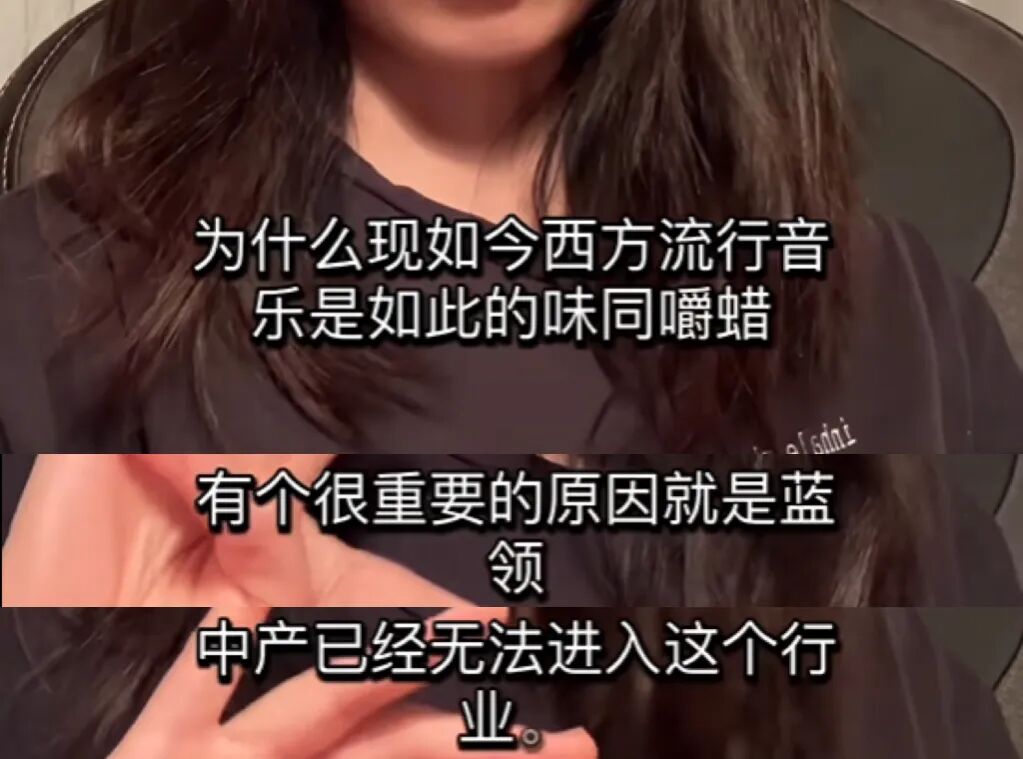
There is also a more popular hypothesis: mainstream music is boring and homogeneous, the argument goes, because its creators all come from similarly comfortable backgrounds, and working-class experience has exited the content pool. It has intuitive appeal — a narrower pool of lived experience should narrow subject matter and aesthetics — but the causality is hard to prove. Among the variables that explain creative sameness, algorithmic distribution and industrialized production are not obviously weaker than birth (this is the author's assessment of both sides' arguments).
More caution is warranted toward the romantic notion that suffering breeds creativity. Art history has its classics written in poverty, but poverty is at least as likely to simply exhaust a person's best years, education, and mental energy. What ultimately determines the work is not wealth or its absence, but a creator's craft and capacity to turn experience into expression. Measured that way, what class consolidation truly devours is not some "grassroots genius" — it is the chance for different kinds of creativity to be seen.
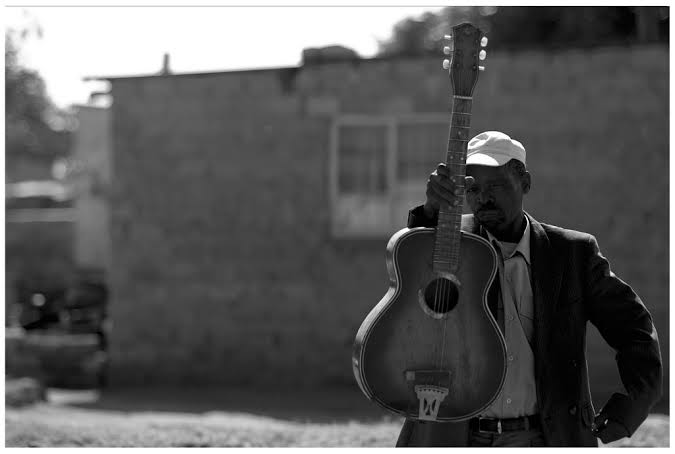
The Chinese-speaking world offers one more blind-spot check: star kids are not a homogeneous class, and the "nepo" dividend is not uniform. When You Yutong (游宇潼), daughter of Taiwanese singer You Hongming (游鸿明), debuted, reports said she not only drew on none of her father's resources but went against his wishes, self-funding her debut album to the tune of about NT$5 million (roughly US$165,000). The decisive variable a family contributes is often not cash or connections — it loops back to that same word: time to fail.
The Chinese Parallel: 2025, the Year of Star-Kid Debuts
A similar debate burst out across the Chinese-speaking industry in 2025. By China News Service's count, more than ten celebrity children entered show business that year, a crop the media dubbed the "year of star-kid debuts": in June, Shen Jiarun (沈佳润), daughter of comedian Xiao Shenyang, signed with Korea's BNB Music and released her first album, Never Afraid, as a K-pop soloist; the same month, Chen Kangdi (陈康堤), daughter of Eason Chan, signed with Warner Music Hong Kong as a "priority new artist," releasing the English single "Doll" and, later, a Cantonese single written by lyricist Wyman Wong (《一律建议分手》). In April, Xie Tianxiao's daughter had launched the duo Yulan与兰; Shao Bing's son Shao Ziheng was among the others. China News Service's editorial line was blunt: star kids who want to last can rely on hard skills alone.

Against that backdrop, the recent backbone of Mandopop is hardly short of outsider stories: Jay Chou rose from behind the scenes; Jane Zhang, Zhou Shen, and Mao Buyi came out of talent shows; GAI broke out of the underground rap scene; Liu Yuning went from livestream covers to mainstream stages. The passages haven't been welded shut — but every one of them, from talent shows to underground scenes to livestreaming, is narrowing, and increasingly demands that entrants arrive with their own traffic and funding.
One caveat: the Chinese and British markets are not directly comparable. Britain has a long tradition of class statistics, so its argument lands on verifiable data; the Chinese debate revolves more around resources, traffic, and fairness — and local channels such as livestream tipping and short-video covers offer monetization paths absent in the UK or US (this is the author's observation). The question — who still gets in — is the same; the answers do not transfer neatly.
Conclusion: A Wider Gate, a Longer Track
Weighing both sides, it is hard to call pop music a pure rich kids' game — production tools keep getting cheaper, distribution keeps decentralizing, and grassroots cases keep emerging. But it is equally undeniable that the industry has shifted the cost of selection and the early risk onto individual creators to a degree never seen before. The entrance has gone from one gate kept by record companies to countless small doors that look open but bill you on the way in.
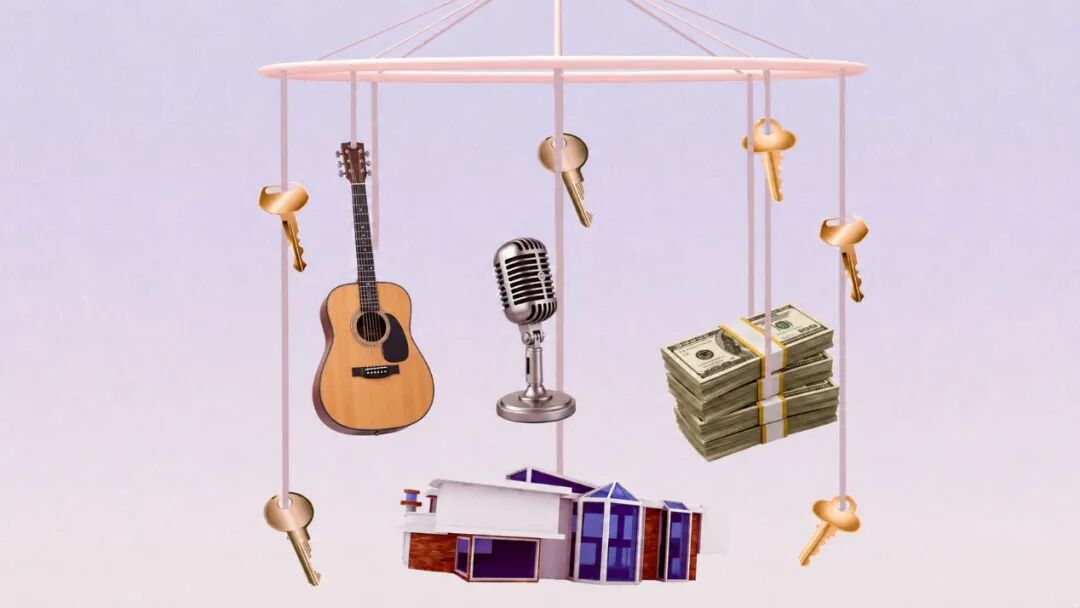
Pop music has never been a fair arena. Its most seductive cultural promise is that anyone might become the next person heard by the world. The real test of that promise today is not which resource another star kid has taken; it is that when two equally talented young people line up at the start, the family behind one of them can buy an extra two or three years of "time before elimination."

Making a song and putting it out may never have been easier; turning music into a career that feeds you has not gotten cheaper at all. Behind the argument over gate width, what has really become expensive was never the gear — it is the cushion you need to survive until the day you are finally seen.
Sources
- 音乐先声 (Music First): "'Young masters and young ladies' are debuting in droves — is there still room in the music world for poor kids?" (written by Li Qinyu, edited by Fan Zhihui, 2026-08-25) — source article: the Outside Lands lineup, artists' family backgrounds, UK class-data leads, and the Mandopop star-kid list
- The Guardian: Music industry risks excluding working-class talent, says Tinie Tempah (2026-05-21) — Tinie Tempah's and Skye Newman's remarks on working-class musicians at the Ivor Novello Awards
- The Guardian: Huge decline of working class people in the arts reflects fall in wider society (2022-12-10) — the generational comparison from the ~250,000-person longitudinal study (≈16% to ≈8%, 4× gap)
- Creative PEC: Just 16% of people in creative jobs are from working class backgrounds (2020-08) — the statistic that ~16% of creative-industry jobs are held by working-class people
- Sutton Trust: A Class Act – Social Mobility and the Creative Industries (2024-11) — working-class young adults ~4× less likely to enter the creative industries
- GOV.UK: Turn It Up – Our Plan for Music (2026-07-13) — the UK government's first music-industry plan and Lisa Nandy's remarks
- Music Business Worldwide: UK government launches 'Turn It Up' plan (2026-07) — plan details including the £60m/three-year commitment
- The New Yorker: Stella Lefty and the Rise of Nepo-Baby Musicians and 'Industry Plants' (2026-08-05) — the Stella Lefty case and the nepo-baby / industry-plant discourse
- Panic! Social Class, Taste and Inequalities in the Creative Industries (Create London × Arts Emergency, 2018; authors Orian Brook, Dave O'Brien, Mark Taylor) — 18.2% working-class share in music/performing/visual arts; 87% of respondents had worked unpaid (no direct link obtained; figures cross-checked via The Guardian and other reporting)
- Michael Musco: Music Breakdown — Rick Beato Is Right About Rich Kids in Music, But That's Not the Full Story (2026-05) — counterpoint: cheaper tools, independent paths, and the romanticization of the old industry
- San Francisco Chronicle: The nepo babies who took over Outside Lands 2026 (2026-08) — the festival's star-kid lineup (paywalled reporting; no direct link obtained)
- China News Service editorial: Star kids debuting in droves — only hard skills earn a lasting place (2026-06-25) — the count of 10+ celebrity children debuting in 2025 and commentary
- Dazed: The deeper problem with 'nepo baby' discourse — criticism of the discourse's slide into personal attacks and misogyny (no direct link obtained)