
Three Names, One Beach, Three Guitars: The Telecaster's 75th-Birthday Experiment
Updated:
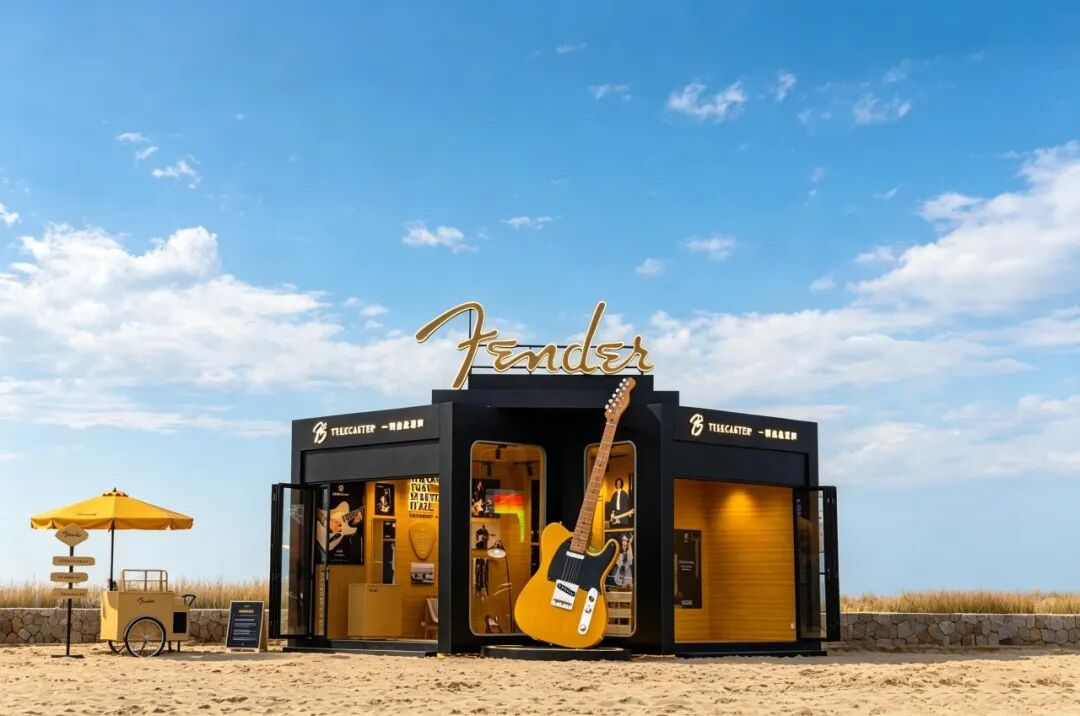
From August 28 to 30, 2026, a black pop-up pavilion appeared on the beach at the Aranya Xiami Music Festival, flanked by a multi-story yellow Telecaster model. Fender, the instrument brand behind the world's most recognizable solid-body electric guitar, staged its 75th birthday by the sea: anniversary-model test drives, panel talks, film screenings, a rare-instrument exhibition — and a donation ceremony with the Smile Angel Foundation under the Chinese Red Cross Foundation.
The usual anniversary recipe — "look back at history, launch new products" — was here replaced by something far more layered: an industrial history compressed into one guitar, a live event built to fight the screen, and three charity guitars finished in children's paintings. Each ingredient has a story of its own.
One Guitar, Three Names
To understand why the Telecaster merits a 75th-anniversary celebration, you first have to go back to the trademark dispute that surrounded its birth.
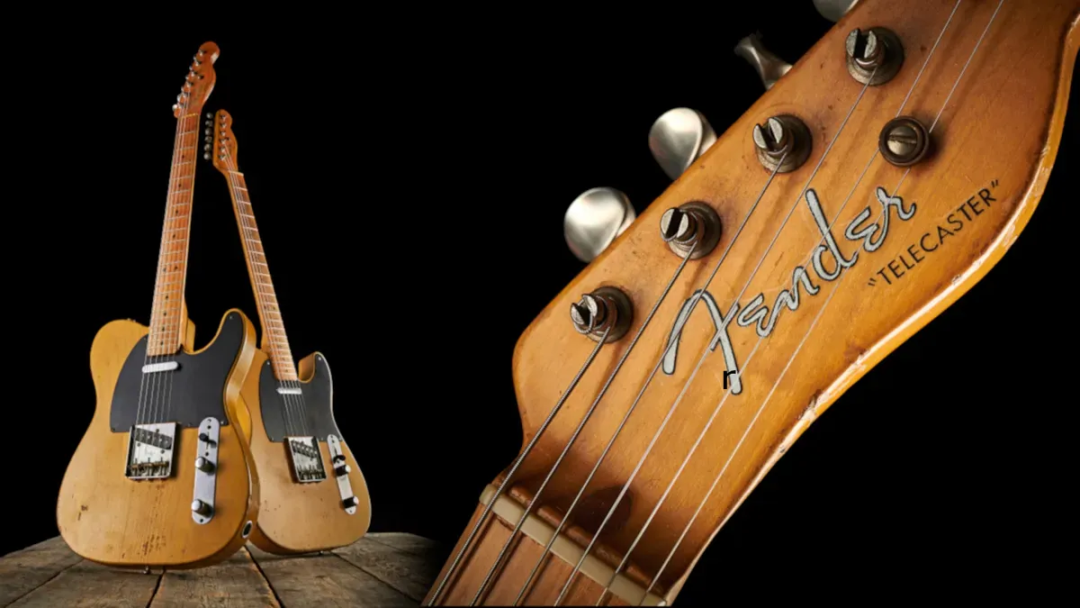
In the fall of 1950, Fender released the Broadcaster — generally credited as the first mass-produced dual-pickup solid-body electric guitar. But the name soon collided with drum maker Gretsch's "Broadkaster" drum-kit trademark, and Fender was forced to drop it. In early 1951, a batch of guitars left the factory with no model name at all on the headstock; collectors later nicknamed these nameless instruments "Nocasters." Later that year, the model finally got its lasting name — Telecaster, a deliberate nod to the then-booming age of television broadcasting.
Fender has since turned this "three names" history into business. The official 75th-anniversary lineup spans the mainstream 75th Anniversary Player II Telecaster and a limited-edition American Vintage II 1951 Nocaster reissue priced at $2,999.99 — converting the embarrassment of those nameless 1951 guitars into a collector-grade premium.
More important than the name is the design philosophy. A bolt-on neck, a minimal pickup and control layout, a rugged solid-wood body: Leo Fender approached the instrument less as a luthier's craft object than as an industrial product — turning the electric guitar from a custom commission in the hands of a few makers into a standard tool musicians could buy, afford to repair, and haul through long tours. Over the following 75 years, James Burton and Buck Owens made it the bright voice of country stages; George Harrison, Joe Strummer, Jonny Greenwood, Chrissie Hynde, and Graham Coxon carried it into rock, punk, and alternative; Sheryl Crow, Tom Morello, and Brad Paisley extended its life in pop and contemporary country. That one model could host such a fractured musical genealogy is precisely because it is structurally "simple" — simple enough to be redefined by any kind of expression.
Moving 75 Years onto the Beach
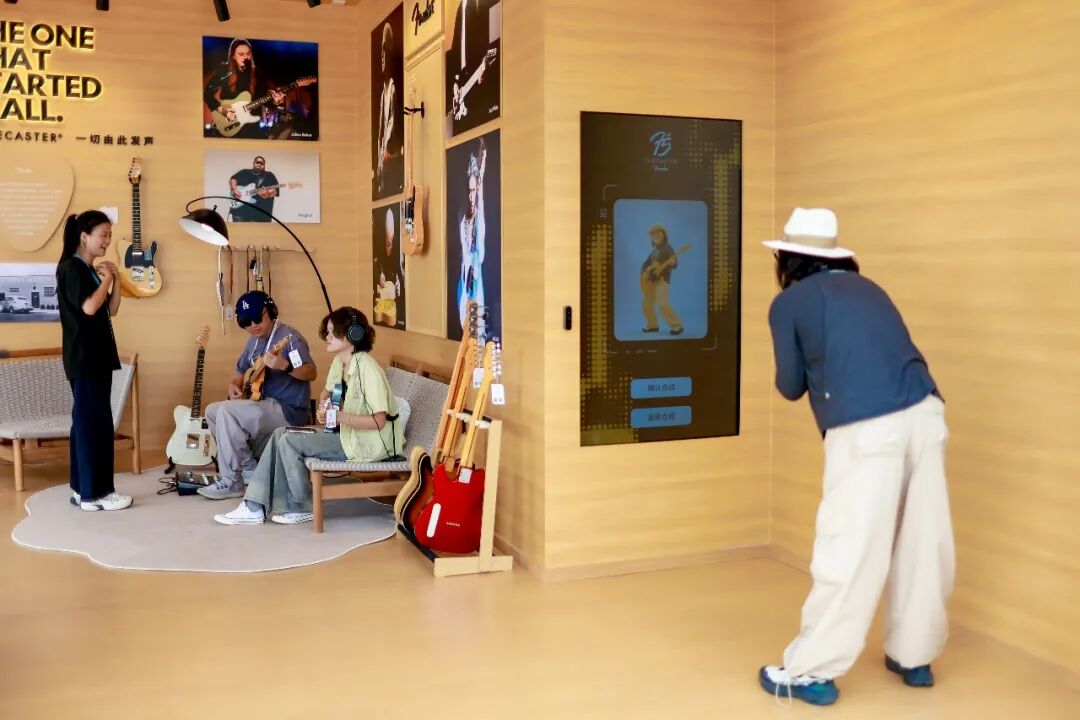
The Aranya event was staged by Fender's China operator Fenda Music (Shanghai) together with the Xiami Music Festival, on the beach just north of the Lonely Library (official event press release, published August 31, 2026). Inside the pop-up space, five anniversary-series models ranging from vintage to modern were laid out for fans: seasoned players compared feel and tone neck by neck, while newcomers could simply pluck the strings.
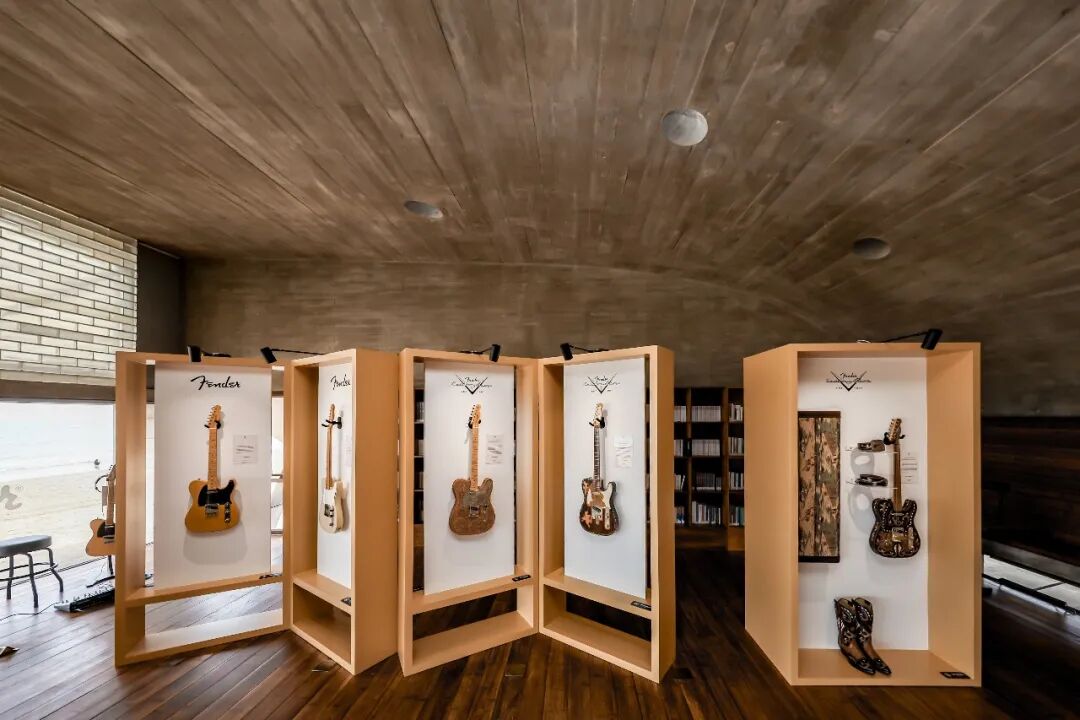
A few steps away, inside the Lonely Library, collectors Liu Chunyang, Lin Dana, and Zheng Xuanle brought out the treasures from their vaults: a 1951 Nocaster, Masterbuilt custom pieces, painted and carved bodies, a fretless metal fingerboard — 75 years of aesthetic branches of a single model under one roof.
At the day's panel, producer Deng Ouge, jazz guitarist Xiao Jun, and Ernest Choi gave three non-overlapping answers to "what is a Telecaster": one prized its immediate response to emotion, one its unmistakable sonic personality, one the sense of order formed by years of refinement. The three answers never merged into a brand slogan; instead they converged on one conclusion: a good tool doesn't speak for the creator — it only makes the creator's own voice clearer.
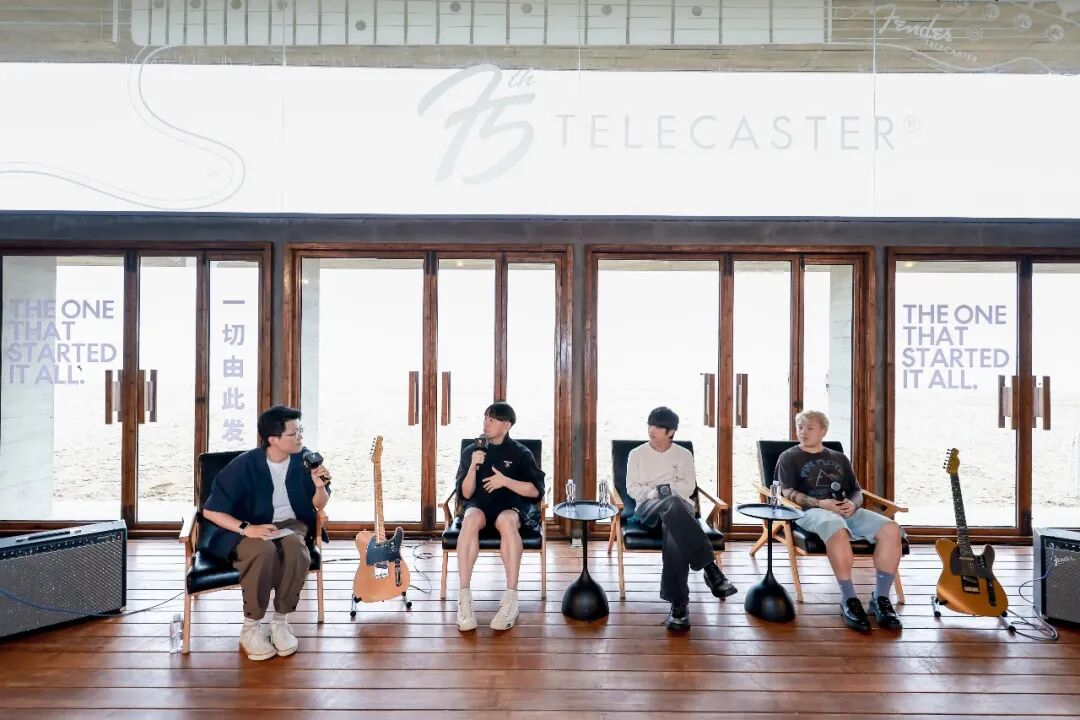
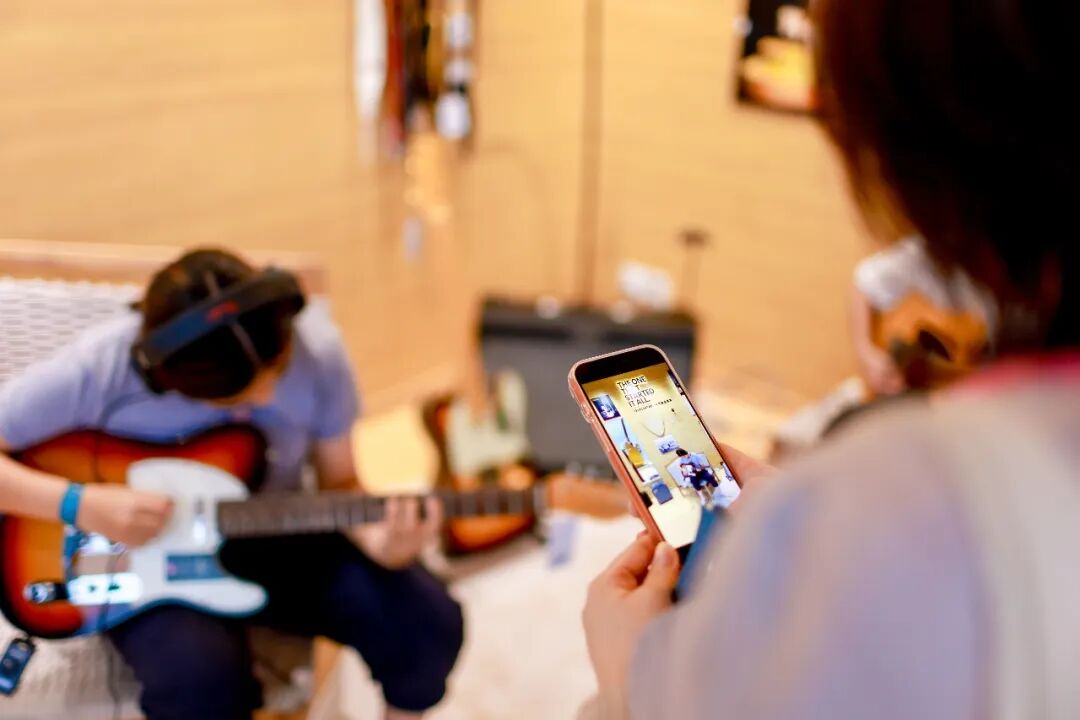
The most intriguing fixture on site was an AI installation that generated virtual performance avatars for participants: the most digital of means, deployed to pull people onto the most physical of beaches. The apparent contradiction matches the view Fender China general manager Junjie Dai expressed on site. According to Music Xiansheng's report, she said AI "can be made extremely standardized, extremely perfect," but cannot feel the subtle shifts in playing force that come from "a bad day, feeling unwell, not enough strength" (translation). In her view, the AI wave is irreversible — "rather than fear it, think carefully about what separates us from the cold things it produces" (translation). An instrument brand insisting on dragging people back to live gatherings at its 75th anniversary follows the same logic: the virtual cannot deliver touch, and music is a natural reason to gather.
Three Guitars and a 17-Year-Old Painting
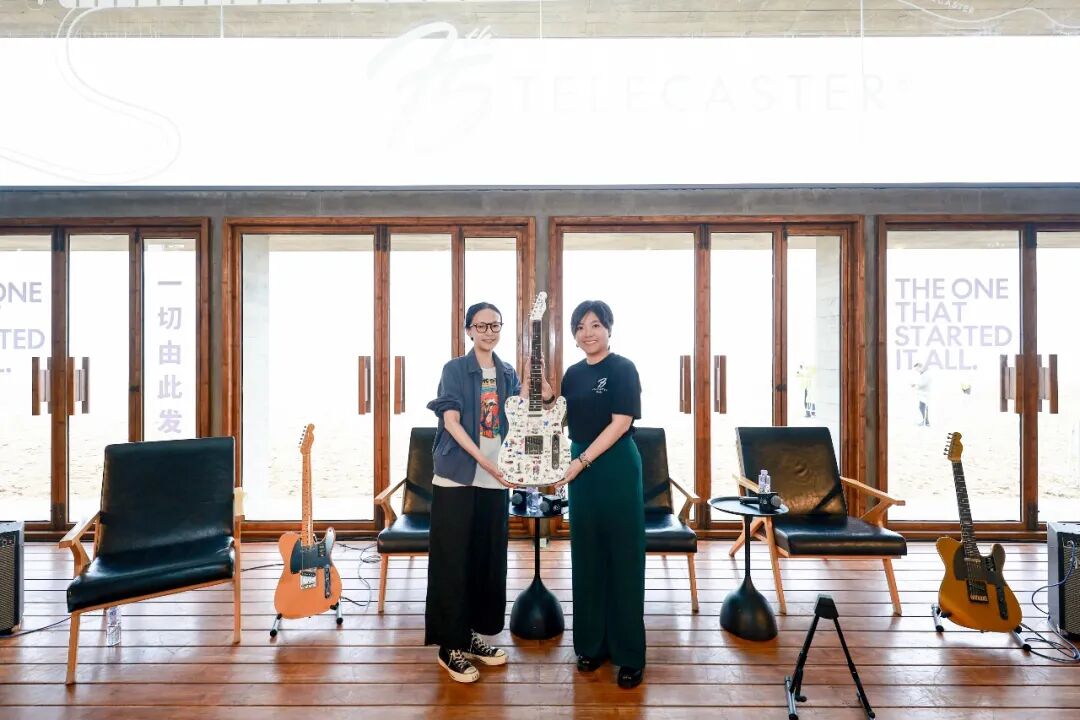
The charity partnership announced on site was the least "anniversary-like" part of the event: Fender and the Smile Angel Foundation produced three limited-edition Telecasters whose top designs were taken from original paintings by children with cleft lip and palate, created in the art-therapy program of the 2009 "Smile Angel Journey — Tibet" medical tour. The three guitars go to the foundation's longtime volunteers Lao Lang, Deng Ouge, and Leah Dou, to be kept in use in their future work on stage.
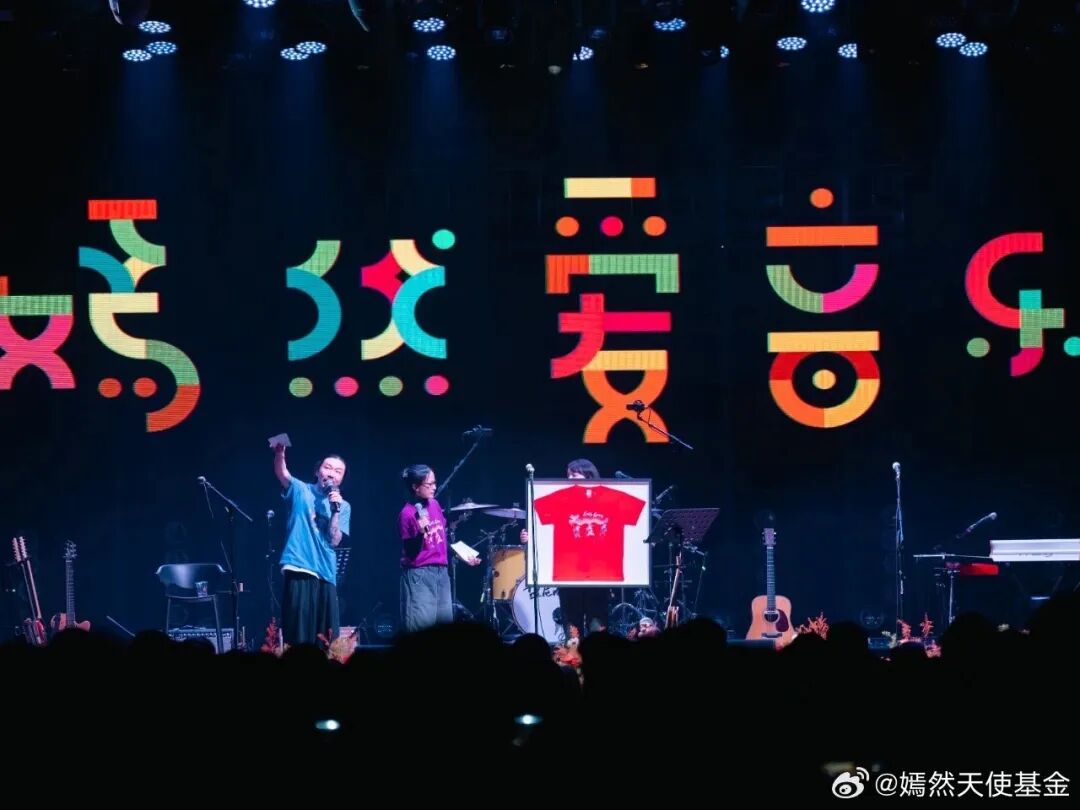
The foundation's background deserves context. Smile Angel was founded in 2006 by Li Yapeng and Faye Wong — whose daughter Li Yan was born with a cleft lip and palate — under the Chinese Red Cross Foundation, and has long provided free surgeries for children with the condition (Chinese Red Cross Foundation). The foundation first organized a medical team to Tibet in 2009; according to the Tibet Autonomous Region government website (February 2025), the "Smile Angel Journey — Tibet" tours have since run for 13 consecutive years, delivering free surgeries to 781 patients in Tibet.
The paintings on the guitar tops came from that first Tibet tour's art-therapy program: music, painting, and drama are the foundation's regular tools for psychological recovery alongside surgery. Between the 2009 paintings and the 2026 guitars lie 17 years — the three instruments effectively frame a page of the foundation's own history onto the body of an instrument.
One detail left unspoken by the official publicity but worth noting: recipient Leah Dou is Faye Wong's daughter, and Smile Angel is the foundation Faye Wong co-founded. Handing a guitar to her is not just a handshake between a brand and a charity; it places the partnership back inside a family-and-foundation relationship that has already spanned two generations (this is the author's observation, not a brand statement).
As for how the collaboration began, per Music Xiansheng's report, the Fender team originally just went to visit producer Deng Ouge; over conversation they learned about Smile Angel's therapy work and the 2009 paintings, and the idea of "bringing music, imagery, and children's therapy together" surfaced naturally, winning company-wide support with no internal push. Fangfang, representing Smile Angel, put it this way: "They ask for nothing, and we ask for nothing — they were even afraid of troubling us. When the original intention is the same, the thing becomes especially beautiful" (translation).
A Global Charity Ledger
Zoom out, and this partnership is not an isolated event; Fender's charity record in recent years traces a clear arc:
- Los Angeles: The Fender Play Foundation's partnership with the Los Angeles Unified School District (LAUSD) began in 2020 with just over 1,000 students and expanded to about 2,500 in 2021, donating instruments and online-lesson subscriptions to the district (LAUSD); the original report states the program has since reached more than 17,000 students.
- Altadena, California: After the 2025 Eaton Fire, Fender worked with PLUS1 to build a Custom Shop Altadena Telecaster from cedar wood recovered from the fire; it sold for $13,700 at the first-anniversary benefit concert at the Pasadena Civic Auditorium on January 7, 2026, with proceeds going to San Gabriel Valley Habitat for Humanity for community rebuilding (Guitar World).
- The UK: A 12-month partnership with Music Venue Trust donates equipment to small venues through a "Nominate a Grassroots Music Venue" campaign (Music Venue Trust).
One pattern stands out: the vehicle in all three cases was a Telecaster. This is not necessarily by design, but it makes sense — a simple structure is easy to customize, a classic model carries its own narrative, and as a donation or auction piece it holds both craft value and symbolic value (author's inference).
The Other Side of Cause Marketing
The marriage of brand and charity is not without critics. The Hidden Costs of Cause Marketing by Angela M. Eikenberry, published in the Stanford Social Innovation Review, voices a representative position: cause marketing tends to channel public goodwill into short-term consumption rather than structural giving; charity goals and brand goals misalign; donations dissipate through layers of marketing overhead; and over time it can breed consumer cynicism toward "charity stunts."
Judged against that framework, the Fender–Smile Angel collaboration does avoid some classic traps: it is not a "buy a guitar, donate a sum" sales tie-in, so charity was never used as a promotional lever; the three guitars go to volunteers to keep using rather than to auction, so the objects stay inside creative settings; and the beneficiary is deeply involved — the guitar tops are the paintings of the very people the foundation serves. In Fangfang's words, both sides "ask for nothing," and the partnership grew naturally out of a private visit.
But the structural asymmetry remains: brand exposure is immediate, while charitable outcomes take years to verify — whether the three guitars truly keep appearing on stages, and whether the partnership brings the foundation meaningful public attention, cannot be tested today. This is exactly the crux of Eikenberry's critique: the costs and benefits of cause marketing are misaligned in time, and there is no guaranteed passage between short-term buzz and long-term effect. The original report itself concedes that "a single brand-charity collaboration can hardly be validated as a lasting mechanism in the short term" (translation).
Conclusion: The Anniversary as Method
The Telecaster's 75 years are, at heart, a history of how a tool gets used: its meaning has never lived in display cases but in the hands of successive generations of players. The Aranya event offered a slightly different anniversary template — instead of retelling history, it let history keep participating in what is happening now: putting a 1951 Nocaster in a room with players, using an AI installation to throw the irreplaceability of live presence into relief, and turning paintings from a 2009 Tibet hospital ward into guitars for 2026 stages.
Who can a 75-year-old Telecaster still speak for? On this evidence, the answer isn't on the brand's website — it's in who plays it next, and who hears it. Goodwill, like the sound of a guitar, only counts once it's played.
Sources
- Music Xiansheng: "From Rock Weapon to Charity Canvas: The 75-Year-Old Telecaster — Who Can It Still Speak For?" (Fan Zhihui, 2026-09-08) — on-site details, panel and interview quotes
- Fender official Telecaster 75th-anniversary page — anniversary lineup and pricing
- Official event press release via HDav China (2026-08-31) — event dates, venue, and organizers
- Chinese Red Cross Foundation — Smile Angel Foundation's 2006 founding
- Tibet Autonomous Region government website (Feb 2025) — 13 years of Tibet tours, 781 patients served
- Los Angeles Unified School District (LAUSD) — Fender Play Foundation partnership
- Guitar World — Eaton Fire memorial Telecaster auction
- Music Venue Trust — grassroots-venue partnership with Fender
- SSIR: The Hidden Costs of Cause Marketing (Angela M. Eikenberry) — the cause-marketing critique