
3.4 Trillion Daily Signals and a 17% Spend Surge: Spotify's AI Bet Was Never About Models
Updated:
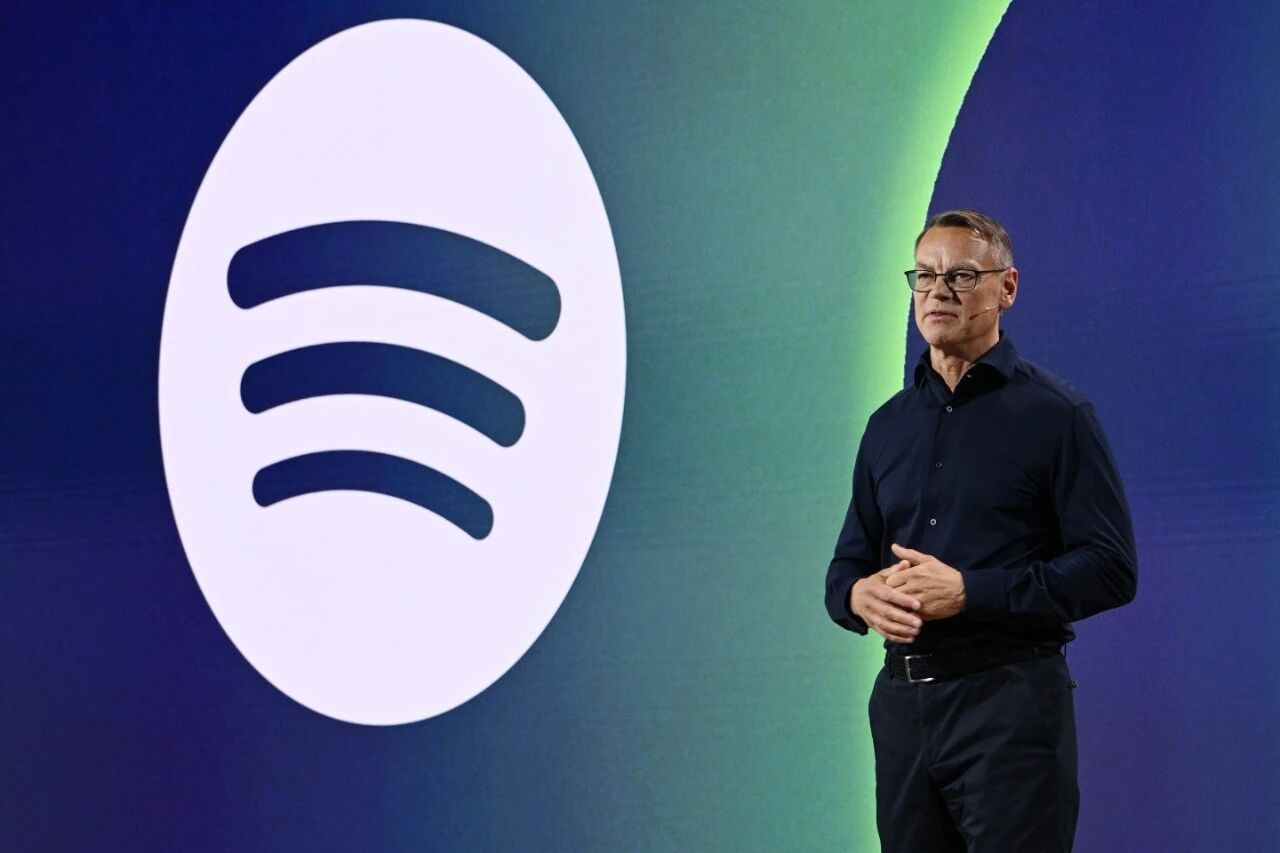
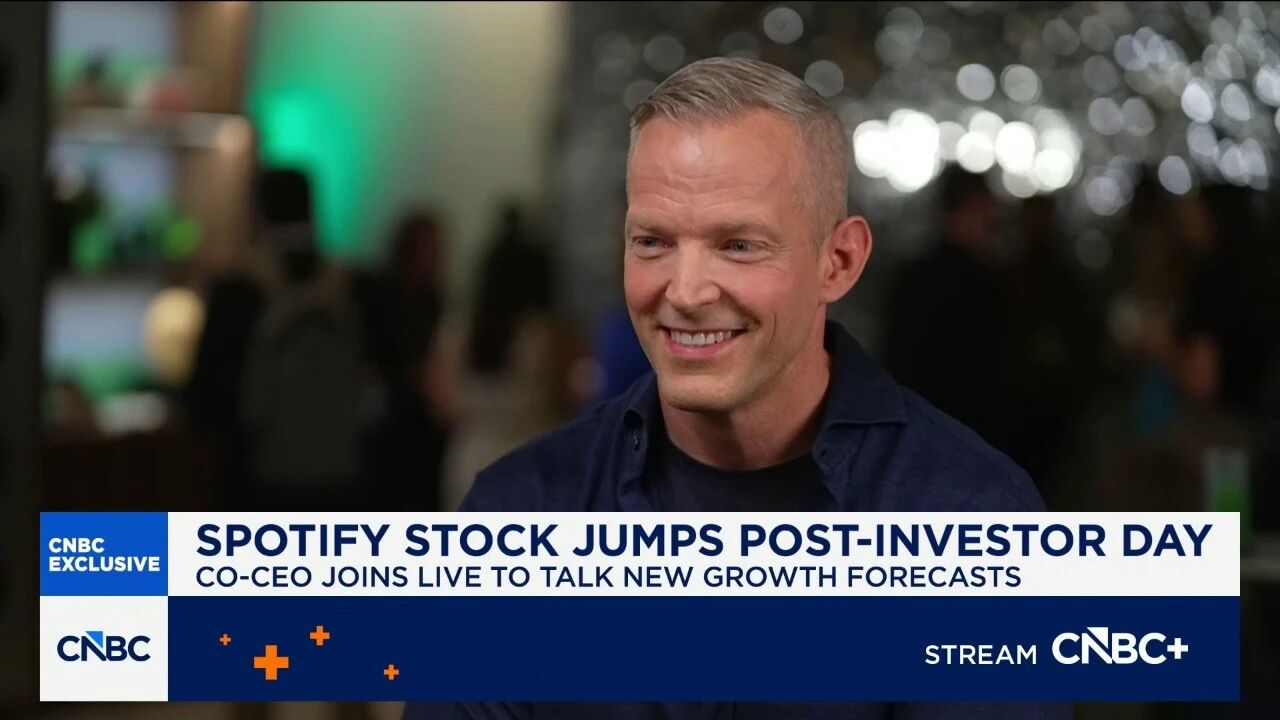
On May 21, 2026, Spotify held the third Investor Day in its history in New York — four years after the previous one. In the first trading session that followed, Spotify's stock rose about 13%, described by several financial outlets as one of its best trading days ever (as reported by CNBC and others, May 21–22, 2026). The market's excitement is understandable: co-CEOs Alex Norström and Gustav Söderström not only laid out a financial framework through 2030 — mid-teens revenue CAGR, gross margin of 35–40%, and operating margin above 20% (official remarks) — but also placed AI at the very center of the story for the first time.
Yet away from the limelight, the parts of this AI bet that most deserve scrutiny were not on stage.
First, the money: the cost side of this narrative sits in the Q1 earnings released in late April, not under the Investor Day spotlights. Second, the rules: whether Spotify can turn "taste" into a business depends on a licensing and legislative framework that has yet to be settled. Third, the landscape: AI-music monetization has long since grown beyond a single Spotify playbook — walled gardens, tool subscriptions, and marketplaces are all expanding at once, and the lines between them have started to blur.
This article first maps the industry's regulatory backdrop and the three commercial paths, then returns to Spotify itself, and finally stress-tests the whole narrative. (Throughout, phrases such as "according to / reported / data show" introduce factual statements; "in this author's view / by this author's estimate" introduce opinion or inference.)
Rules Come First: AI Music Enters the Age of "Unbundled Rights"
The starting point for understanding this wave of AI music is not a model but a bill in the U.S. Congress.
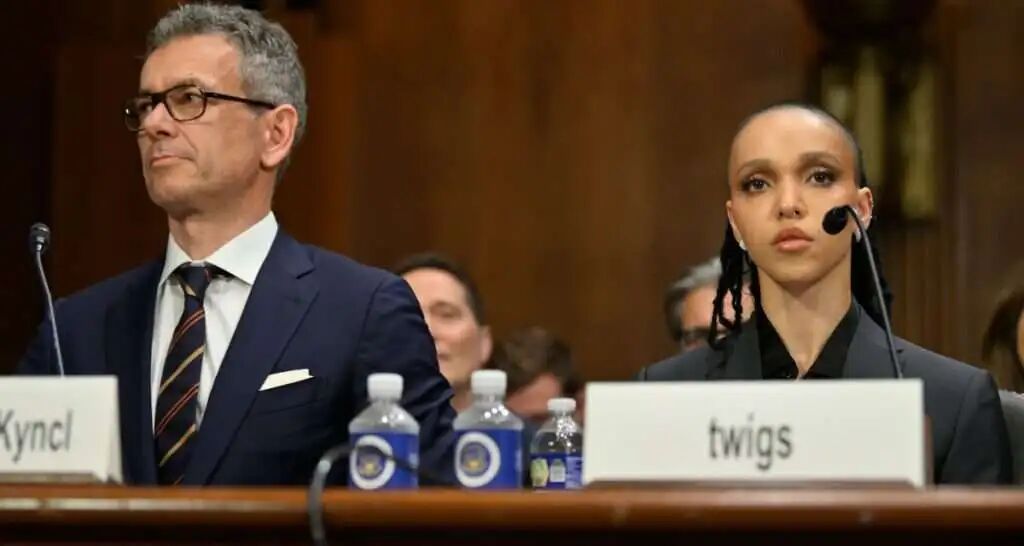
On May 20, 2026, bipartisan lawmakers introduced the NO FAKES Act for the third time (S.4591, 119th Congress, Congress.gov). Compared with earlier versions, the new bill makes differentiated revisions for streaming platforms — distinguishing between platforms hosting ordinary user-generated content and those operating human-curated services, and refining the rules and enforcement standards for handling infringement disputes by platform type. Spotify publicly backed the bill (as reported by Music Business Worldwide, May 21, 2026).
Behind the bill is a consensus taking shape: in the AI era, voice, likeness, musical style, training data, remix permissions, and download rights are being unbundled into separately licensable, separately billable layers of rights. The copyright system of the record and streaming eras was built around compositions, recordings, performer rights, and distribution revenue; in the AI-music era, the granularity of "licensing" is being rebuilt from scratch.
Another signal of this rebuilding comes from the patent layer. On August 20, 2026, Music IP Holdings (MIH) unveiled a patent-licensing framework for generative AI: more than 24 issued or allowed patents plus over 50 pending, covering the entire chain from prompt input through moderation, watermarking, identifier tagging, authorization, licensed distribution, and payment across open and closed ecosystems. Udio and GRAI became the first licensees, and UMG and its affiliated rightsholders can use the portfolio for additional protection against unlicensed generative-AI uses (UMG's official announcement). This postdates the original article, but it confirms its direction: AI-music competition is shifting from model capability to a composite contest over copyright assets, distribution scenarios, and settlement systems.
Three Commercial Paths: The Garden, the Factory, and the Marketplace
On this unbundled foundation, AI-music monetization has taken three broad paths.
Path one: rightsholder-led "licensed walled gardens." The exemplars are Spotify × Universal Music Group, and Udio's new platform Starstruck.
On October 29, 2025, Universal Music Group settled its copyright lawsuit against Udio and announced a strategic agreement to launch, the following year, an AI-music platform trained only on "authorized and licensed music" (per UMG's announcement and the Los Angeles Times' coverage, October 29–30, 2025; original links could not be verified). According to Music Ally (May 22, 2026; original link could not be verified), Udio's new platform Starstruck will offer four creative modes — Cover, Reimagine, Remix, and Create — but every mode revolves around artists and songwriters who have opted in; generated content stays inside the platform, backed by fingerprinting and filtering mechanisms.
Spotify's deal with Universal follows the same logic: on May 21, 2026, the two announced licensing agreements spanning recorded music and publishing, with a flagship product that lets fans make AI covers and remixes of licensed tracks — launching as a paid add-on to Premium, not a default feature. Co-CEO Norström stressed that everything rests on "consent, credit, and compensation," while UMG chairman Grainge called the deal "artist-centric, rooted in responsible AI" (Spotify Newsroom).
This path offers the highest commercial certainty and suits top rightsholders, superstar artists, and strong distribution platforms — it pulls fan-remix demand that previously scattered across the gray zones of TikTok, YouTube, and Suno back into a system that can be licensed, metered, and settled. Its ceiling is equally clear: users can only create within the boundaries the rightsholders draw.
Path two: tool subscriptions — selling capacity by credits. The exemplars are Suno and China's Mureka.
Under Suno's official pricing, the Pro plan costs $10 a month for 2,500 credits (roughly 500 songs) with commercial-use rights; Premier costs $30 for 10,000 credits (about 2,000 songs) and unlocks Suno Studio, stem separation, audio upload, and other advanced capabilities (Suno pricing page). For short-video creators, advertising teams, game developers, podcast producers, and independent musicians, this is content productivity rented by the month.
China's Mureka (owned by Kunlun Tech, launched August 2024) treads a similar path: the platform emphasizes "royalty-free tracks with full commercial rights," commercial licensing included from its $8 entry tier, plus a Mureka Store where users can sell AI-generated music (Mureka official site; the original article additionally cited MP3/WAV/MP4 downloads and commercial licensing for paid-API output — details from the original article's retelling that could not be independently verified against official documentation).

This is currently the most common path, but it is structurally squeezed: revenue depends on generation volume, while models converge, inference costs fall, and lookalike products multiply — the price per generation can only trend down. In this author's view, tool subscription is the AI-music "picks-and-shovels" business: it can build revenue, but not a moat.
Path three: transactional marketplaces — making AI music itself the commodity. The exemplar is ElevenLabs.
On ElevenLabs, users can publish AI-generated songs; others buy usage rights by use case, download, or remix, with creators earning a share — the company's help documentation puts the starting creator share at 25% of the purchase price (per help.elevenlabs.io official documentation; original link could not be verified). The platform connects AI-music creators on one side with buyers of music material on the other — YouTubers, advertisers, brand teams, podcast producers — in essence pushing AI music from a generation tool toward a standardized-licensing marketplace, the form closest to a mature rights market.
The most notable recent change: the three paths are converging. On September 10, 2026, Universal Music Group and ElevenLabs announced a multi-year strategic agreement — ElevenLabs' first with a major label — to jointly launch a new AI-music creation platform built on licensed music with artist participation, where fans can create remixes, mashups, and new interpretations (UMG's official announcement). A marketplace player is now building its own walled garden — which confirms from the side that without licensing, no AI-music model reaches the mainstream market.
Back to Spotify: It Isn't Selling AI, It's Selling "Taste"
Seen against this landscape, Spotify's approach is notably restrained — restrained enough to sit oddly beside the "all in AI" headline framing.
Spotify is not building a general-purpose foundation model to compete with OpenAI. Söderström put it plainly in his Investor Day remarks: "rather than training general Large Language Models we are training what we call our Large Taste Model. We have also referred to this as our Large Personalization Model in the past" — a deep interest-understanding system built on roughly two decades of user-behavior data (official remarks). He also framed the three-stage evolution: "we started with basic service, went into personalization service, and now we're going into generative service." Stage one used streaming to solve access to music; stage two used recommendations and playlists to solve discovery; stage three uses generative AI to bring users into content creation.
The data chassis is the foundation of this narrative: as of Q1 2026, Spotify counted 761 million monthly active users and nearly 300 million subscribers, generating 3.4 trillion events and taste signals per day — up 43% since the start of the year — across music, podcasts, and audiobooks (official remarks). Söderström's argument: general reasoning capability is becoming a commodity; Spotify's moat lies not in the model but in its understanding of each user's taste.
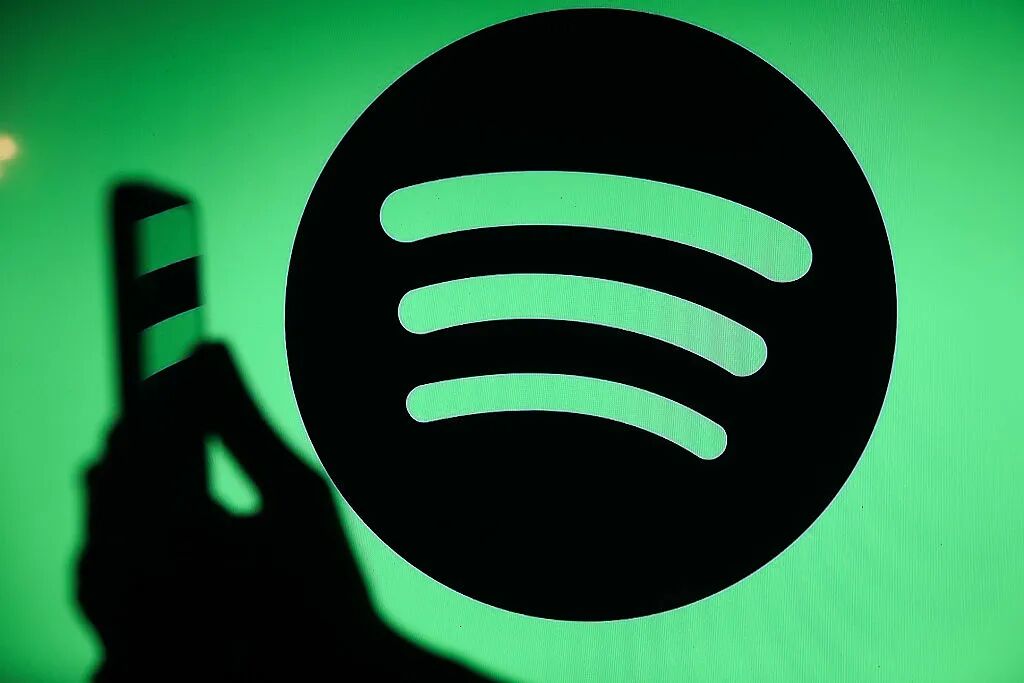
At the product layer, the past year has been dense: beyond AI DJ, Prompted Playlists let users generate playlists in natural language and refine them conversationally into a Taste Profile (official recap); Studio by Spotify Labs opened to creators as a standalone desktop app (official announcement); and Reserved, a ticketing product for superfans, was announced with U.S. launch partners for summer 2026 (official announcement). According to official disclosures, AI-driven Autoplay lifted song saves by 9%, and interactions with AI DJ rose roughly 20% (Investor Day recap).
Governance has moved in parallel: AI-use disclosure mechanisms, spam filtering, stricter impersonation policies, and Artist Profile Protection, which hands verification back to artists. These are not PR gestures — the NO FAKES Act's platform provisions, noted above, will need exactly this infrastructure to land.
So Spotify's AI strategy is not "becoming a model company" but the productization of a data asset: converting the behavior data of 761 million users into stronger retention, higher willingness to pay, and more individually chargeable add-ons — like the still-unpriced UMG cover tool. Management even set a far-off north star: 1 billion subscribers and €100 billion in revenue (official remarks).
Stress Test: Three Questions That Need Sharper Answers
The narrative is complete, but three points need tightening.
First, the "iPhone moment" analogy needs a correction of attribution. The original article attributed the comparison — "the AI wave is like the birth of the iPhone and the App Store" — to the Investor Day. But according to Music Business Worldwide, the analogy actually came from the Q1 2026 earnings call on April 28, when Söderström justified the AI investment by comparing the moment to the launch of the iPhone and App Store (MBW, April 28, 2026; original link could not be verified); the official Investor Day remarks contain no such analogy. This is not pedantry: the venue of the metaphor changes its audience — on the earnings call it persuaded analysts pricing the capex; at the Investor Day it would have persuaded long-term money pricing the growth story.
Second, the cost picture needs two sets of books. The original article cited "operating expenses up 17% year on year excluding currency and social charges, driven largely by cloud and AI infrastructure." According to MBW's reading of the Q1 shareholder letter, that figure is the like-for-like basis (ex-FX, ex-social charges); on a reported basis, operating expenses actually fell about 5% year on year (MBW, April 28, 2026; original link could not be verified). In other words, "AI is inflating costs" and "total costs are falling" are both true — the precise statement is that Spotify is sharply increasing cloud and AI spending while cutting elsewhere to offset it. This is a deliberate reallocation of spend, not runaway cost inflation. Tellingly, management's own framing runs the same way: at the Investor Day, Söderström called AI "not simply a cost layer, but a monetization opportunity," pointing to tiered pricing and premium AI add-ons (official remarks). The official narrative and the reported accounts do not contradict each other — but which face gets shown to the market is narrative craft.
Third, two pieces of the licensing puzzle are still missing. The original article's conclusion said "Spotify and Udio have successively struck deals with the major labels (Sony Music excepted)." A correction: the label that settled with Udio is Universal alone (Warner's settlement was with Suno, and it formally dismissed its claims in December 2025; per legal-trade reporting). What genuinely remains unresolved are two things. First, Sony has yet to license any AI platform — the walled garden is missing a corner. Second, the litigation against Suno is still grinding on: Universal and Sony sued Suno in June 2024 (over 61,000 recordings); in June 2026 Universal moved to add more than 60,000 further works to the case; and per legal-trade reporting, in September 2026 the labels filed a new copyright suit over Suno's v6 models seeking damages of up to $9 billion (single-source reporting, pending further verification). Training data, voice rights, remix boundaries, and revenue splits still have no industry consensus.
The risk therefore cuts both ways. If licensing terms are too strict, AI music becomes an innovation lab controlled by a few rightsholding giants, with UGC and long-tail creators locked out early; if governance stays absent, voice cloning, false attribution, and murky ownership keep eroding artist rights and user trust. Slip toward either end, and the industry cannot form a sustainable growth flywheel.
Conclusion: The Decisive Battleground Is Rules, Not Models
Piecing the three layers together, this author's judgment is that the essence of Spotify's AI narrative is not "becoming an AI company" but rebuilding pricing power on a data asset and a licensing framework, from within the stalemate of homogeneous streaming. The 3.4 trillion daily signals are the moat; the 17% spend growth is the toll; and whether the walled garden gets built depends on whether Spotify can, together with the rightsholders, make "licensable, traceable, settleable" the industry's default rule.
To watch this bet, skip the keynotes and track four harder indicators: the paid-conversion rate of the UMG cover tool once it launches; whether — and on what terms — Sony comes in; the outcome of the Suno litigation; and the NO FAKES Act's legislative progress. Technology was never the decisive factor in this transformation — the new order built around it is. That is also the part of the "iPhone moment" metaphor most worth keeping: what changed mobile was not the touchscreen but the revenue-share and distribution rules the App Store redefined.
Sources
- 音乐先声 (Yinyue Xiansheng), "Spotify all in AI,机会还是泡沫?" (by 李沁予, June 4, 2026, original article): https://mp.weixin.qq.com/s/YRZMfPEZ0lfpl96KdIFFcA
- Spotify Newsroom, "Investor Day 2026 Remarks From Spotify Co-CEOs" (May 21, 2026): https://newsroom.spotify.com/2026-05-21/alex-norstrom-gustav-soderstrom-co-ceos-investor-day-remarks/
- Spotify Newsroom, "Universal Music Group and Spotify Enter New Multi-Year Licensing Agreements" (May 21, 2026): https://newsroom.spotify.com/2026-05-21/universal-music-group-spotify-licensing-agreements-fan-made-covers-remixes/
- Spotify Newsroom, "Investor Day Recap" (May 21, 2026): https://newsroom.spotify.com/2026-05-21/investor-day-recap/
- Spotify Newsroom, "Studio by Spotify Labs" (May 21, 2026): https://newsroom.spotify.com/2026-05-21/studio-by-spotify-labs-launch/
- Spotify Newsroom, "Reserved by Spotify" (May 21, 2026): https://newsroom.spotify.com/2026-05-21/investor-day-reserved-launch/
- Congress.gov, S.4591 — NO FAKES Act of 2026 (119th Congress): https://www.congress.gov/bill/119th-congress/senate-bill/4591
- Universal Music Group, "UMG and ElevenLabs Announce Multi-Year Strategic Agreement" (September 10, 2026): https://www.universalmusic.com/universal-music-group-and-elevenlabs-announce-multi-year-strategic-agreement-beginning-with-a-new-licensed-ai-music-creation-platform/
- Universal Music Group, "Music IP Holdings Unveils Patent Portfolio and License for AI Music Creation" (August 20, 2026): https://www.universalmusic.com/music-ip-holdings-unveils-groundbreaking-patent-portfolio-and-license-for-ai-music-creation-with-udio-and-grai-as-first-adopters/
- Mureka official site (Kunlun Tech): https://www.mureka.ai
- Suno pricing page: https://suno.com/pricing
- Music Business Worldwide coverage of Spotify's Q1 2026 earnings call (April 28, 2026; original link could not be verified)
- Music Business Worldwide coverage of the NO FAKES Act's platform provisions (May 21, 2026; original link could not be verified)
- Music Ally coverage of Udio's Starstruck (May 22, 2026; original link could not be verified)
- Los Angeles Times coverage of the UMG–Udio settlement (October 30, 2025; original link could not be verified)
- CNBC and other financial outlets' coverage of Spotify's post-Investor Day stock move (May 21–22, 2026; original links could not be verified)
- ElevenLabs official help documentation on Music Marketplace creator revenue share (original link could not be verified)