
8 Million Monthly Listeners vs. 1,000 Subscribers: The Streaming Ledger Lily Allen Exposed With Foot Pics
Updated:
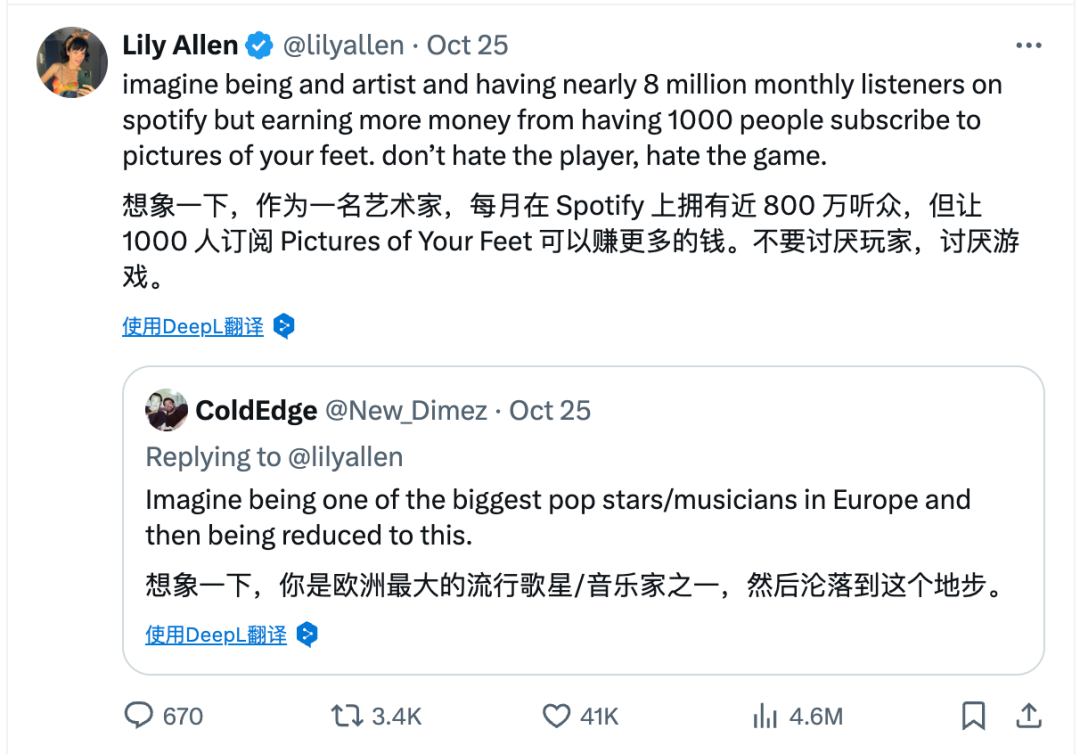
On October 25, 2024, British singer Lily Allen posted a message on X that mixed anger with self-mockery: "imagine being an artist and having nearly 8 million monthly listeners on spotify but earning more money from having 1000 people subscribe to pictures of your feet." She finished with the old saying: "Don't hate the player, hate the game."
The post was a clap-back at a snide comment—"Imagine being one of the biggest pop stars/musicians in Europe and then being reduced to this." Once her reply went up, the tide of public opinion turned quickly: the gossip-fueled schadenfreude receded, and an industry question took the stage—why does a singer with nearly 8 million monthly listeners need to subsidize her living by selling foot pictures?
Two years on, the answer to that question hasn't faded with time. If anything, a string of newer financial reports and industry data keeps confirming it.
A Ledger That Won't Balance
Let's lay the numbers out.
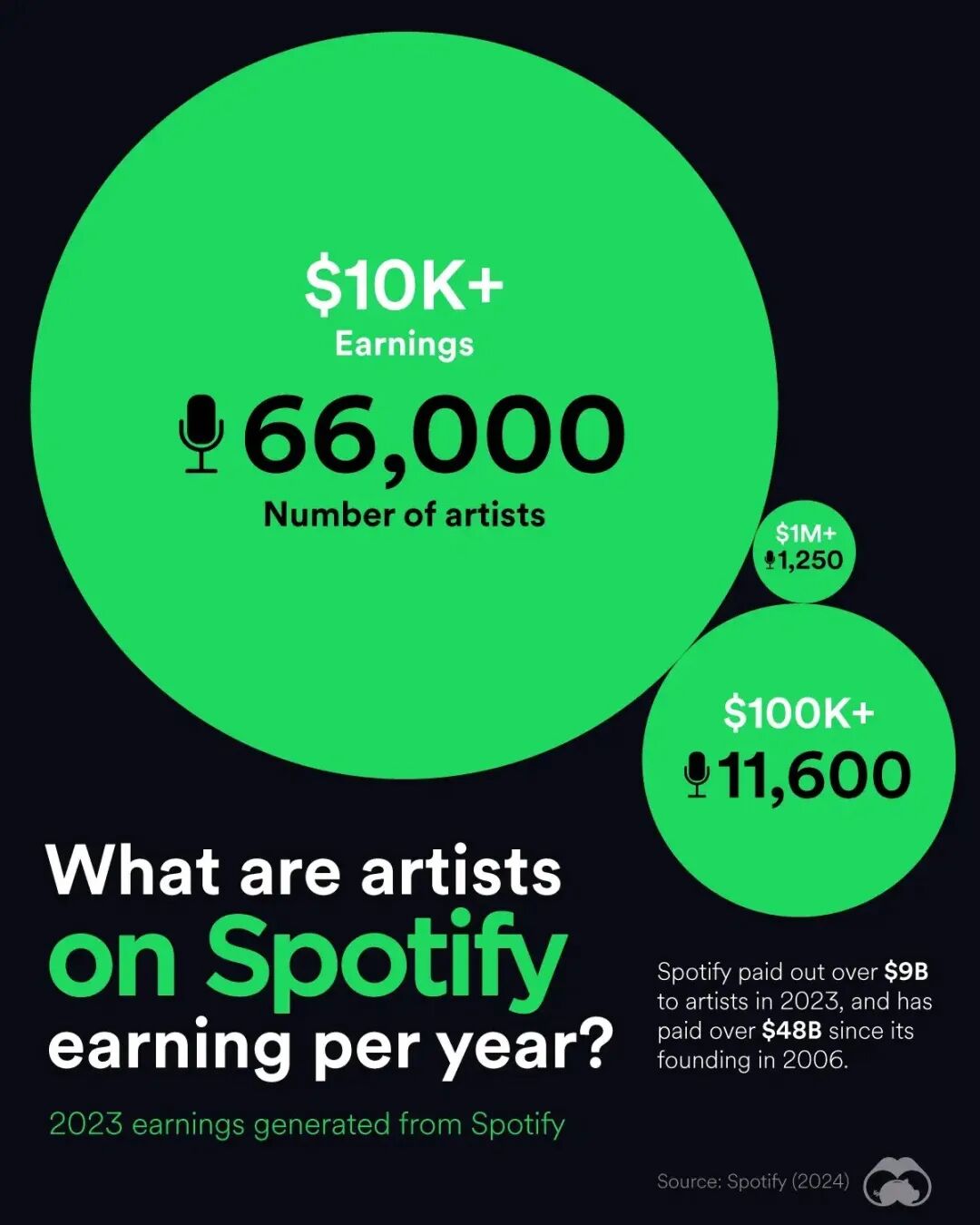
Lily Allen's OnlyFans account costs $10 a month. At the roughly 1,000 subscribers she disclosed, that's about $10,000 a month. For reference: in 2023, only about 66,000 artists earned $10,000 or more in annual royalties from Spotify—while the platform's uploader base had long since crossed into the millions. In other words, what 1,000 subscribers paid her in a month roughly equaled the annual threshold income a musician needed a full year on streaming to reach. (By 2025, Spotify says that threshold population had grown to over 81,000 artists—still a vanishingly small share.)
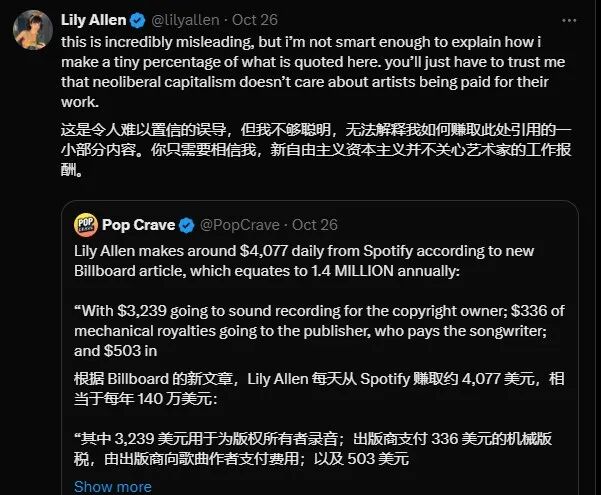
The streaming side of the ledger takes a few more bends to calculate. Billboard once estimated, based on third-party data, that as of October 17, 2024, Lily Allen was averaging about 851,623 daily plays on Spotify; at standard industry royalty-calculator rates, that would mean Spotify paying roughly $4,077 a day to her rights holders—$3,239 in recording royalties, $336 in mechanical royalties, and $503 in performance royalties (Billboard). Lily Allen publicly rejected the estimate as "incredibly misleading" (as the original report recounts)—because before any of that money reaches her account, it passes through the label, the publisher, and the performance rights organizations. What a streaming platform pays is "rights-holder income," not "artist income."
Her rebuttal is actually closer to the truth than Billboard's math. Per Spotify's own Loud & Clear data, streaming has no fixed "per-stream rate": the platform pays two-thirds of music revenue into a royalty pool, which is then divided by "streamshare." In 2025, an artist capturing one in every million Spotify streams generated roughly $11,000 in royalties for the year—and that money lands with rights holders first, then flows to artists according to their individual contracts. For a mid-tier singer with "nearly 8 million monthly listeners," the amount that actually reaches her pocket is separated from the seemingly impressive play counts by several layers of deductions.
That's why "Don't hate the player, hate the game" cuts so sharp: the problem isn't any one artist's decline or downfall—it's the distribution structure itself.
Starting From the Feet: A Carefully Packaged Business Experiment
Looking back, Lily Allen's OnlyFans move wasn't an impulse; it was a business experiment with publicity design baked in from the start.
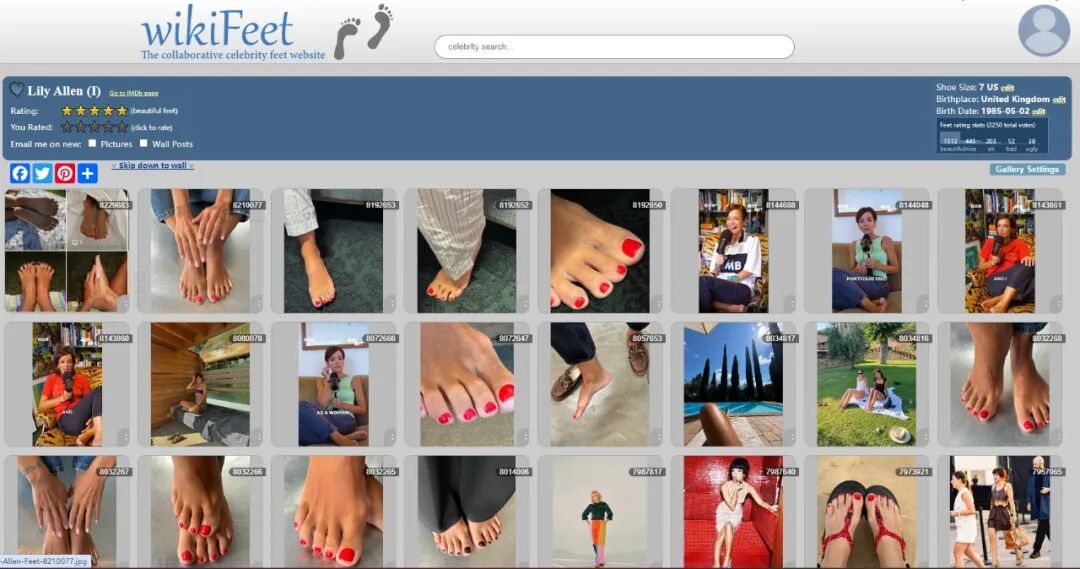
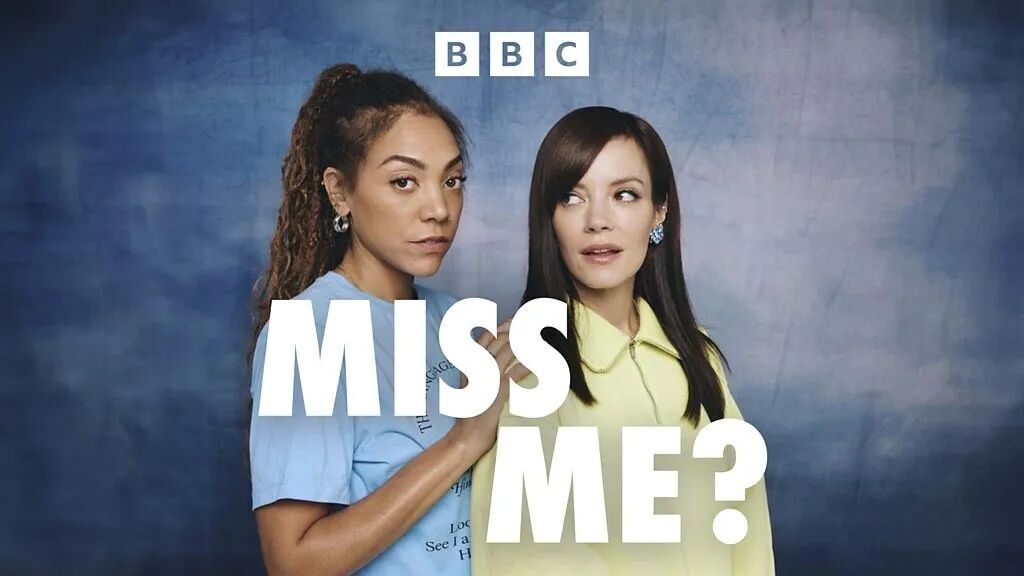
The starting point was her podcast Miss Me? in June 2024. Her manicurist told her that her feet had a rare five-star rating on WikiFeet—a site that collects and rates photos of celebrities' feet—and that "you could make a lot of money from selling foot content on OnlyFans." Allen's reply: "I'm like, 'Not no.'" (Billboard)
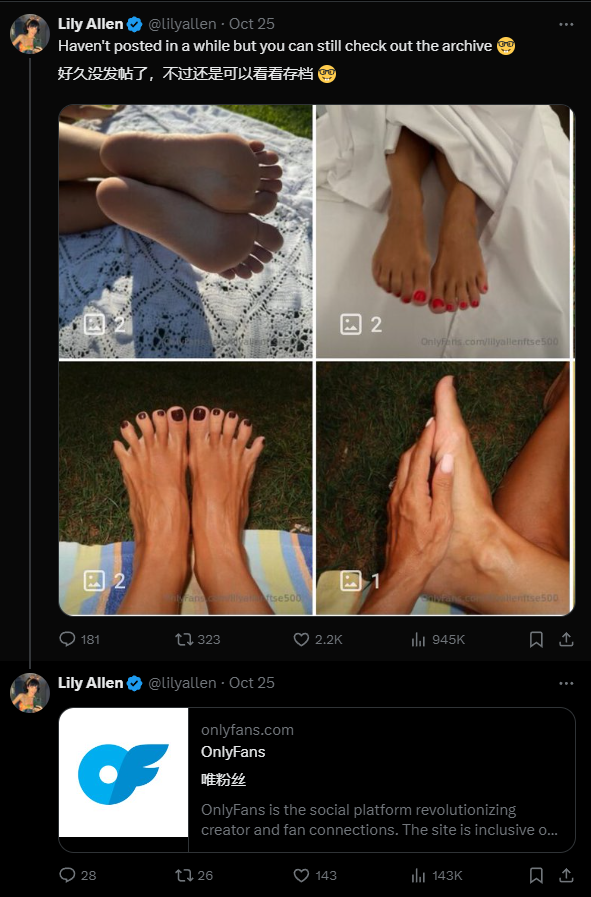
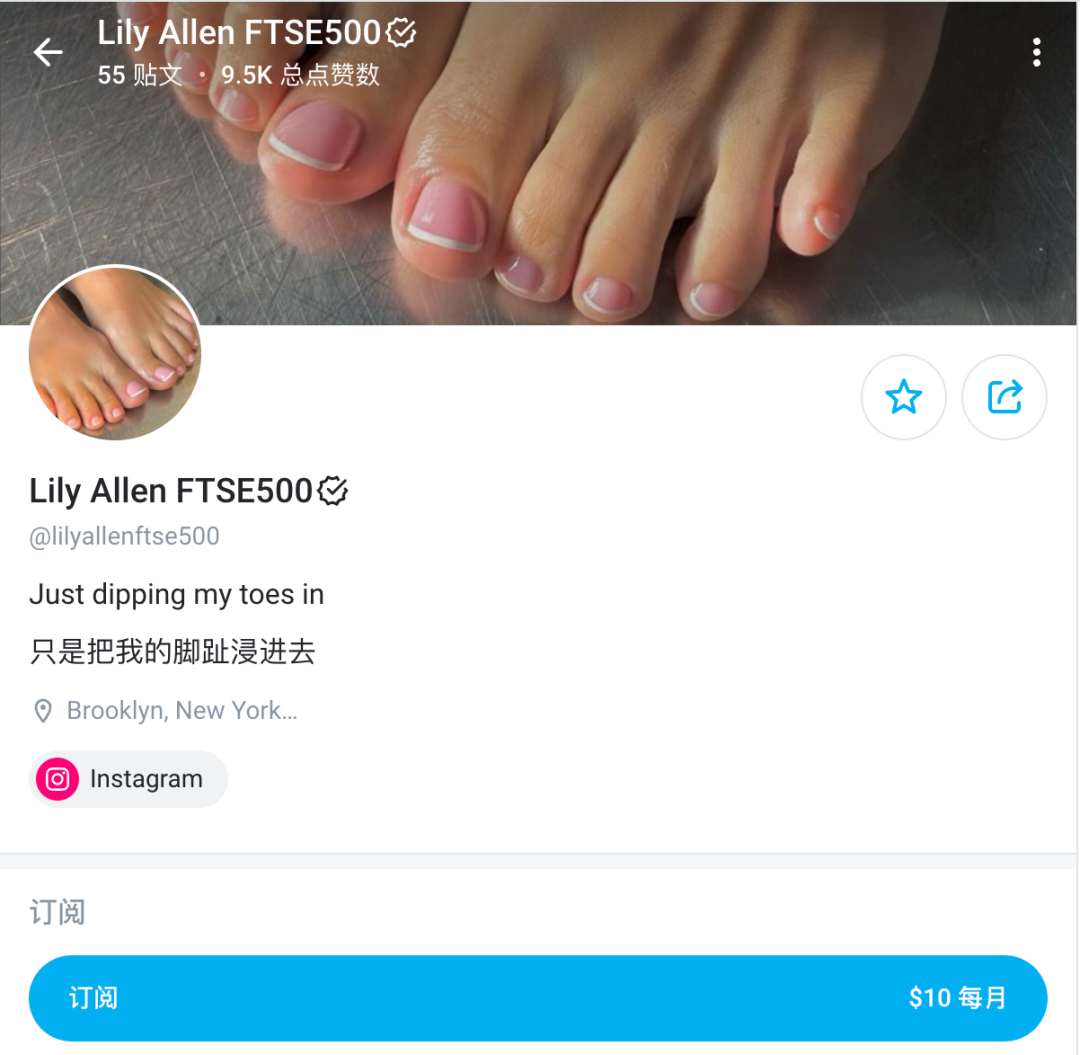
In early July 2024, the account "LilyAllenFTSE500" went live—even the handle was a joke: FTSE 100 is the London Stock Exchange's blue-chip index, and she'd listed her foot content at $10 a month. It launched with just seven posts, from manicure close-ups to shoe shots, the content held firmly inside the "feet" perimeter, deliberately distant from the adult content OnlyFans is best known for. Her husband, Stranger Things star David Harbour, publicly approved: "He thinks it's great."
On the podcast she gave the motive in her own words: she had been over-sexualized since childhood—"people made money off my body while I had almost no control." Now she could finally decide for herself how to monetize her own image—absurd, even farcical, but empowering (as relayed in the original report from her podcast remarks). Selling foot pictures was itself a reversal of the question "who gets to define and sell a woman's body."
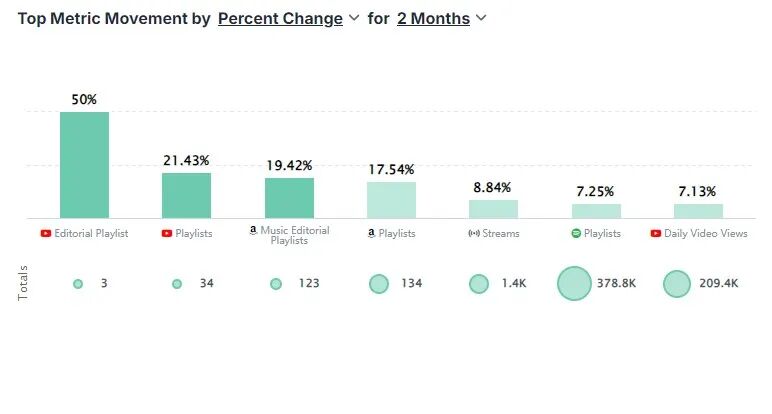
Commercially, the experiment worked too. Per Chartmetric data cited by the original report, after joining OnlyFans, Lily Allen's Spotify numbers rose rather than fell—in the week of August 4–11, 2024, she added roughly 364,100 monthly listeners, a 261.1% jump over her prior weekly growth rate. Controversy was traffic; "going over" became her best comeback promo.
OnlyFans' Ledger: A Company of Dozens Splitting Half the Industry's Pie
The music industry has talked about the "creator economy" for years. The platform that actually made it work is OnlyFans.
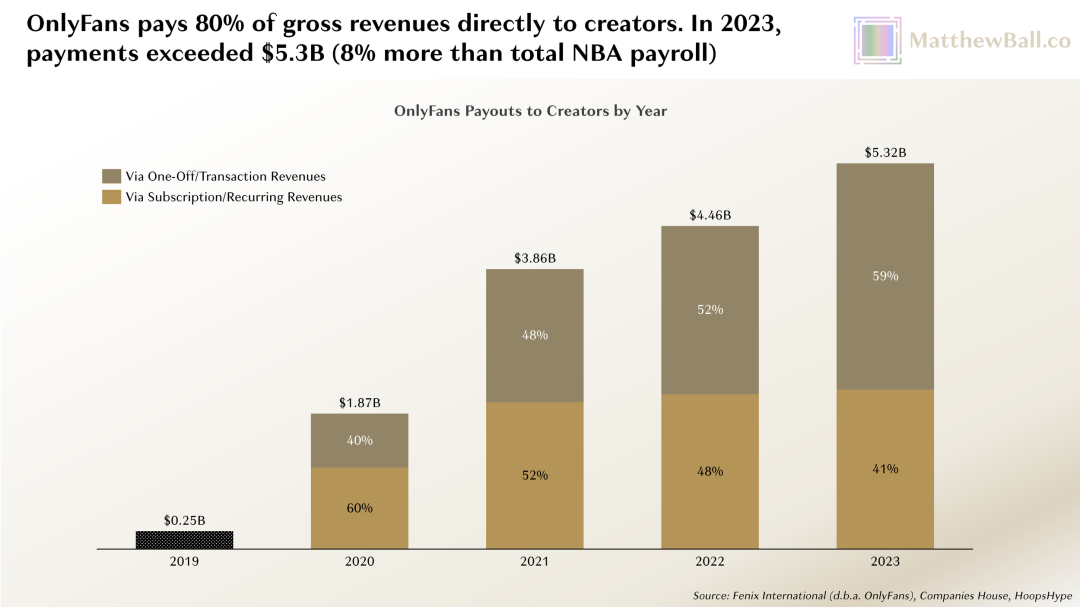
Its structural advantage is written on the surface: by serving users directly through the browser, it bypasses App Store and Google Play payment systems—which take a 15–30% cut and ban adult content—and passes up to 80% of revenue to creators. By contrast, after streaming's two-thirds go into the royalty pool, the money still passes through labels and publishers before the artist sees any.
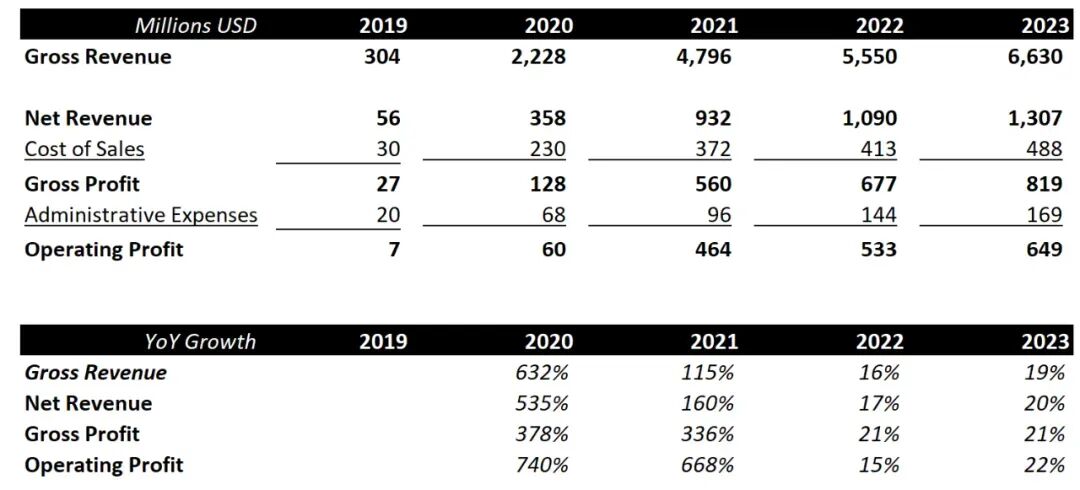
The company's growth curve tells the story even better. In fiscal 2023 (year ended November 30, 2023), OnlyFans booked $6.6 billion in gross revenue and paid creators $5.32 billion (Variety); in fiscal 2024, gross revenue rose 9% to $7.22 billion, with net revenue of $1.41 billion, pre-tax profit of $684 million, $5.8 billion paid to creators, 4.634 million creator accounts, and 377.5 million fan accounts (Variety); in fiscal 2025 (year ended November 30, 2025), net revenue grew another 10% to $1.55 billion, with creator accounts reaching 5 million and fan accounts 437 million (Variety. Note: the Founder Park figures cited in the original report—"2024 revenue of $6.6 billion, up 19%"—are in fact fiscal 2023 numbers; corrected here to the fiscal-report figures.)
A few numbers deserve their own zoom-in. As of 2026, OnlyFans has paid creators more than $25 billion cumulatively, and 5,076 creators have earned over $1 million on the platform. The company's full-time headcount is a few dozen—46 in fiscal 2024, 47 in fiscal 2025 (Variety). The per-capita creator revenue that a few dozen employees leverage is a ratio no record label or streaming platform has ever come close to.
But this money-printing machine went through upheaval in 2026. Owner Leonid Radvinsky died of cancer in March 2026, at 43; his widow Yekaterina Chudnovsky took control (UK Companies House filings show the equity moved into his family's holding entities in May 2026). That same May, the company sold a 16% stake to investment firm Architect Capital for $535 million, valuing it at $3.15 billion (Variety)—notably far below the $8 billion price Radvinsky was reportedly asking while alive. High margin, high cut, heavy reliance on a single founder's personal credit: the capital market applied its own discount.
Management has turned over too. Amrapali Gan, the CEO quoted in the original report, stepped down as early as July 2023 to found the consultancy Hoxton Projects; she was succeeded by chief strategy and operations officer Keily Blair (Variety. The original report identifies Gan as OnlyFans' CEO; corrected here.) Under Blair, the de-stigmatization line is more explicit: she has said publicly that OnlyFans is "not just sexy content," with comedy, combat sports and fitness all expanding, and the all-ages streaming service OFTV, launched in 2021, positioned as a second growth curve.
Not Just Lily Allen: A Roster of Crossovers
Lily Allen isn't an isolated case—she's just the most famous name on a list.
Kate Nash, also from the UK, offered the bluntest version. In late 2024, to fund her own tour, she launched "Butts 4 Tour Buses," selling photos of her backside on OnlyFans, and left behind the widely quoted line: "No need to stream my music, I'm good for the 0.003 of a penny per stream thanks." She also cited industry survey data: travel, lodging and promotion costs for touring had all risen while gig fees stayed flat, making touring a "passion project" for most musicians (Billboard).
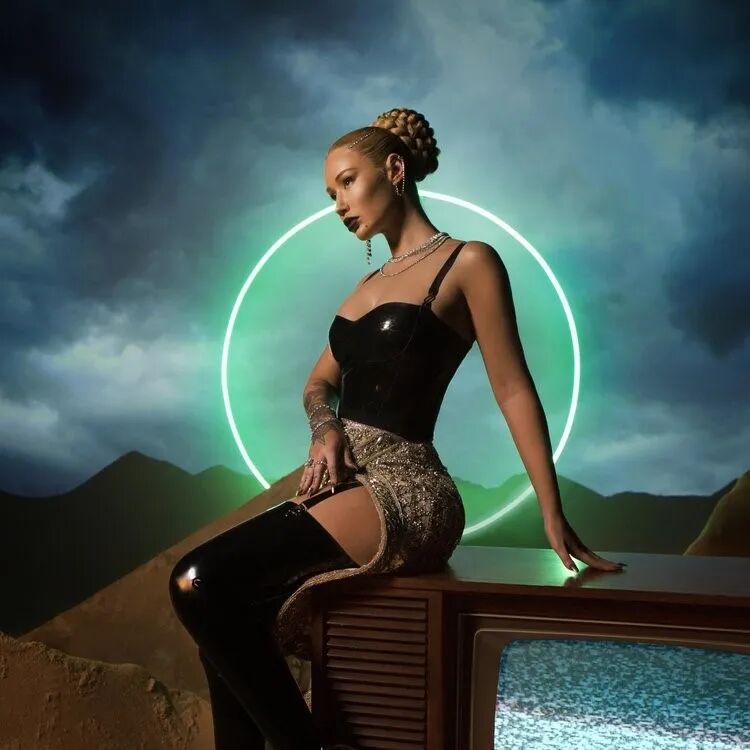
The earlier pathfinder was Australian rapper Iggy Azalea. In January 2023, she moved her entire year-long multimedia project "Hotter Than Hell" onto OnlyFans: a $25-a-month subscription bundled with her fourth studio album, photo collections and a coffee-table book. In interviews she was frank: "I made record labels so much money off my body… and I got the smallest cut." As for earnings, she would only say, "I'm making so much money that I won't say how much it is"—the circulating "$9 million a month" figure was never confirmed, and she publicly denied media-guessed numbers (Billboard. The original report's "monthly income of $9 million" has no reliable source; corrected here as an unverified rumor.)
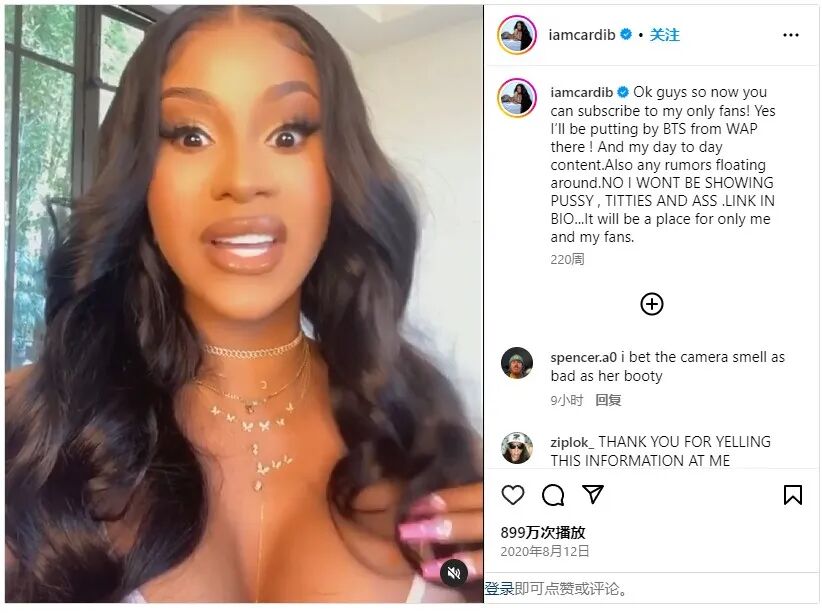
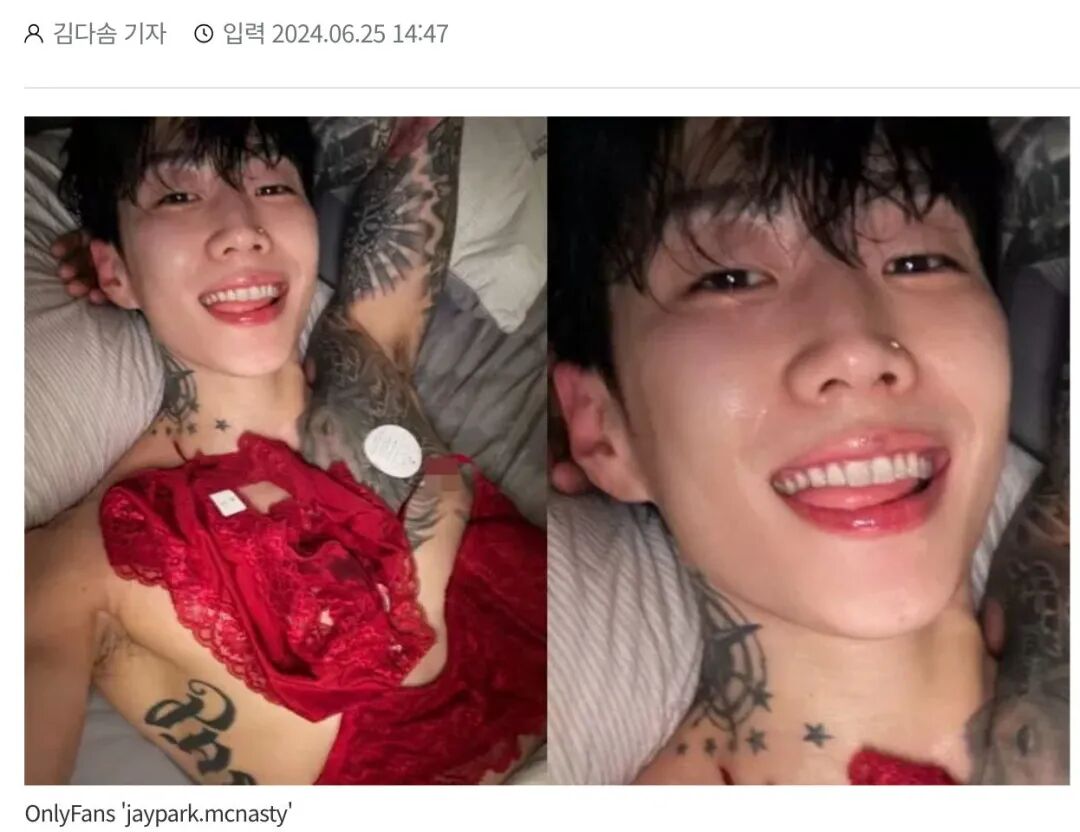
Rapper Cardi B joined OnlyFans back in August 2020, using it to post WAP outtakes and "private stuff" (Billboard; the "roughly $45 million total earnings" figure appears only in unverifiable listicles and is questionable here in the original report). Bella Thorne set the record of $1 million in her first 24 hours as early as 2020 (Billboard). Korean rapper Jay Park also joined OnlyFans in June 2024 to promote his single "McNasty" (per the original report; no authoritative English coverage of this was found).
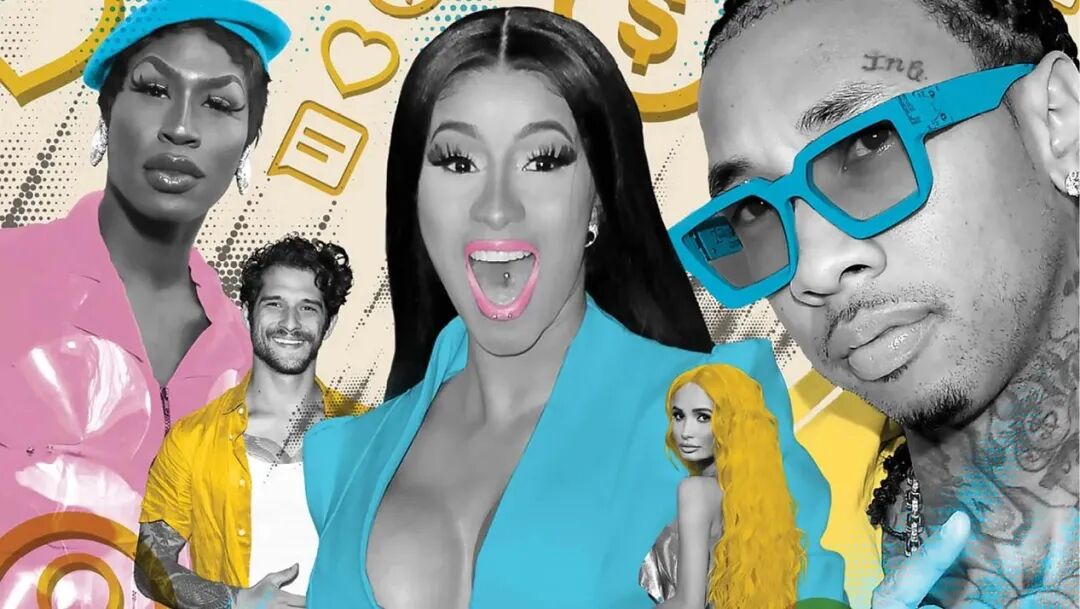
The common thread on this list is clear: those entering are established artists who hardly lacked "exposure." What they sold wasn't content per se, but two scarce things that live outside the content—exclusivity (pay to view) and control (comments hidden from public view, immune to open-court judgment). It's a commercial proof of Kevin Kelly's "1,000 True Fans" theory: a creator doesn't need to please everyone, only to find the small group willing to pay for a closer, denser relationship.
Streaming's Counterattack: Superfans Back on the Price List
The telling twist: after artists voted with their feet, the first to react wasn't the record industry—it was the streaming platforms themselves.
In February 2025, Spotify CEO Daniel Ek confirmed on an earnings call that a subscription product aimed at "superfans" was being tested internally, calling 2025 "the year of accelerated execution." Around the same time, Spotify's renewed licensing agreements with Universal and Warner both explicitly included provisions for "new paid subscription tiers and exclusive content bundles," and Universal partnered with Deezer to explore new "Streaming 2.0" distribution models (Billboard).
In plain language: the streaming platforms have finally admitted that casual listeners and die-hard fans should be priced differently—a higher tier for better audio, exclusive content and closer artist access is precisely the road OnlyFans proved out four years earlier. Lily Allen's X post was less a personal gripe than a product requirement submitted two years early.
That's the most ironic part of the whole affair: the superfans that artists once had to "go over" to monetize are now the next growth story in the streaming giants' own eyes. What the platforms want is the wallet OnlyFans validated. What no streaming platform has promised to match—so far—is the 80% that OnlyFans passes to creators.
Aftermath: She Went Back to the Music
Lily Allen's own story hit a low stretch after the foot-pic era.
In early 2025 she admitted on her podcast that she was "really not in a good place," spiraling; that same year, she and David Harbour ended their four-year marriage (Billboard). For a time, "selling foot pics" was read as a footnote to the marriage and the era.
But the 2026 news took the aftermath in another direction: she went back to the music itself. She announced a new album and launched a solo tour—deliberately downsizing her US dates from arenas to theaters and small venues, making it "the least populous pop tour of the year," a self-deprecating one-woman show (Variety). In summer 2026 she played Norway's Øya Festival and was named a 2026 O2 Silver Clef honoree (Variety).
Seen from that ending, OnlyFans was less a career change for Lily Allen than a strike: she used the most mainstream-nerves-grating method available to put the absurdity of the mid-tier artist's streaming income on the table, earned her negotiating chips along the way, and took those chips back to the music. The foot pics were the means; the ledger was the subject.
Conclusion: The Game Is, in Fact, Changing
"Don't hate the player, hate the game."—what people forget about the saying is the second half: if it's a game, the rules can be rewritten.
In two years, the ledger has been updated: OnlyFans' cumulative payouts to creators have passed $25 billion, and its rule of splitting 80% straight to creators still hangs over streaming's head; the streaming platforms are lining up to test "superfan" paid tiers, trying to co-opt with OnlyFans-proven logic the wallets OnlyFans proved; and the protagonist of the story, Lily Allen, has used the leverage she banked selling foot pictures to return to where she actually wants to be—on stage.
The relationship between artists and fans has never changed: a few will pay for closer distance; most just want to pass by for free. What changes is who takes that money, and at what ratio. OnlyFans' answer is blunt and, so far, unmatched—80% to the creator. Streaming's answer is still sitting on a product roadmap.
Until that roadmap ships, the next "foot pic" can appear at any moment on the timeline of any artist with a few million monthly listeners. Don't be surprised—the ledger is speaking.
Sources
- 音乐先声 (Music First Sound): 《当一位有800万听众的歌手决定“下海”OnlyFans》 (original article, in Chinese)
- Billboard: Lily Allen Says She Earns More Money From Selling Feet Pictures Than Spotify Streams
- Billboard: Lily Allen Joins OnlyFans to Sell Feet Pictures
- Billboard: Lily Allen & David Harbour Separate After 4 Years of Marriage: Report
- Billboard: Kate Nash Launches 'Butts 4 Tour Buses' OnlyFans Campaign to Fund Tour
- Billboard: Iggy Azalea Kicks-Off 'Hotter Than Hell' Era With Launch of OnlyFans Profile
- Billboard: Iggy Azalea Will Not Be Apologizing for Making Money Off OnlyFans Photos
- Billboard: Cardi B Joins OnlyFans, So That's Where You'll Find 'WAP' Outtakes and 'Private Stuff'
- Billboard: Bella Thorne Is the First Person to Earn $1 Million on Her First Day on OnlyFans
- Billboard: Superfan Streaming Is Getting Closer to Being a Reality
- Variety: Lily Allen Says Her OnlyFans Feet Pictures Make More Money Than Spotify Streams
- Variety: OnlyFans Payments Surged to Record $6.6 Billion in 2023, up 19%
- Variety: OnlyFans Gross Revenue Rises 9% to $7.2 Billion in 2024
- Variety: OnlyFans Valued at $3.15 Billion in Deal to Sell Minority Stake to Architect Capital
- Variety: OnlyFans Millionaires: Site Says 5,076 Creators Have Earned More Than $1 Million to Date
- Variety: OnlyFans Names Keily Blair New CEO
- Variety: Lily Allen's One-Woman Show Is the Least Populous Pop Tour of the Year
- Variety: Lily Allen, Sam Fender… Revealed as First Honorees of 2026 O2 Silver Clef Awards
- Spotify Loud & Clear (updated March 2026, 2025 royalty data)
- UK Companies House: Fenix International Limited (company filings)