
Wall Street Wants Your Old Songs: What Duetti's $665 Million Says About the Financialization of Indie Catalogs
Updated:
On November 17, 2026, a four-year-old New York company called Duetti announced that it had lined up another $665 million. That is a lot of money for a business whose inventory consists largely of songs most people have never heard of: tracks by independent rappers, bedroom producers, and country singer-songwriters whose royalty statements run to a few thousand dollars a year. According to Digital Music News, the new money lifts Duetti's total capital raised to at least $1.3 billion.
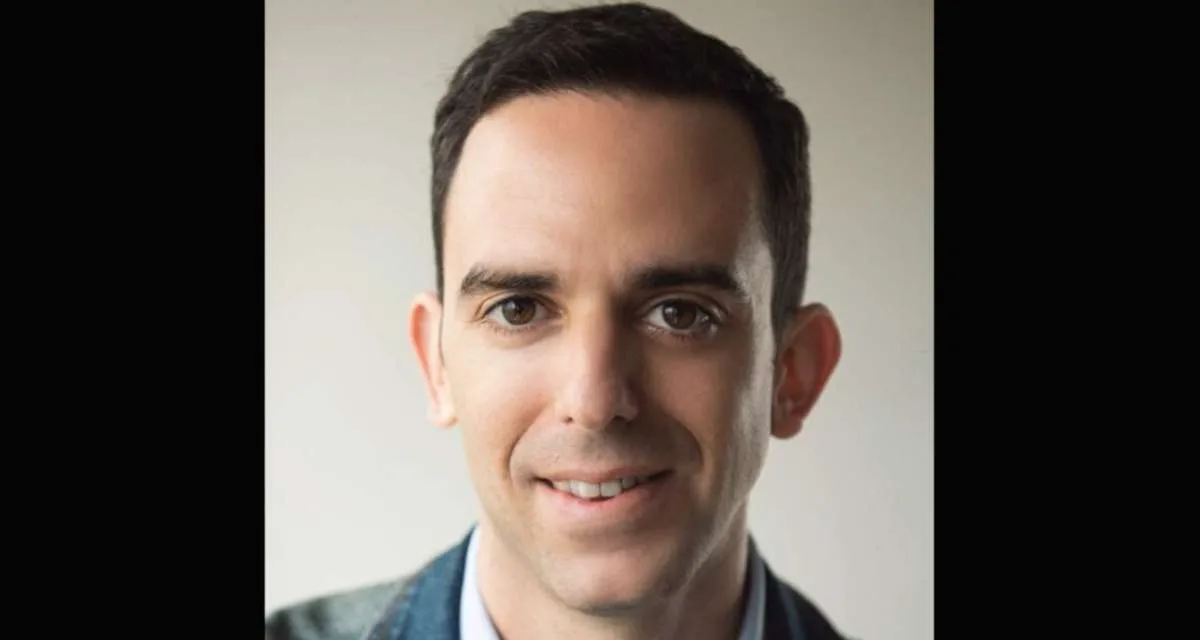
Duetti co-founder and CEO Lior Tibon. Photo: Duetti
The headline number is less interesting than the question behind it. Why are some of the largest pools of institutional capital in the world, including insurance money and private credit funds, willing to lend against the back catalogs of artists without platinum plaques? The short answer is that streaming has turned even small catalogs into something that looks, to a credit analyst, like a predictable stream of cash. The longer answer involves a 1997 David Bowie bond, a listed fund that lost half its market value, and a set of assumptions about streaming growth that are now being tested.
Earlier pieces on this site covered how DistroKid and Kobalt are trying to collect the publishing money independent songwriters leave on the table, and how Sony Music's record quarter leaned in part on the steady earnings of older recordings. This piece looks at the next step in that chain: what happens when those royalty streams are bought, pooled, and turned into bonds.
The Deal, in Three Pieces
The $665 million is not a single check. Per the company's announcement as reported by Digital Music News, it breaks down as follows:
| Component | Amount | Provider |
|---|---|---|
| Asset-backed securitization (ABS) | $450 million | "Anchored by" Carlyle |
| Additional credit capacity | $165 million | Viola Credit (an existing lender) |
| "Side facility" | $50 million | Flexpoint Ford and Truist Bank |
The ABS is the core of the deal. In a securitization, a company places a pool of income-producing assets, here the royalty rights Duetti has bought, into a separate legal vehicle, which then issues notes to investors. The notes are repaid from the royalties the songs generate. Investors are lending against the music, not against Duetti's balance sheet.
This is Duetti's third such transaction. The first, an $80 million deal in late 2024, was advised by DLA Piper and, according to 9fin, structured and placed by Barclays. The second, a $125 million private deal completed in October 2025, was disclosed in January 2026 as part of a $200 million package that also included a $50 million Series C equity round led by Raine Partners. 9fin reported that buyers of that second deal included asset managers investing insurance capital. CEO Lior Tibon, a former Tidal executive, said the new deal is "more than five times the size" of the first. On these figures, ABS issuance has grown from $80 million to $125 million to $450 million in roughly two years.
One caveat on sourcing: at the time of writing, the $665 million figure, the Carlyle anchor, and the facility breakdown come from Duetti's own announcement as relayed by Digital Music News. I could not find an independent filing or a second trade report confirming the terms. Public coverage of Carlyle's securitization business has centered on aircraft leasing, so an anchor role in a music-royalty ABS would be a notable step for the firm if the reported terms hold (this is the author's reading of available coverage).
What Duetti Actually Buys
Duetti's pitch to artists is simple: sell some of your future royalties for cash now. On its website, the company says it buys "masters, publishing and royalty rights," and that a deal can cover "a single track, a full catalog, or a % of a song." It says more than 70% of its deals are for a single track or a partial catalog, that most close within 60 days, and that its contracts carry "no recoupment, matching rights or other lock-ins." It also markets the songs it buys, at its own cost.
The scale is broad and shallow. When DLA Piper announced the first ABS in 2024, it described deals ranging from $10,000 to $3 million per artist. By January 2026, Duetti said it had worked with more than 1,100 artists, songwriters, and creators in over 40 countries and was signing more than 80 deals a month, with over 30% of 2025 deals coming from outside the US (FinTech Global). With the November announcement, the count rose to more than 1,600 catalog investments covering interests in over 50,000 masters and compositions. Named rights holders include Drake producer Bnyx, Odd Future co-founder Casey Veggies, and "Leave Me Alone" rapper Flipp Dinero.
That breadth is the business model. A single indie track is a risky asset: one song can go viral and then fade within a year. Thousands of tracks across genres and countries behave more like a portfolio, and portfolio-level statistics are what make a securitization possible. Tibon framed it in exactly those terms in January, arguing that traditional labels and buyout funds cannot "keep pace" with the growth of independent music, and that Duetti is building "proprietary databases and systems to identify, predict, and effectively manage" those catalogs.
From Bowie Bonds to Concord: Songs as Collateral
Turning royalties into bonds is not new. The template is usually traced to 1997, when banker David Pullman structured the "Bowie Bonds." According to the Wikipedia summary of celebrity bonds, Prudential Insurance paid $55 million for ten-year notes backed by income from 25 albums (287 songs) David Bowie recorded before 1990, with a 7.9% coupon at a time when 10-year Treasuries yielded about 6.37%. The deal also showed the risk. As piracy and falling CD sales cut recorded-music revenue, Moody's downgraded the bonds from A3 to Baa3, one notch above junk, in 2004. They were still paid off on schedule in 2007, and the rights reverted to Bowie.
For about two decades after that, music securitization stayed a niche. Streaming changed it by making royalty income steadier and easier to model. The biggest example is Concord: in late 2022 it priced roughly $1.8 billion of notes backed by more than a million copyrights, in a deal anchored by Apollo (Music Business Worldwide). In July 2025 Concord refinanced with a $1.765 billion ABS (Business Wire).
Duetti differs from these predecessors in one important way. Bowie Bonds were backed by one superstar catalog, and Concord's collateral is dominated by established songs. 9fin noted that Duetti's pools contain master recordings from hundreds of independent artists rather than the superstar catalogs typical of public music ABS. Investors are being asked to price a different kind of risk: many small, young assets instead of a few large, proven ones.
How a Catalog Gets a Price
Most catalog valuations start from the same formula: take a catalog's annual net royalty income and multiply it. A widely used illustration is a catalog earning $100,000 a year selling for around $1.5 million, a multiple of 15 (RouteNote). Behind the multiple is a discounted-cash-flow model. A buyer estimates how royalties will decay or grow over time, then discounts those future payments back to today.
Two inputs dominate that model.
Interest rates. The discount rate tracks broader borrowing costs. When rates were near zero in 2020 and 2021, a steady royalty stream looked attractive next to bonds paying almost nothing, and catalog prices rose. When rates climbed in 2022 and 2023, the same royalties were worth less in present-value terms and government bonds became a real alternative. Fortune summarized exactly this mechanism in its October 2023 coverage of Hipgnosis. Shot Tower Capital, a catalog adviser, put typical publishing multiples at about 16.1x net publisher's share in 2024, down from 16.7x in 2023, and described them as "slightly declining but stable" (summary via Vinyl Me, Please). Shot Tower sells advice into this market, so those figures are best read as an industry estimate.
The decay curve. A song typically earns most in its first months and then declines, though the slope varies. Older hits that have survived decades decay slowly; new indie tracks can drop off sharply. This is where Duetti's data claims matter. Buyers of small catalogs now look less at fame and more at streaming consistency, audience retention, and geographic spread. In a May 2026 Hypebot guest post, Matt Caprio, a producer and founder of the catalog-buying service SongCash, wrote that some buyers now consider catalogs earning "as little as approximately $5,000 annually," and songs as young as 18 months. Caprio runs a competing buyer, so his piece describes the market from the purchaser's side.
The Cautionary Tale: Hipgnosis
The clearest warning about catalog valuations comes from the most visible buyer of the last boom. Hipgnosis Songs Fund, launched in London in 2018 by Merck Mercuriadis and Nile Rodgers, raised over $1 billion from public investors and bought rights in catalogs including those of Shakira and Justin Bieber near the peak of the market.
Writer Ted Gioia flagged the problem early. In a September 2022 essay, he argued that the valuation models behind the boom were flawed because "songs are a depleting asset, much like oil in the ground," and that Hipgnosis's roughly $600 million of debt left it exposed as rates rose.
What followed largely confirmed that diagnosis. By October 2023, Hipgnosis shares traded at roughly half of its reported net asset value. Its valuer had sharply cut historical royalty estimates, and the fund cancelled a planned dividend. Shareholders then voted against continuing the fund and blocked a $440 million sale of 29 catalogs to a Blackstone-backed vehicle, arguing the price was too low (Fortune). In March 2024, a new valuation from Shot Tower cut the portfolio's value by about 26%, or roughly $690 million (Billboard). Blackstone ultimately took the fund private for about $1.58 billion, completing the deal in July 2024 after outbidding Concord (Music Business Worldwide).
The lesson is not that the songs stopped earning money. Most of them kept earning. The lesson is that small changes in two assumptions, the discount rate and the decay curve, can move a catalog's valuation by hundreds of millions of dollars, and leverage makes those swings more painful.
What It Means for an Independent Artist
For an artist, a catalog sale converts uncertain future income into certain present cash. That can be a rational trade. Money now can pay for a new record, a tour, or marketing, or clear expensive debt. It can also let an artist stay independent rather than sign a label deal on worse terms. Duetti's structure, where artists can sell a single track or a percentage and keep the rest, makes the trade less all-or-nothing than a traditional catalog buyout.
The cost is just as real. Whatever the buyer pays, it expects to earn more over the life of the asset, otherwise the deal would not make sense for it or its bondholders. An artist who sells a song that later finds a second life through a sync placement, a TikTok trend, or a cover gives that upside to the buyer. The artist also gives up a long-term income stream that might have covered lean years later in a career.
Three practical points follow (the author's synthesis of the sources above):
- The price depends on assumptions the artist rarely sees. A buyer's offer reflects its own discount rate and decay curve. Artists generally cannot see those models, and multiples for small indie catalogs are not publicly reported, so it is hard to tell whether an offer is fair.
- Partial sales reduce the risk of selling at the bottom. Selling 50% of a track, or one track out of a catalog, leaves the artist some exposure if the song outperforms.
- Terms matter as much as the headline number. Duetti says its deals have no recoupment or matching rights. Other buyers and royalty-advance lenders use different structures, and an advance that must be recouped is closer to a loan than a sale. Artists comparing offers need to compare the full contract, not just the upfront figure.
The Limits of the Model
Duetti's growth rests on a few assumptions that deserve scrutiny.
Streaming growth is slowing. Every catalog valuation assumes some trajectory for streaming revenue. In June 2025, Goldman Sachs cut its forecasts in its annual Music in the Air report, noting that recorded-music revenue grew only 4.8% in 2024 and lowering its 2025–2030 compound annual growth estimate to 6.8% (Music Business Worldwide). Slower growth does not break the model, but it compresses the upside that justified high multiples during the boom.
Leverage cuts both ways. Securitization lets Duetti buy far more catalog than its equity alone would allow. Bondholders are paid first, so if royalties underperform, the equity, and Duetti's ability to keep buying, absorbs the loss. Hipgnosis showed how quickly a leveraged catalog owner can lose room to maneuver when valuations fall.
Small catalogs are harder to model. Diversification across thousands of tracks smooths out individual hits and misses. It does not protect against a shift that hits the whole independent sector at once, such as a change in how streaming services pay out for low-volume tracks, a platform crackdown on AI-generated or spam uploads, or a broad fall in rates paid per stream. These risks are the author's inference, not issues Duetti has disclosed.
Concentration of ownership. As specialist buyers acquire more independent catalogs, a growing share of the money from independent music flows to investors rather than the people who made it. Raine partner Joe Puthenveetil argues the opposite, saying Duetti has "democratized the industry by enabling artists at every stage of their careers to monetize their rights" (FinTech Global). Both descriptions can be true at once.
The Bottom Line
Duetti's $665 million round is a sign of how far royalty financing has moved down market. A technique that began with one superstar's back catalog in 1997 now funds the purchase of single tracks from artists earning a few thousand dollars a year. Institutional investors are buying because, in a pool large enough, streaming royalties behave like a reasonably predictable cash flow.
That predictability has limits. Hipgnosis showed that rates and decay assumptions can move valuations quickly, and streaming growth is no longer the steady tailwind it was. For independent artists, the new liquidity is a real option that did not exist a decade ago. It is also a trade-off with a price on it, set by a buyer whose model the artist will probably never see.
Sources
- Original article: Dylan Smith, "Duetti Scores $665 Million in ABS and Credit Funding, Intends to 'Significantly Accelerate' Its Investments as Total Capital Raised Tops $1.3 Billion," Digital Music News, November 17, 2026 — https://www.digitalmusicnews.com/2026/11/17/duetti-funding-november-2026/
- Duetti, company website (deal terms) — https://www.duetti.co/
- DLA Piper, "DLA Piper advises music platform Duetti in US$80 million ABS issuance," November 2024 — https://www.dlapiper.com/en-us/news/2024/11/dla-piper-advises-music-platform-duetti-in-us$80-million-abs-issuance
- 9fin, Duetti's second private music-royalty ABS — https://www.9fin.com/insights/duetti-second-private-abs-music-royalties
- FinTech Global, "Duetti secures $200m to scale independent music catalog deals," January 21, 2026 — https://fintech.global/2026/01/21/duetti-secures-200m-to-scale-independent-music-catalog-deals/
- Wikipedia, "Celebrity bond" (Bowie Bonds) — https://en.wikipedia.org/wiki/Celebrity_bond
- Music Business Worldwide, "Concord prices $1.8bn bond offering backed by over 1m music copyrights" — https://www.musicbusinessworldwide.com/concord-prices-1-8bn-bond-offering-backed-by-over-1m-music-copyrights
- Business Wire, "Concord Closes $1.765 Billion ABS to Fuel Continued Growth," July 2025 — https://www.businesswire.com/news/home/20250722826534/en/Concord-Closes-%241.765-Billion-ABS-to-Fuel-Continued-Growth
- RouteNote, "How much is my music catalog worth? A guide for independent artists" — https://routenote.com/radar/how-much-is-my-music-catalog-worth-a-guide-for-independent-artists/
- Shot Tower Capital multiples, via Vinyl Me, Please — https://vinylmeplease.com/ko/blogs/%EC%82%B0%EC%97%85-%EB%89%B4%EC%8A%A4/music-catalog-market-to-remain-resilient-despite-slowing-growth-says-shot-tower-capital
- Matt Caprio, "You Don't Need to Be Famous to Sell Your Music Catalog Anymore," Hypebot, May 19, 2026 — https://www.hypebot.com/hypebot/2026/05/you-dont-need-to-be-famous-to-sell-your-music-catalog-anymore.html
- Ted Gioia, "The Buying Mania for Old Songs Has Come to a Sudden and Ugly End," The Honest Broker, September 12, 2022 — https://www.honest-broker.com/p/the-buying-mania-for-old-songs-has
- Ryan Hogg, Hipgnosis shareholder revolt, Fortune, October 27, 2023 — https://fortune.com/2023/10/27/beyonce-justin-bieber-music-hipgnosis
- Billboard, Hipgnosis portfolio valuation cut, March 2024 — https://ca.billboard.com/business/business-news/hipgnosis-songs-portfolio-value-fund-valuation-1235621213
- Music Business Worldwide, "Blackstone's Hipgnosis Songs Fund is no longer a publicly traded company" — https://www.musicbusinessworldwide.com/hipgnosis-songs-fund-is-no-longer-a-publicly-traded-company/
- Music Business Worldwide, "7 takeaways from Goldman Sachs' new 'Music in the Air' report" — https://www.musicbusinessworldwide.com/emerging-markets-superfans-and-price-rises-7-takeaways-from-goldman-sachs-new-music-in-the-air-report