
Suno's Music Videos Run on a Model Hollywood Is Suing: What Visuals Changes, and What It Risks
Updated:
On November 17, 2026, Suno stopped being only a place where songs come out. Its new tool, Visuals, turns a track from a user's library into lyric videos, album art and short clips whose motion follows the song. The product pitch is simple: "show us what your song looks like." The more interesting detail sits on a separate product page. The video model behind Visuals, called H3 Move, is built on H3 from MiniMax. MiniMax is the Chinese AI company that Disney, NBCUniversal and Warner Bros. Discovery have been suing in a Los Angeles federal court since September 2025.
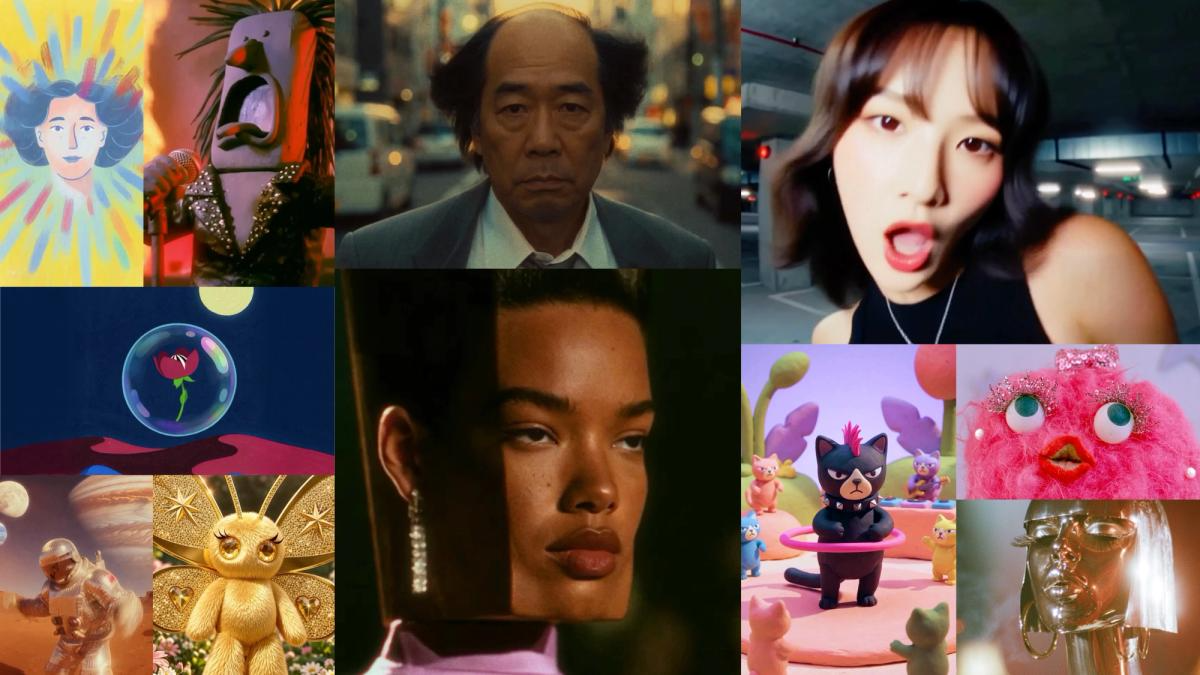
Image: Suno Visuals (via Digital Music News)
Digital Music News, which first reported the MiniMax connection, framed the launch with a question: more litigation? That framing is speculation, not a filed case. Nobody has sued Suno over Visuals. Still, the question deserves a careful answer, because this launch is the first time an AI music company has moved into AI video. It also brings Suno into the area of copyright law where Hollywood studios are already fighting. This piece covers what the tool does, where its model comes from, why the studios' cases matter, and what all of it means for the people who make music videos.
Earlier pieces on this site covered Suno Bridge linking Suno to DAWs like Ableton Live, MIDI input on Suno's Create page, and an ad agency's TVC pipeline that paired Opus 5.5 with Suno. All three were about Suno getting deeper into music production. Visuals goes in another direction, outward from audio into images and video.
What Visuals Actually Does
According to Suno's launch post, written by Chief Product Officer Jack Brody, and the Visuals product page, the tool covers four kinds of output:
- Lyric videos synced to the beat, with custom fonts and colors;
- Lip-sync videos, in which a character mouths the song's lyrics;
- Short video clips generated from a text prompt or from an uploaded photo;
- Still images, including album art.
The workflow starts from music rather than from a blank prompt box. A user drags a song from their Suno library into the Visuals tab. Suno says clips are generated to "follow your song's structure, pick up on your lyrics and lip sync right along with them." Clips run up to 15 seconds and can be extended on a timeline, edited, or re-prompted in plain text. Users who don't want to begin from their own image can choose from a set of Suno-designed original characters, with names like Astronaut, Chrome Diva, Pink Fluff and Disco. Export supports 9:16, 1:1 and 16:9 aspect ratios, so the output is ready for Shorts, Reels or a YouTube upload. There are two quality modes. "Fast" is for quick ideas and costs fewer credits. "Standard" is for "more complex ideas."
On money, Visuals has its own currency. Visual credits are bought separately from song credits, and the cost of a generation depends on the clip length and quality mode chosen. Purchased packs do not expire. For a limited time, Pro and Premier subscribers get a small allotment of Visual credits to try the tool. Neither the launch post nor the product page listed dollar prices at the time of writing.
One factual discrepancy is worth recording. Digital Music News reported that the tool launched on the web, with iOS and Android apps due "in the coming weeks." Suno's own announcement says "we're launching today on web, iOS, and Android." This piece follows Suno's primary statement and notes the conflict.
Under the Hood: A Licensed Engine With a Lawsuit Attached
Suno's launch post says only that "a new generation of models" made video cheap and fast enough for ordinary users. The model's identity is on the product page, not in the announcement. There, Suno says Visuals runs on H3 Move, a model built on MiniMax's H3 that Suno has "optimized for our community including adding additional protections and safeguards." Digital Music News adds that H3 replaced MiniMax's earlier Hailuo video models.
Little official documentation is available for H3 itself. Third-party API resellers and model aggregators such as Apiframe and EvoLink describe it, also under the name "Hailuo 03." By their accounts, it was previewed at the World Artificial Intelligence Conference in Shanghai in July 2026 and generates clips of up to 15 seconds with native audio. Their figures for resolution and frame rate disagree, and this piece could not find a MiniMax primary source confirming them. The one point that lines up across sources is the 15-second ceiling, which matches the clip length Suno advertises.
The choice of partner makes commercial sense. Suno is a music company, not a video lab, and building a competitive video model from scratch would cost enormous amounts of compute and training data. Licensing an existing model and tuning it for music is the faster route, much as Suno has opened its platform to DAWs with Bridge instead of building a full DAW. The catch is in what that licensed model brings with it.
Why the Studios' Cases Matter
The legal background is a campaign, running since mid-2025, by the major film studios against image and video generators. In order:
- June 11, 2025: Disney and Universal sued Midjourney in the U.S. District Court for the Central District of California (Law360 docket). Warner Bros. Discovery filed its own suit against Midjourney in September 2025 (IBC). Midjourney has argued fair use. As of mid-2026, those cases were still in discovery fights over the studios' own AI use (The Art Newspaper).
- September 16, 2025: Disney, NBCUniversal and Warner Bros. Discovery jointly sued MiniMax over Hailuo AI (Engadget). The complaint describes the service's own "Hollywood studio in your pocket" marketing and screenshots of generated Darth Vader, Minions and Wonder Woman imagery. It calls the alleged infringement "willful and brazen."
- February 2026: Disney and Paramount sent cease-and-desist letters to ByteDance over Seedance 2.0. The Motion Picture Association called the tool "a machine built for systemic infringement" (The Decoder; TheWrap). No suit had been filed as of mid-2026.
- May 22, 2026: Judge Stanley Blumenfeld Jr. denied MiniMax's motions to dismiss. He rejected the argument that a U.S. court lacked jurisdiction over the Chinese parent company and allowed both the direct and the contributory infringement claims to proceed (Offit Kurman; ChatGPT Is Eating the World). The order reproduced one of the complaint's sample outputs, showing R2-D2 and C-3PO. Digital Music News reports that the judge found Hailuo could produce "near-perfect" copies of famous characters from simple prompts. This piece could not confirm that exact wording in the order.
So why might Suno be exposed? There are two layers to the question, and they should be kept separate.
The first layer is training. The studios' core claim against MiniMax is that its models were trained on their films without permission. If H3 descends from the same training pipeline as Hailuo, Suno is licensing a model whose origins are the subject of an active case that has already survived dismissal. A licensee is not automatically liable for its supplier's training choices. Still, discovery in the MiniMax case could produce evidence about H3's data that studios later find useful. That is an inference, not a reported fact.
The second layer is output. This is where Suno has clearly prepared. The company says new text and visual filters block prompts and uploads that try to depict specific artists, public figures, copyrighted works or IP. It states openly that "prompts that work on other video platforms may not work on Suno and that's by design." Every generated image or video is screened before the user sees it. Embedded watermarks are applied before anything leaves the platform. The first time a user uploads an image, they must confirm they hold the rights to it. MiniMax was accused of doing close to the opposite: promoting character generation in its own ads and ignoring the studios' requests for safeguards. Contributory infringement claims usually turn on that kind of conduct, and Suno's design looks aimed at avoiding it.
The fair reading, then, is that Visuals carries a real but indirect risk. The model's origins are contested, but Suno's output controls are stricter than those of the company the studios sued. Whether the filters actually hold up against users trying to get around them is something no independent test has yet shown.
A Company Already Fighting on Another Front
Visuals is arriving while Suno is still fighting its main legal battle, which is about music. Warner Music Group settled with Suno in November 2025 and became a licensing partner. Universal Music Group and Sony Music did not. Their 2024 lawsuit is still pending in federal court in Massachusetts. On September 18, 2026, days after Suno released its V6 model (promoted as built with music licensed from Warner, BMG and Believe), UMG and Sony filed a second suit covering 60,202 more recordings. They call V6 "fruit of the same poisoned tree" (Law Commentary). Rights holders of Elvis Presley's catalog have also expanded their own claims against Suno (Music Business Worldwide).
This matters for Visuals in two ways. First, the labels' strongest argument right now is that Suno's licensing deals prove a market for training licenses exists. A video model with contested training data does little to help Suno look like the licensed, compliant company it has been trying to present. Second, the safeguards in Visuals look a lot like a lesson learned on the music side. Audio fingerprinting through Audible Magic, ACRCloud and Musixmatch is still in place, and the new image filters extend the same approach. Suno appears to be trying to show courts and partners that it now acts before it is sued.
What It Means for the People Who Make Music Videos
For independent musicians, the most direct effect is on the cheapest tier of visual content. Lyric videos, looping visualizers, Spotify Canvas-style clips and vertical promo snippets are the kind of material an unsigned artist usually makes alone in a free editor, or pays a freelancer a modest fee for. Visuals compresses that work into the same app where the song was made, with the lyrics already attached. That is a real saving in time, if not always in money.
For a sense of cost, one API reseller's walkthrough of H3 describes a 32-second music video stitched from four 8-second clips, generated with the song as reference audio, for about $4.80 in total (Atlas Cloud). That figure comes from a vendor with an interest in the comparison. It reflects raw API pricing, not Suno's credit prices, which Suno has not published. It still shows the order of magnitude. Clips cost dollars, not the thousands a small professional video shoot usually requires.
Full narrative music videos are a different story. Fifteen-second clips must be chained, re-prompted and edited into a coherent three-minute piece. Keeping characters consistent across shots is a known weak point of current video models. The craft of a music video director is in concept, pacing and editing, and none of that is automated here. The likely near-term shift is that AI handles the lower-budget formats that once went to junior editors and motion designers, while directed work keeps its value as a signal of investment. This is the author's assessment, not a measured trend.
Audiences and artists have also pushed back before. When Washed Out released "The Hardest Part" in May 2024, billed as the first official music video made with OpenAI's Sora and directed by Paul Trillo, it drew strong criticism over training data and replaced labor, including from other musicians (NBC News; PetaPixel). Frontman Ernest Greene later said he hoped the video would advance the conversation (Rolling Stone AU). Two years on, that response remains a useful benchmark. Visibly AI-generated visuals can still cost an artist credibility with part of their audience, regardless of how cheap they were to make.
How Visuals Compares With General-Purpose Video Models
Musicians did not need Suno to make AI music videos. General video models have been offering the same capability for most of 2026:
- Kling 3.0 (Kuaishou) generates up to 15-second shots with native audio and multi-shot cuts. Third-party testers report that it handles gentle singing reasonably well but struggles with rap and operatic vocals, and that background music reduces lip-sync accuracy, a real limitation for music videos (flowith FAQ).
- Seedance 2.0 (ByteDance) became the most popular, and most legally contested, of these tools after the studio letters in February.
- Gemini Omni (Google DeepMind), announced at I/O 2026, creates video from mixed inputs and is rolling out free inside YouTube Shorts and the YouTube Create app. Google says only voice references are supported as audio input at launch, with other audio types "soon." Every output carries an invisible SynthID watermark (Google).
Against these, Suno's advantage is not raw image quality. No independent comparison exists yet, and its underlying model is licensed rather than built in-house. Its advantage is placement. The song is already in Suno, so the music video is one tab away, and the model was tuned to take audio as its main input instead of a text prompt. The trade-off is the filter policy. A general video tool might let a user pastiche a famous film, but Suno says it will refuse by design. For a working musician that can be a creative limitation. It also protects them, because the risk of publishing a video that infringes someone else's IP shifts away from the artist.
Limits and Open Questions
Several points should temper any strong conclusion.
Quality is untested. At the time of writing, no independent hands-on review of Visuals had been published. The descriptions above come from Suno's own materials. Common failure modes of AI music videos, such as distorted hands, inconsistent faces between clips and arbitrary camera moves, are well documented for comparable tools, and there is no evidence yet on whether H3 Move avoids them.
Sameness is a design risk. A shared set of preset characters, prompt templates and a single underlying model means many users will produce videos that look alike. That suits quick social posts but works against a visual identity, which is the whole point of a music video for an artist trying to stand out.
The legal outcome is open. The DMN headline asks whether more litigation is coming. Today the honest answer is that the risk is plausible but no suit exists. The MiniMax case is in discovery and could settle, narrow or go to trial. Any claim against Suno itself would need to deal with the safeguards described above.
Pricing is unknown. Without published credit prices, it is not yet possible to compare Visuals' cost with competitors' API rates.
Conclusion: Sound Was the Easy Part
Visuals marks the point where Suno stopped being only an audio company. It is betting that the people who make songs on its platform want the whole release package, meaning track, art and video, from one place. That bet is commercially sensible, and the music-first workflow is a real differentiator against general video tools.
It also brings Suno into a new set of legal problems while the old ones are still unresolved. The film studios have already shown, in the Midjourney and MiniMax cases, that they will sue AI image and video companies. Suno chose a licensed model from one of their defendants and surrounded it with stricter guardrails than that defendant used. Whether that combination looks responsible or reckless will depend on evidence that does not yet exist, including discovery in the MiniMax case, independent tests of the filters, and the first real music videos users make with the tool.
Sources
- Digital Music News, Ashley King: Suno Launches 'Visuals' for Music Videos—More Litigation? (original article)
- Suno: Introducing Visuals (launch post: features, filters, watermarks, availability)
- Suno: Visuals product page (H3 Move on MiniMax H3, credit system, Pro/Premier allotment, export formats)
- Engadget: Disney, Warner Bros. Discovery and Universal file joint lawsuit against generative AI app Hailuo (MiniMax complaint, September 2025)
- Offit Kurman: AI copyright lawsuit: MiniMax, Hailuo and the studios (May 22, 2026 dismissal denial)
- ChatGPT Is Eating the World: Judge Blumenfeld rejects motions to dismiss in Hailuo AI case (order details)
- Loeb & Loeb: Disney Enterprises Inc. v. MiniMax (case analysis cited by DMN)
- Law360: Disney/Universal v. Midjourney docket (filed June 11, 2025)
- IBC: Warner Bros. Discovery sues AI platform Midjourney
- The Art Newspaper: Midjourney demands Hollywood AI secrets (discovery status)
- The Decoder: MPA calls Seedance 2.0 a machine built for systemic infringement
- TheWrap: Disney hits ByteDance with cease-and-desist over Seedance
- Law Commentary: UMG, Sony hit Suno with new copyright lawsuit days after AI model launch
- Music Business Worldwide: Elvis Presley rightsholders amend Suno lawsuit
- Apiframe: Hailuo 03 API and EvoLink: Hailuo 3 release date (third-party H3 descriptions; not MiniMax primary sources)
- Atlas Cloud: MiniMax H3 music video (vendor cost example)
- flowith: Kling 3.0 FAQ: lip sync, audio, 4K
- Google: Introducing Gemini Omni
- NBC News: Indie artist Washed Out uses AI to generate full music video
- PetaPixel: Musician sparks debate after releasing AI-generated music video
- Rolling Stone AU: Washed Out on the AI video backlash