
Twice in a Year: Why AI Music Keeps Reaching No. 1 Through Gospel
Updated:
In late November 2025, an AI-generated gospel persona called Solomon Ray topped Apple's iTunes Christian chart, and the Christian music world argued about it for weeks. Less than a year later, on November 2, 2026, Showbiz411 columnist Roger Friedman reported that the No. 1 song on the whole US iTunes chart, across every genre, was "Tell Me, How is Heaven?", a gospel ballad about grief credited to a project called May the Lord Studio. The next day, The AI Musicpreneur's Christopher Wieduwilt confirmed the song at No. 1 on Apple's US iTunes Top Songs chart, ahead of Ella Langley's "Choosin' Texas" and Keith Whitley's "Don't Close Your Eyes."
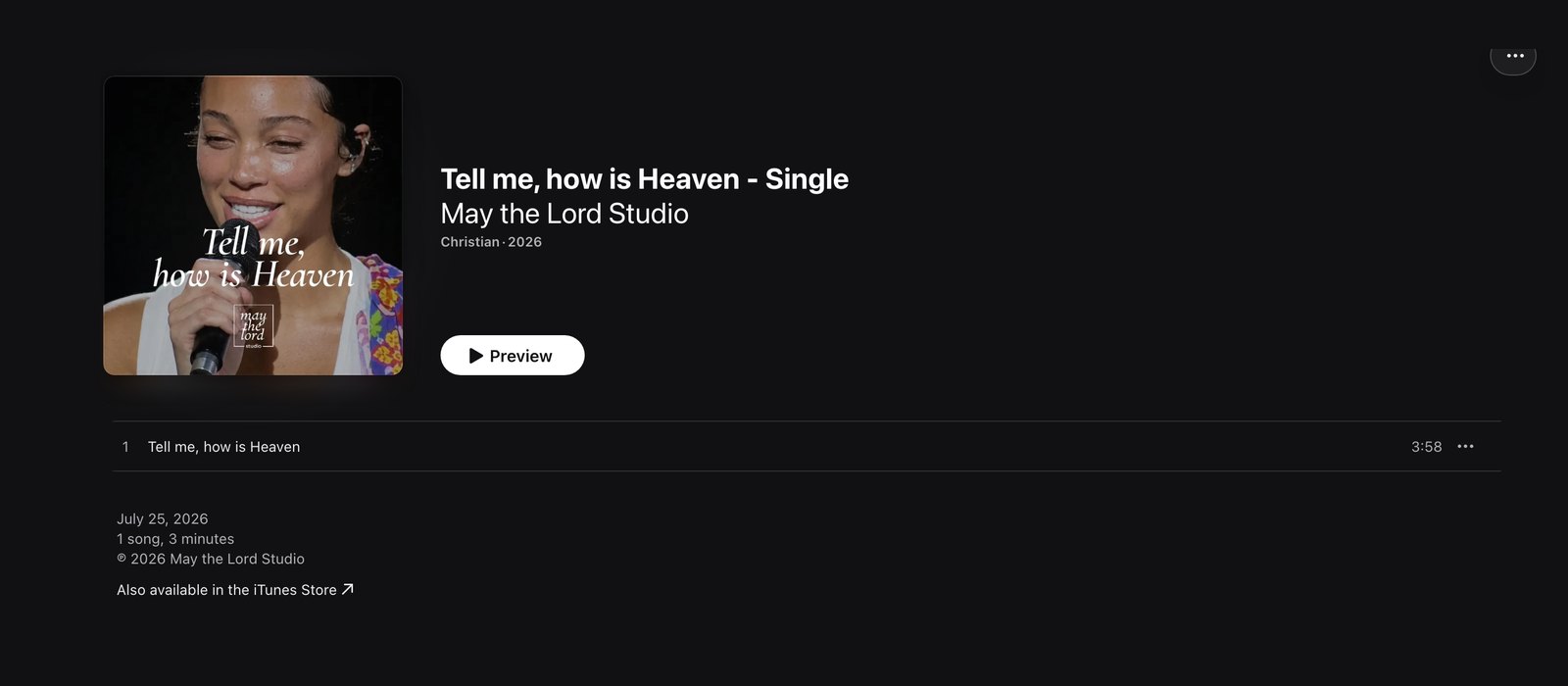
Two gospel chart-toppers in twelve months could be coincidence. But they share some structural conditions: a sales chart that takes relatively little to win, a genre where the emotional content of a song matters more than who sings it, and storefronts that show listeners nothing about where the music came from. Earlier pieces on this site covered how AI-detection tools misfire and how streaming services are starting to label AI tracks. This one asks a narrower question: why gospel, and why download charts?
From a genre chart to the all-genre chart
The 2025 episode is the necessary backstory. According to an AOL report from November 19, 2025, Solomon Ray, billed as a Mississippi act, held the top two spots on the iTunes Christian Music chart along with the No. 1 Christian album, and had the No. 1 and No. 5 songs on Billboard's Gospel Digital Song Sales chart. A week later, American Songwriter counted four Solomon Ray songs in that Billboard chart's Top 10, led by "Find Your Rest." The person behind the persona, Christopher Jermaine Townsend, defended the project publicly.
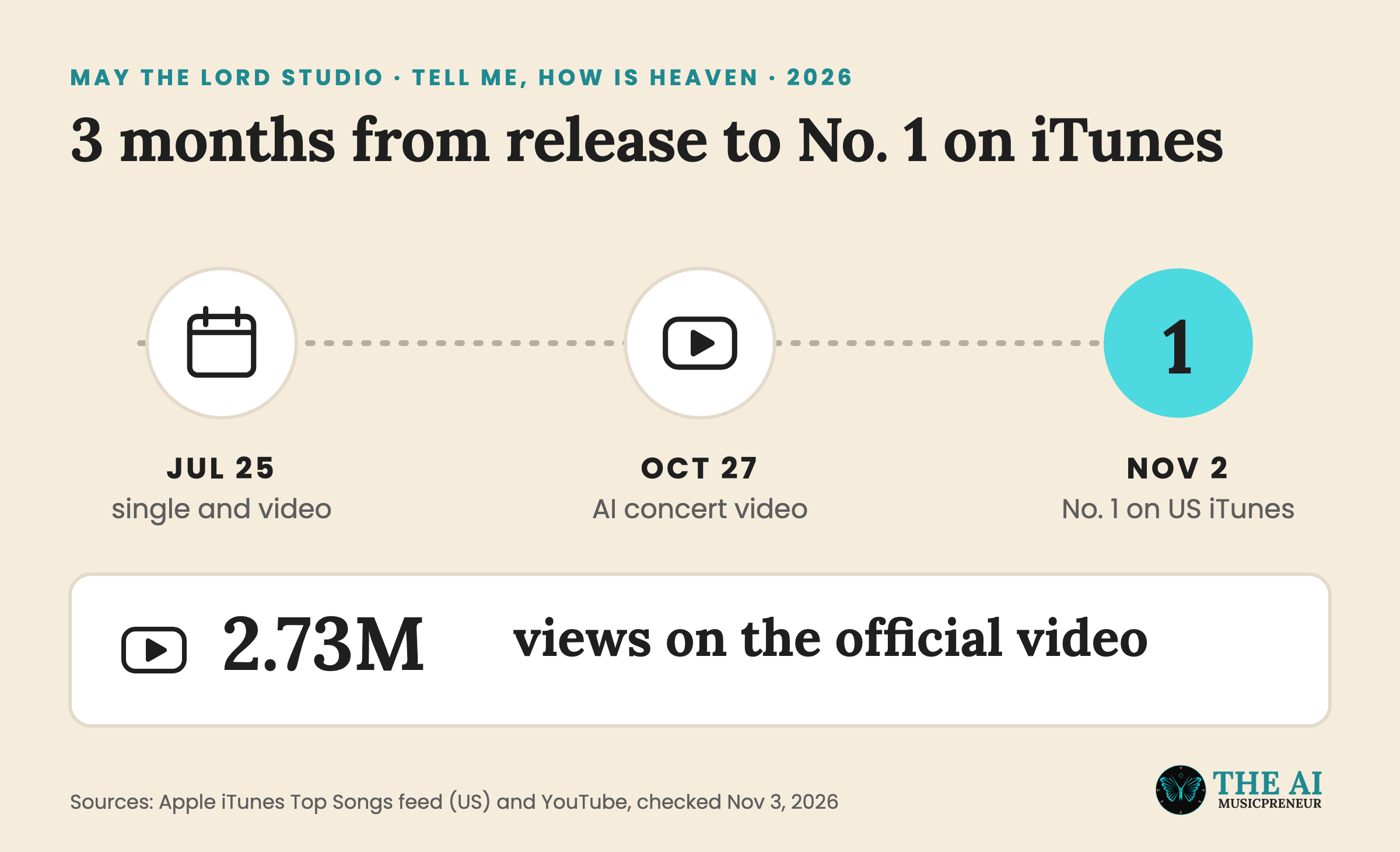
The 2026 case goes further in one specific way. Solomon Ray won a genre chart. May the Lord Studio's song reached No. 1 on the all-genre US iTunes Top Songs list, the same chart country and pop hits compete on. The climb was slow, not overnight. Per Wieduwilt's check, the single and its official video came out on July 25, 2026, more than three months before the song hit No. 1, and the video had about 2.73 million YouTube views by November 3. The channel itself started in February 2026.
The top spot didn't last. On November 13, kworb's chart tracker listed "Tell me, how is Heaven" at No. 42 on US iTunes, with three more of the project's singles ("I am Yours," "God, can You hear me" and "Lord, burn it down") also somewhere in the US top 200. So the catalog is selling steadily, but the No. 1 itself was a short-lived position.
Why download charts are easy to top
To understand why these songs reach No. 1, look at what the iTunes chart measures. It ranks paid downloads, typically $0.99 a track, not streams. As Wieduwilt notes, Apple doesn't publish the sales figures behind the ranking.
The wider market explains why that matters. In the RIAA's 2025 year-end report, streaming made up 82% of a record $11.5 billion in US recorded-music revenue. Downloads belong to the shrinking share of the remainder. When most listeners have stopped buying individual tracks, the purchase charts are decided by the relatively few people who still buy. A song can top iTunes with far less total demand than a streaming chart would require. Friedman went further and called iTunes "easily manipulated." That is his characterization. Neither he nor any other source cited here has presented evidence that this particular chart run was manipulated, and this article makes no such claim.
Why gospel in particular? No public data answers that directly, so what follows is the author's inference. Faith music often reaches people at specific moments: a funeral, an illness, a hard season. It travels through church communities, YouTube and social video more than through radio rotation. A song about losing someone ("I'm still learning how to lose you. You're learning how to live," as its hook goes) gives listeners a personal reason to buy it, share it or play it at a memorial. In a market where very few people still buy downloads, a concentrated, emotionally motivated audience can matter more than a large but passive one. That may also explain why copycats appeared: Wieduwilt found at least two other acts on Deezer releasing songs with the same title in August and September.
What the store page doesn't say
On disclosure, May the Lord Studio has said something, but not where most listeners look. Its website's About page, as quoted by The AI Musicpreneur, says the studio "combines human songwriting, biblical inspiration and modern creative technology" and that "some voices, imagery and elements of production may be created or supported using artificial intelligence." A YouTube concert video describes itself as "an AI-generated concert visualization." The official music video and the Apple Music page say nothing about AI.
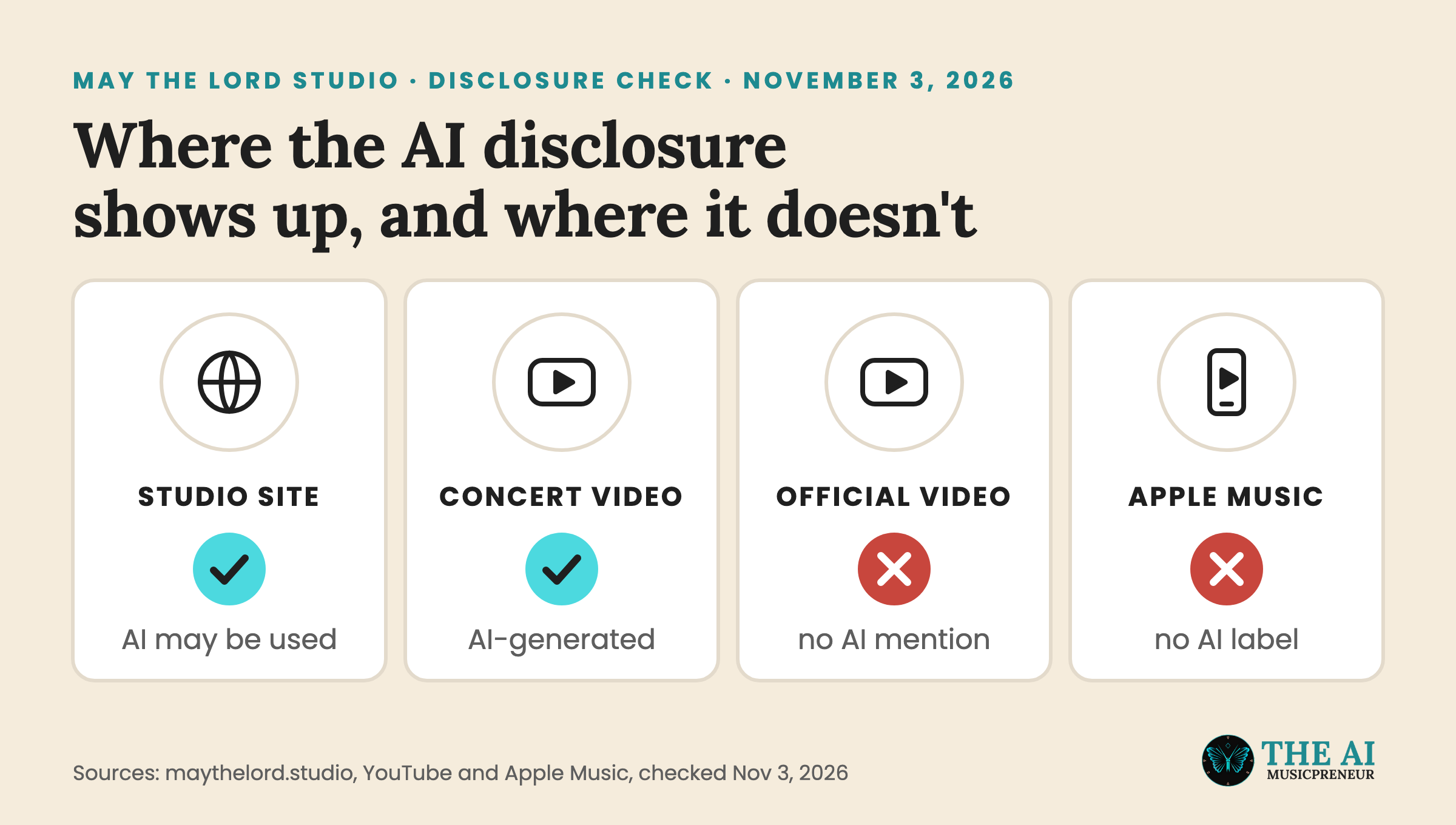
That gap comes from how the platforms work, not only from one project's choices. Per The AI Musicpreneur, Apple's "Made With AI" labels appear only when the label or distributor tags a track, and Apple runs no detection of its own for them. So a store page can be truthful and still incomplete. Which tool was used is also unsettled: Showbiz411 says the song was made on Suno, but the studio's own pages don't name a tool, so that claim rests on one report.
The case against dismissing it
Gospel is also where the strongest objections to AI music show up, and they aren't only about copyright or jobs. In a November 2025 Instagram video quoted by both AOL and American Songwriter, Christian artist Forrest Frank said: "At minimum, AI does not have the Holy Spirit inside of it, so I think that's really weird to be opening up your spirit to something that has no spirit." He added that he personally would not listen to AI Christian music. For a lot of believers, worship music is supposed to be testimony, a person's faith set to melody. On that view, the sincerity of the singer is part of what the song is.
The other side has a serious argument too. Townsend, answering Frank, called the question "really more of a preference" and asked, "Who am I to say what God will or won't use to get the message His people need to them?" (as quoted by AOL). The listeners who bought "Tell me, how is Heaven" presumably bought it because it said something they needed about grief. Telling them that experience was fake doesn't make it go away. Whether a song's value depends on where it came from is exactly the question these chart runs keep raising, and the market hasn't settled it.
Finally, the chart's significance shouldn't be overstated. An iTunes No. 1 is real, but it measures one narrow, shrinking channel over a short period. Ten days later the same song was at No. 42. These episodes say less about AI conquering mainstream music than about the low price of entry to a chart that most of the industry no longer watches closely.
What to watch
For listeners, the practical takeaway is simple: a store page with no AI label doesn't mean no AI was involved. For the platforms, the two gospel episodes suggest that disclosure based on self-reporting will keep missing cases until labeling sits where the purchase happens. For the Christian music community, the debate Frank started in 2025 is now back, this time over the all-genre chart instead of a niche one.
Sources
- Original article: "AI act May the Lord Studio has the No. 1 song on US iTunes with 'Tell me, how is Heaven'" (The AI Musicpreneur, Christopher Wieduwilt, November 3, 2026)
- Showbiz411, Roger Friedman: "Number 1 on iTunes: AI Christian Rock Song … 'Tell Me, How is Heaven?'" (November 2, 2026)
- kworb.net: May the Lord Studio chart positions (accessed November 13, 2026)
- AOL, Brandon Caldwell: "Fair or foul? Creator of AI gospel artist Solomon Ray hits back at critics as songs go No. 1" (November 19, 2025)
- American Songwriter: "Forrest Frank Speaks Out After AI-Generated Song Tops the Gospel Chart" (November 26, 2025)
- Hypebot: "US Music Revenue Hits Record $11.5B as Vinyl Surpasses $1B" (on the RIAA 2025 year-end report)