
Ableton Bets on the Hands: What Live 13 Says About How DAWs Are Answering AI
Updated:
In the first week of November 2026, the music-software industry seemed to move in one direction. Apple previewed Logic Pro 13 with an agentic assistant that can add tracks, open plugins and adjust levels from a typed request (MusicRadar). Splice released Splice Create, a full DAW with a voice-and-text assistant built around its sample catalog (The Fader). According to a roundup by the newsletter The AI Musicpreneur, Avid's Pro Tools and Steinberg's Cubase also shipped AI features between November 3 and 5. That last claim comes from a single source.
Then, on November 10, Ableton announced Live 13 (The Verge). Its headline features include a step sequencer, a drum synthesizer, a four-headed tape looper, Melodyne-style audio editing and a remodeled mixer, and none of them is an AI feature. MusicRadar's tech editor Matt Mullen called that a deliberate refusal "to jump on the bandwagon" and said Live 13 "is all the better for it" (MusicRadar).
That makes Live 13 more than a version number. It is the clearest current example of a major DAW maker answering generative-AI pressure by doubling down on hands-on music making. The interesting questions are whether that is a principled position or just a release-cycle accident, who the update actually serves, and what it costs the people who are asked to pay for it.
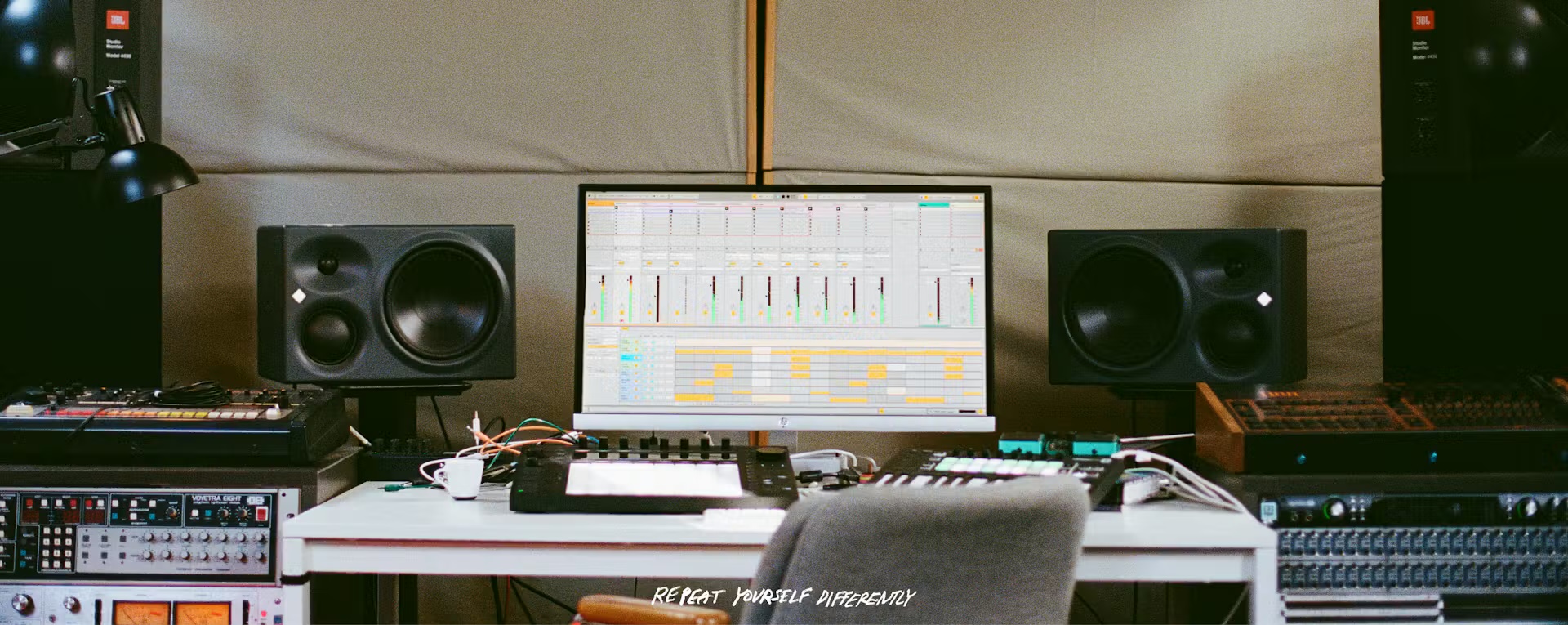
What Live 13 actually adds
Ableton says Live 13 will ship in "early 2027" with no firmer date. A limited-seat public beta is open now to owners of Live Standard and Suite, but not Intro (Ableton shop; CDM). Taken one at a time, the changes are modest. Together, The Verge's Terrence O'Brien argued, they amount to the biggest update to Live in years. Grouped by the type of user each one serves, they look like this.
For beatmakers and beginners: the Step Sequencer. Until now, writing MIDI in Live meant using the piano roll. Push hardware owners had a step sequencer, but the desktop app did not. Live 13 adds a step-sequencer clip type, and any MIDI clip can be converted to it and back. According to MusicRadar's hands-on, patterns run from 8 to 128 steps. Each lane has its own step count, rate, direction and swing, which makes polyrhythms trivial, and each step can carry its own velocity, timing offset, length, repeats, pitch bend and probability. A Fold to Scale option keeps melodic lanes in key. Mullen wrote that it "has largely replaced the Notes window for drum programming" for his team.
For vocal producers and switchers from other DAWs: ARA 2. ARA lets a compatible plugin work directly on audio in the timeline instead of processing a live audio stream. In practice, that means Celemony's Melodyne no longer has to record the audio, make its edits and send the result back to the track. Live 13 Suite bundles Melodyne Essential. CDM's Peter Kirn described missing ARA 2 as "one of a handful of obstacles for folks switching from other DAWs." Synthtopia notes that the first implementation is limited to Arrangement View, and Ableton warns that a small number of ARA plugins have known problems.
For sound designers: Drum Synth and Looplet. Drum Synth is a native percussion instrument that covers TR-808, TR-909 and CR-78-style models as well as physical-modeling and experimental engines. Coverage describes the numbers differently. The Verge counts "more than 20 different models across nine categories," and MusicRadar counts 25 presets. CDM noticed that it follows Live's active tuning system, so percussion can be tuned outside 12-tone equal temperament. Looplet, a Max for Live device included only with Suite, plays four tape-style heads over a single sample for loops, drones and granular textures, and each head can be routed to its own track. O'Brien called it his personal favorite.
For people who work in big sessions: workflow changes. Racks now hold 32 Macros instead of 16, with custom mapping curves and a Round Robin mode that cycles incoming notes across chains. New Multiband and Mid-Side Racks join Clipper and Transient Shaper. Device Slots finally show every track's plugins inside the mixer. Capture now saves automation as well as notes, so knob moves you made without pressing record can be recovered. Return tracks can also hold Envelope Clips, which turn effect automation into launchable clips (Synthtopia; The Fader).
Every item on that list is about making a person's own input faster, more expressive or easier to recover. None of them writes a part for you.
The week everyone else shipped an assistant
Put Live 13 next to what its competitors released this autumn, and the contrast is about where each company thinks the friction in music making is.
- Logic Pro 13 (Apple). The new Assistant runs on a mix of OpenAI and in-house Apple models. It needs macOS 27 on an Apple Intelligence-capable Mac and launches in beta, in English only (MusicRadar; 9to5Mac). Apple says it can "start a new song" or "set up a vocal track from a single prompt." The same release adds six-part drum stem separation and natural-language sample search. Several outlets report that the Assistant is tied to the Creator Studio subscription rather than the one-off Logic license. CDM's review headline summed it up: Logic Pro 13 "gets touch right, but stumbles on 'intelligent assistant.'"
- FL Studio 2026 (Image-Line). Gopher, which began in FL Studio 2025 as a chatbot that answered questions from the manual, became an agent that can change track levels, plugin parameters and mixer layouts. MusicRadar called FL Studio the first major DAW to put agentic AI directly into its workflow. Image-Line stresses that Gopher does not train on user data (MusicRadar).
- Splice Create. Splice's new DAW, a free beta for Mac, ships with an assistant called Assist that can label tracks, group drums or set up sidechaining by voice or text. Splice says Assist does not generate new sounds. It searches the licensed catalog, writes MIDI patterns and uses the Variations tool, and everything it does lands in the session as editable audio. Projects can also be exported as Ableton Live sessions (The Fader). The AI Musicpreneur reports that the assistant's paid usage units are branded "Rheo." The two names are not reconciled in the coverage we found.
- Suno Studio 2.0. Coming from the opposite direction, Suno's browser-based "generative DAW" added MIDI recording and editing, a wavetable synth, automation and a production chat bar in August, for Premier subscribers (Digital Music News). As our earlier piece Start Songs with MIDI argued, AI generators are working hard to win over people who already make music by hand. Digital Music News pointed out that Studio still did not appear to support third-party plugins. Suno's own launch note praised "guitars, drum machines, synths, effects, and step sequencers" as "tried and true" tools that "ought to be available in the next generation of music software," which reads like an argument for exactly the kind of tool Ableton is now building.
- Bitwig Studio 6.1. Bitwig, the other DAW most often compared with Live, also spent 2026 on non-AI craft, rebuilding its Sampler with Spectral and Fragments modes in an August release (MusicRadar).
The pattern is not "AI versus no AI" so much as a split over what to remove. Apple, Image-Line and Splice are removing the distance between intent and result: you describe what you want and software operates the interface for you. Suno is removing the need to play anything at all, then putting manual controls back in. Ableton and Bitwig are removing friction from the act of playing and editing: fewer clicks between the hand and the sound, more ways to shape what the hand produced.
Not anti-AI, just not AI-first
Ableton is not avoiding machine learning altogether, and treating Live 13 as a manifesto would overstate it. Live 12.3, a free point release in late 2025, added on-device stem separation (vocals, drums, bass and other) to Live Suite, along with Splice browsing inside Live's browser. MusicRadar framed that release bluntly: "Ableton is playing catch-up," because Serato, FL Studio and Logic Pro already had stem splitting (MusicRadar). According to The AI Musicpreneur's reading of the Live 13 beta notes, the only AI-related change is that the stem-separation models now download after installation instead of shipping inside the installer. That detail is single-sourced.
The pattern so far, in this author's reading, is that Ableton treats AI as a utility: something that pulls apart or finds audio. It does not treat AI as a collaborator that writes parts or operates the session. The AI Musicpreneur notes that Live's own MIDI generators, introduced in Live 12, use rules and randomization rather than trained models. Anyone who wants an AI co-producer inside Live gets one from third parties, through Max for Live or companion apps. That arrangement lets Ableton benefit from the AI ecosystem without taking on the licensing questions behind generative models. Those questions are live: Suno is being sued by rights holders, and Splice has made "fully licensed, creator-compensated" training a selling point. Whether Ableton is avoiding that legal exposure on purpose is our inference. The company has not said so publicly.
The hardware loop: Push, Move and a desktop that thinks like a groovebox
The most revealing part of Live 13 may be how much of it flows from Ableton's hardware. The new desktop Step Sequencer brings a Push idiom to the laptop screen. Push 3 gets an update of its own: Custom Layouts that mix note pads, Session View, faders and XYZ controls on one surface and save per Set; a Performance Mixer that turns the pads into touch faders for DJ-style and dub mixing; the Step Sequencer with expressive per-step editing; and expanded Rack control from the hardware (The Fader; Resident Advisor). According to The AI Musicpreneur, the older Push 2 gets the Step Sequencer and most Device Mode changes, but not Custom Layouts, the Performance Mixer or expressive step editing.
At the entry level sits Move, the portable standalone groovebox Ableton launched in October 2024 at $449 (KVR Audio), which hands off sketches to Live. Ableton is discounting Push 3, Move and the Push Upgrade Kit by 20% through November 30, 2026 (Ableton shop FAQ).
This is where the strategy hangs together. A company that sells pads, knobs and an expressive controller has a commercial reason to make physical gesture the center of music making rather than the prompt box. Inside the industry it is a contrarian bet, though not a lonely one. Our earlier piece How Akai and Moog are embracing vibe-coded mods showed hardware makers opening their instruments to AI-assisted modding. That approach uses AI to customize the tool and still leaves the playing to the human. Ableton keeps its loop more closed, tying Push, Move and Live tightly together, but it shares the premise that the hands are the product.
The case against: overdue features, Suite-only extras and an unpublished price
The "human-first" framing flatters Live 13 more than a cold look at the features supports. There are at least four reasons for caution.
Much of it is catch-up. The reviewers who like the update keep using the same word. Mullen called the Step Sequencer "long overdue." Kirn said multiband Racks were "an overdue feature." On showing devices inside the mixer, he wrote that "probably Live should have done this earlier." He also observed that step-sequenced clips "look similar to some other offerings — Logic, FL Studio" (CDM). ARA 2 has long been supported in rival DAWs. Its absence was a known reason vocal-heavy producers kept a second DAW around. Seen this way, Live 13 is less a bold refusal of AI than Ableton spending a release cycle closing gaps that had been open for years. Both readings can be true at once.
The most distinctive pieces are Suite-only. Looplet, Clipper, Transient Shaper, the Softube Classic Dynamics & EQ Pack and the bundled Melodyne Essential all sit in Live 13 Suite (The Fader; The AI Musicpreneur). Standard owners still get the Step Sequencer, ARA 2 hosting, Drum Synth and the Rack and mixer changes, but less of what makes demos exciting. Intro owners cannot join the beta at all, and the sources we checked do not clearly say which features Intro will get.
You can't see the upgrade price without logging in. Ableton has not published Live 12-to-13 upgrade prices. Existing owners are told to log in to see theirs. What is public is the launch offer: Live 12 and its upgrades are 20% off until Live 13 ships, any Live 12 purchase includes the matching Live 13 edition free on release, and Live 12 Suite can be rented-to-own. Full Live 13 licenses are already listed. In the regional (Chinese yuan) storefront this article was researched from, Ableton's own shop showed CNY 499 for Intro, CNY 1,499 for Standard and CNY 2,999 for Suite (Ableton shop). The AI Musicpreneur recorded discounted Live 12 prices of €63, €223 and €479 on the German store on launch day. For a Live 12 Suite owner whose main gains are ARA 2 and a step sequencer they could approximate with the piano roll, a paid upgrade is a real decision, not an automatic one.
There is no verdict from working users yet. Live 13 is a limited beta with no release date beyond "early 2027." ARA support starts in Arrangement View only, and Ableton acknowledges that some ARA plugins have compatibility problems. We found no substantive signed community testing of the beta at the time of writing. Forum debates so far are mostly carried over from the Live 12 upgrade cycle. Anyone deciding now is buying on reviews from journalists who had prerelease access.
There is also a strategic counterargument. AI-first tools are aimed squarely at beginners: Splice Create is free to download, and FL Studio pitches Gopher as a way to learn the software. If newcomers learn music making by talking to an assistant, Ableton's bet on the hands could keep its existing producers loyal while ceding the next generation's first DAW to someone else. The beginner-friendly Step Sequencer is Ableton's answer to that, but it is an answer for people who already want to press buttons.
What this tells us about DAW strategy
Live 13 does not settle the "AI or not" question. It shows that a major DAW maker can still ship a large, well-received release in late 2026 without a single generative feature, and that reviewers, for now, are rewarding it for that. Ableton's version of the human-made premium is concrete rather than rhetorical: a sequencer that rewards fiddling, a looper that rewards listening, and hardware that rewards touch. AI stays in its place as a stem-splitting utility, and the rest comes from third parties.
What to watch is whether this is a stance or a phase. If Live 13.x quietly adds an assistant after release, November 2026 will look like timing. If it doesn't, while Logic, FL Studio and Splice keep moving functions into the prompt box, the DAW market will have split clearly. Some tools will try to remove the musician's labor. Others will try to make that labor feel better. Both are legitimate products, but they are not the same product, and Ableton has chosen the second.
Sources
- Original article: Terrence O'Brien, "Ableton Live 13 announced with a step sequencer, new drum synth, and more," The Verge, November 10, 2026
- Ableton — Live 13 shop page and FAQ (release window, editions, offers, Push/Move discount)
- MusicRadar — Ableton Live 13 is here: everything you need to know (Step Sequencer details, Drum Synth, ARA 2, "bandwagon" quote)
- CDM — Ableton Live 13 hands-on (hands-on impressions, "overdue" criticisms, beta access)
- Synthtopia — Ableton Announces Live 13 (feature list, ARA in Arrangement View)
- The Fader — Ableton announces Live 13 (Suite-only effects, Push 3 features, offers)
- Resident Advisor — Ableton announces Live 13 (Push 3 Custom Layouts, public beta)
- The AI Musicpreneur — Live 13 announced, no new AI features (AI comparison across DAWs, EUR prices, Push 2 scope; single-source items flagged in text)
- MusicRadar — Live 12.3: Ableton is playing catch-up (stem separation, Splice integration)
- MusicRadar — Apple goes all in on AI with Logic Pro 13
- 9to5Mac — Apple Creator Studio gets AI features using OpenAI models
- MusicRadar — FL Studio 2026 agentic Gopher
- The Fader — Splice launches its own DAW, Splice Create
- Digital Music News — Suno Studio 2.0
- MusicRadar — Bitwig Studio 6.1 Sampler
- KVR Audio — Ableton Move launch