
Words, Not Voice: Elvis's Song Owners Take the Lyrics Fight to Anthropic
Updated:
On October 23, 2026, a group of companies, trusts and individuals that own or control rights in 274 compositions recorded by Elvis Presley filed a copyright lawsuit against Anthropic, the developer of the Claude models, in the U.S. District Court for the Northern District of California (IPWatchdog). Two weeks later, on November 6, a Presley rights coalition represented by the same lead attorney, Richard Busch, sued the AI music generator Suno in the same district. That second case is built around Elvis's voice and Tennessee's ELVIS Act (Variety).
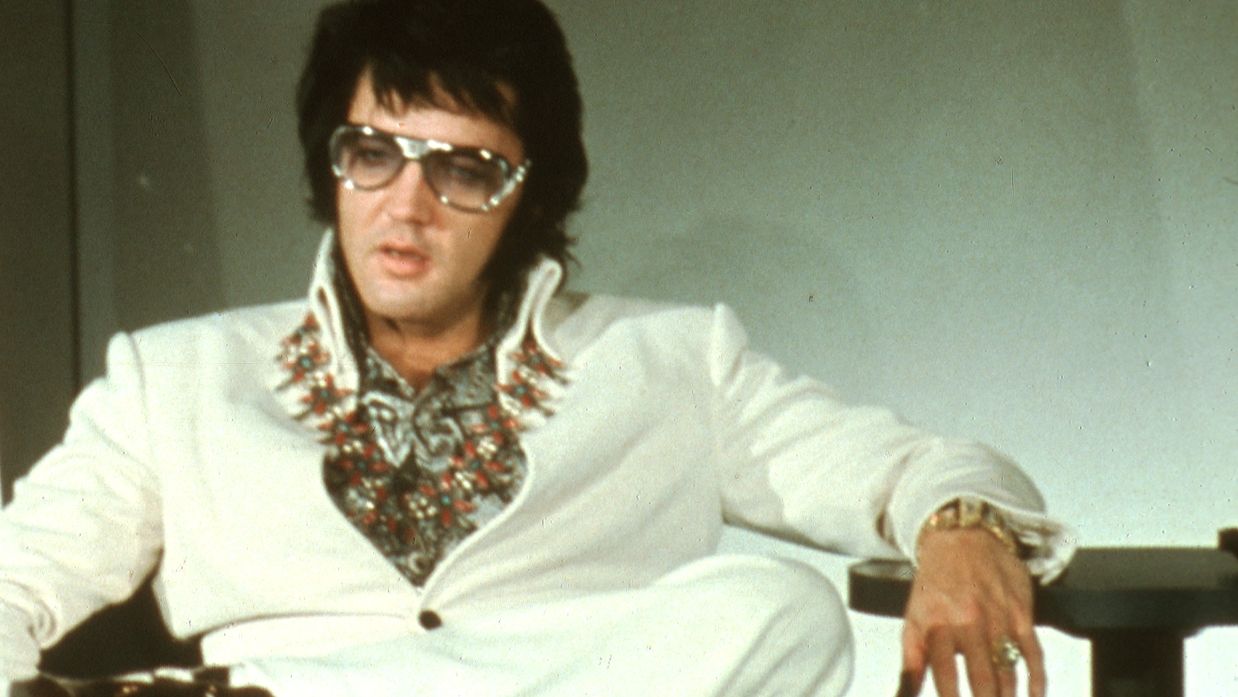
Elvis Presley holds a press conference at the Las Vegas Hilton Hotel, 1972
The two suits target different layers of the same catalog. The Suno complaint is about how a singer sounds. The Anthropic complaint is about the written words: whether lyrics were copied to train a text model, whether songwriter and publisher credits were stripped from them along the way, and whether the chatbot can hand versions of those lyrics back to users. This piece looks only at the Anthropic case. Everything below describing what Anthropic did is an allegation in a complaint that has not been tested in court.
Who is suing, and over what
According to IPWatchdog's summary of the complaint, the plaintiffs are ABG EPE IP LLC (a unit of Authentic Brands Group), Raleigh Music Publishing LLC, Abilene Music LLC, Jason Simeon Aberbach and several family trusts. Implicator adds that the trusts include ones tied to "Can't Help Falling in Love" co-writer Luigi Creatore and to the Aberbach family. The 274 works are listed in an exhibit and include "All Shook Up," "Can't Help Falling in Love," "Don't Be Cruel" and "Return to Sender."
The complaint pleads three causes of action:
- Direct copyright infringement. It covers copies allegedly made to build training data, copies kept in what the complaint calls a permanent "central library," and copies allegedly appearing in Claude's outputs.
- Circumvention of technological protection measures under 17 U.S.C. § 1201. The complaint alleges that the lyrics sat on licensed lyrics and streaming platforms behind logins, paid subscriptions, CAPTCHAs and IP rate limits, and that Anthropic's automated scrapers got around them.
- Removal or alteration of copyright management information (CMI) under § 1202. This claim is the most specific to lyrics, and the next section covers it.
In a statement quoted by Pitchfork, Busch said the plaintiffs sued a defendant "that has built its entire business model based on copyright infringement at a scale never seen before." An Anthropic representative told Pitchfork: "We disagree with the claims and intend to defend this case fully." As of publication, that is the only public response from Anthropic we could find.
The credits question: why § 1202 matters for lyrics
A lyric copied from the web usually arrives with labels attached: the song title, the songwriters, the publisher, a copyright line. The complaint's § 1202 theory says those labels were removed on purpose before training.
The complaint alleges that the training data drew on lyrics aggregation sites, streaming-platform metadata and large web corpora, including Common Crawl, Books3 and The Pile. It singles out a subset of The Pile called "YouTube Subtitles," described as drawn from 173,536 videos across 48,000 channels, which it says contained the lyrics to "Can't Help Falling in Love," "Don't Be Cruel" and other titles on the list. The complaint points to Anthropic's acknowledgment in the earlier Bartz v. Anthropic case that at least one commercially released Claude model was trained on YouTube-subtitle data from a version of The Pile. It further alleges that pirated book collections Anthropic downloaded, such as Library Genesis and the Pirate Library Mirror, also contained the lyrics at issue (IPWatchdog).
On the CMI claim, the complaint says, citing public sources, that Anthropic tested three text-extraction tools (Readability, Newspaper and jusText) and picked Newspaper. It then alleges, "upon information and belief," that Newspaper was chosen because it stripped song titles and songwriter and publisher credits more aggressively than the others (Implicator). Two parts of that claim should be kept apart. That a particular tool was tested and selected is presented as drawn from public sources. That it was selected in order to remove credits is the plaintiffs' inference about intent. Section 1202 liability generally turns on the second part, the defendant's knowledge or intent, so the inference carries much of the weight of this count.
The complaint's broader point about credits is that a model trained on lyrics without attribution cannot reproduce that attribution in its outputs. In the plaintiffs' account, the result conceals where the material came from.
The arithmetic: $41.1 million or $48.6 million
Headlines have reported both "$41 million" (MusicRadar, Pitchfork) and "more than $48.6 million" (Music Business Worldwide's headline). Both figures come from the same prayer for relief, added up differently (IPWatchdog, Implicator):
| Claim | Statutory amount per work | × 274 works |
|---|---|---|
| Copyright infringement (willful ceiling) | $150,000 | $41.1 million |
| § 1201 circumvention | $2,500 | $685,000 |
| § 1202 CMI removal | $25,000 | $6.85 million |
| Total | ≈ $48.6 million |
The $41 million figure counts only the copyright claim. The $48.6 million figure adds the two DMCA claims. Several caveats apply to both:
- These are maximums the plaintiffs requested, not amounts a court has found owed. $150,000 is the statutory ceiling for willful infringement, and courts can award as little as $750 per work, or less for innocent infringement.
- Statutory damages are pleaded as an alternative to actual damages and Anthropic's profits.
- The money is not the only remedy sought. The complaint also asks for a permanent injunction, an accounting of training data, and the impoundment or destruction of unauthorized copies, "including those held in training datasets, internal repositories, and model weights."
Evan Everist of Dorsey & Whitney told IPWatchdog that, given how small the damages request is compared with Anthropic's reported valuation, "a court order constraining model weights and server infrastructure could have a much broader and lasting impact than monetary damages." He also pointed out that the complaint was filed three days before Anthropic registered for its IPO, and that the complaint repeatedly sets the company's valuation against its alleged failure to pay for works. He described the plaintiffs' framing of that strategy as "infringe now, and hope for a two-trillion-dollar IPO later." That is the plaintiffs' framing, as Everist characterized it, not a finding.
Where "Claude admitted" comes from
MusicRadar's headline opens with the words "Claude admitted," followed by a quotation: "These renders keep landing very close to the originals: same structure, same hooks reused with light rewording, and full sets of verses/choruses/bridges." The phrasing invites readers to treat it as a confession, so the context matters.
- It is a model output quoted in the complaint, not a statement by Anthropic the company. The complaint says Claude produced this text after being asked to recreate specific songs "for a modern audience" (Pitchfork). The complaint offers it as evidence that lyric guardrails added after earlier suits can be bypassed by rephrasing a prompt.
- It does not involve an Elvis song. According to Implicator, the Presley complaint "prints no Claude output reproducing a Presley song." Its output examples concern songs in other publishers' suits, and the "modern audience" exchange is drawn from Round Hill Music's complaint against Anthropic. The Presley plaintiffs allege "on information and belief" that Claude produced infringing output for all 274 works and say discovery will show more.
- Reports differ on which model produced it. IPWatchdog's summary says the complaint attributes related exchanges to Claude Haiku 4.5 and Sonnet 5, and attributes the "edging past 'inspired by'" line to Sonnet 5.
A chatbot describing its own output is not a legal admission by its developer, and it is not a court finding that the output infringes. Whether those outputs were substantially similar to protected expression is a question the court would have to decide by comparing the texts themselves.
At least the seventh music case in one courthouse
The Presley suit adds to a growing list of music cases against Anthropic. According to Implicator and the complaint's own list of related cases:
- October 2023: Universal Music Publishing Group, Concord and ABKCO sued over 499 works. In January 2026 they expanded the claims to more than 20,000 works and more than $3 billion.
- March 2026: BMG sued.
- August 2026: Sony Music Publishing and Warner Chappell sued, and so did Round Hill Music, which filed against Anthropic and Suno on August 17 (Complete Music Update).
The complaint identifies at least six pending musical-composition suits in the same district. One correction to the original MusicRadar report: it described the UMG/Concord/ABKCO action over "over 500 songs" as filed "just last week." The 499-work suit dates from October 2023. What happened shortly before the Presley filing was a hearing in that case.
That hearing is the most important near-term event. On October 21, 2026, Judge Eumi Lee heard cross-motions for summary judgment on fair use in Concord v. Anthropic and took the matter under submission. Anthropic argued that training on lyrics is fair use and that the record shows no harm to the music market. The publishers argued that Claude's ability to reproduce lyrics and generate competing material weighs against fair use (AI Musicpreneur). Accounts of how receptive the judge seemed differ, and no ruling had been reported as of publication. Whatever she decides on lyrics training is likely to shape how the Presley claims are argued.
The Bartz precedent, read from both sides
The Presley complaint leans heavily on Bartz v. Anthropic, the authors' case in the same district. On June 23, 2025, Judge William Alsup ruled that using copyrighted books to train LLMs was fair use and called it "exceedingly transformative." In the same ruling he held that acquiring pirated copies to build a permanent, general-purpose central library was not fair use and sent that issue toward trial (Goodwin summary). The case then ended in a $1.5 billion class settlement, which Implicator reports was approved in July 2026. We did not independently confirm the approval date.
The two sides read this precedent in opposite ways.
- The plaintiffs' reading: The complaint cites the part of Bartz that went against Anthropic, namely that indefinitely keeping unlicensed copies in a general-purpose library is not fair use. It quotes Alsup's line that "there is no carveout, however, from the Copyright Act for AI companies." It also argues that the library itself was a standalone infringement, separate from training, and that each new Claude model trained on the material made another infringing copy.
- The defense's footing: The same ruling found training itself fair use, and Anthropic says the same holds for lyrics. Bartz is a single district-court decision and does not bind other judges. Alsup also expressly did not address whether the outputs of products like Claude infringe.
That last point marks a distinction that recurs throughout these cases. Training and output are separate legal questions. A court could find training fair use and still find that particular outputs infringe, or reach the opposite conclusions. The "modern audience" exchange is evidence about output. The YouTube-subtitle and Newspaper allegations are about acquisition and training. Readers should keep the two lines of argument apart, as a court would.
Bartz has not resolved every book claim either. A separate suit filed in June 2026 by more than 100 authors, Shakespeare v. Anthropic, also accuses the company of using pirated books (The National News Desk).
The limits of a complaint
Some caution is needed in reading this case:
- A complaint presents one side. It is written to persuade, and several of the most pointed allegations, including why Newspaper was chosen and whether Claude output all 274 songs, are pleaded "on information and belief."
- Outside lawyers see gaps. Randy McCarthy of Hall Estill called the complaint "ambitious and ambiguous." He said some allegations "appear incomplete or have a questionable nexus to the elements of the asserted causes of action," which may invite "targeted motions by Anthropic to dismiss particular theories of liability" (IPWatchdog).
- Fair use is unsettled for lyrics. Bartz favored training on books, the Concord ruling is pending, and appellate courts have not yet weighed in.
There is also an industry-level point. Hypebot noted that catalog owners like ABG can afford lawyers and lengthy litigation, while independent songwriters with the same rights often cannot. If AI training ends up as a licensed market, the question will be whether smaller creators get any seat at that table.
What to watch
- Anthropic's formal response: an answer, a motion to dismiss particular theories, or a motion to relate the case to the publisher suits already pending in the district.
- Judge Lee's fair use ruling in Concord v. Anthropic, the first decision specifically on lyrics.
- Whether the remedy of destroying model weights, which goes beyond money, survives early motions.
- How the Presley camp's parallel case against Suno over Elvis's voice proceeds, and whether the courts treat words and voice as separate questions.
Sources
- Original article: MusicRadar, "Claude admitted…": AI firm Anthropic hit with $41 million lawsuit by owners of Elvis catalogue (Beth Simpson, Oct 26, 2026)
- IPWatchdog: Rights Holders of Elvis Compositions File Suit Against Anthropic Over AI Training and Lyrics Output (plaintiffs, causes of action, damages breakdown, data-source and CMI allegations, McCarthy and Everist comments)
- Implicator: Elvis Presley's song owners hit Anthropic with copyright suit (damages total, origin of the "modern audience" exchange, related-case timeline, Bartz settlement approval)
- Pitchfork: Elvis Presley catalog owners sue AI company Anthropic (complaint quote, Busch statement, Anthropic response)
- The National News Desk: Elvis Presley rights holders sue Anthropic over alleged use of 274 songs (statutory damages, remedies, Shakespeare v. Anthropic)
- Hypebot: Elvis Has Left the Building. His Copyrights Haven't. (independent-songwriter perspective)
- Goodwin: District Court Issues AI Fair Use Decision (Bartz v. Anthropic)
- AI Musicpreneur: Concord v. Anthropic fair use summary judgment hearing, October 2026
- Complete Music Update: Round Hill joins the AI lawsuit party
- Variety: Elvis and Eminem rights holders sue Suno