
T-Pop Is Going Global, but It Does Not Need to Become the Next K-Pop
Updated:
Thai pop music is going through a moment that makes optimism easy.
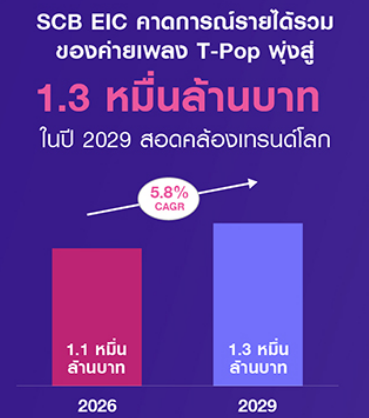
Research published by SCB EIC in 2026 projects that revenue among T-Pop businesses will reach THB 11 billion this year and rise to THB 13 billion by 2029. Thai songs’ share of domestic music streaming also increased from 35% in 2021 to 50% in 2024. In the survey, 71% of respondents said they now listened to more T-Pop than before; among Gen Z, that figure reached 81%.

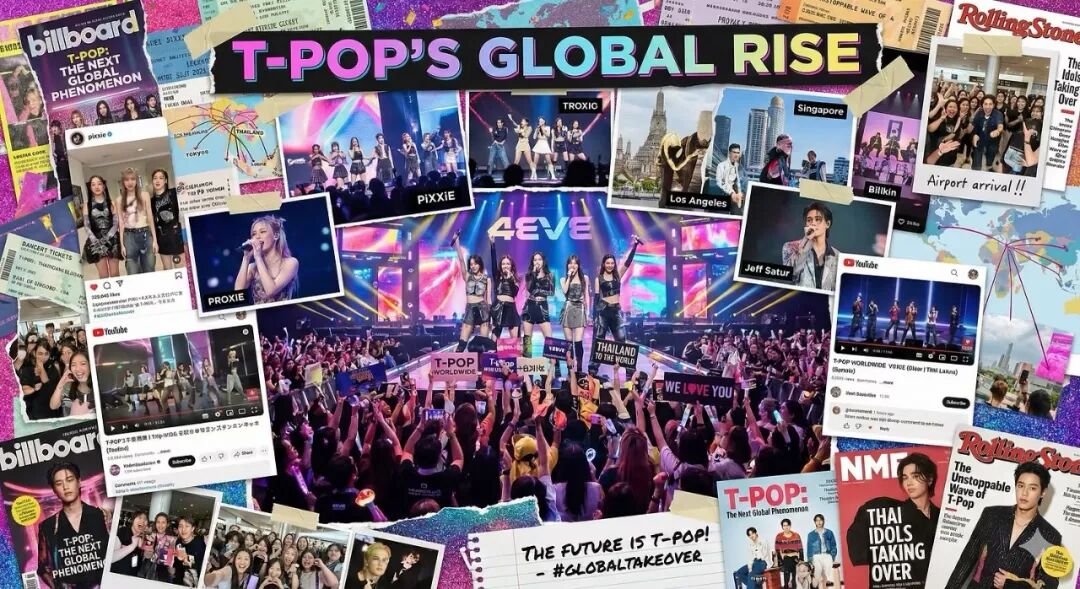
Thai artists are also becoming more visible on international stages. MILLI, Jeff Satur, 4EVE, BUS, PiXXiE, and others have begun appearing at overseas festivals such as Coachella and Summer Sonic. Chinese audiences, meanwhile, are discovering more Thai artists through variety shows, short-form video, Thai dramas, and fan communities.
These signals are enough to show that T-Pop is no longer merely a domestic market label. But once the question becomes whether it will be “the next K-Pop,” the answer gets more complicated. T-Pop’s current growth is not a smaller version of the Korean idol industry. It depends on a different system—one that is looser, more cross-media, and more readily propelled by fan relationships.
The Growth Is Real, but the Metrics Need to Be Read Correctly
According to the original SCB EIC report, the THB 11 billion-to-13 billion forecast refers to projected revenue among T-Pop businesses, not a single valuation of Thailand’s entire music market. The report estimates a compound annual growth rate of about 5.8% between 2026 and 2029. That is slower than the pre-pandemic pace, but it still indicates that the sector has entered a new phase of expansion following the return of live events.
The distinction matters. Streaming volume, artist visibility, and corporate revenue can all describe “growth,” but they do not measure the same thing. Streams show changes in audience attention. Festivals and concerts reflect demand for live experiences. Corporate revenue may also include artist management, brand partnerships, merchandise, and fan events. Combining those metrics can easily overstate the commercial strength of music recordings themselves.
Even so, the change in audience composition is significant. SCB EIC’s survey suggests that T-Pop is gaining a larger share of everyday listening among young Thai audiences instead of relying only on isolated viral hits. At the same time, overseas circulation is expanding beyond neighboring countries into multiple nodes across Europe, the Americas, and East Asia.

For a music category still building international recognition, the first door has opened. The real question is whether Thailand’s music industry can persuade that attention to stay.
T-Pop’s Most Effective Export Is Not Yet a Song
K-Pop generally begins with music and idol groups, then extends into variety programming, film and television, fashion, and consumer products. T-Pop’s overseas route has often worked in reverse. Audiences first encounter a Thai drama, an on-screen pairing, or a short video clip, then follow the actors, soundtrack songs, and fan meetings into music consumption.
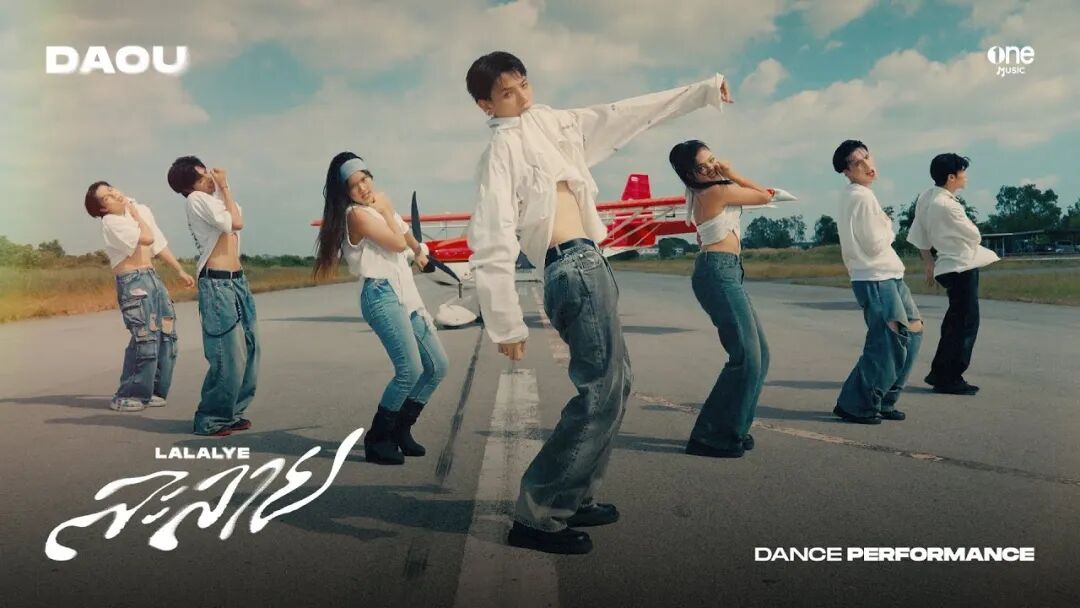
The cross-border success of 2gether: The Series in 2020 marked an important point in this process. During the pandemic, LINE TV, YouTube, and Netflix lowered the barriers to international distribution. Fan subtitles, social media clips, and cast interactions then extended attention well beyond each episode’s release window. Later, titles such as KinnPorsche continued connecting actors, songs, concerts, and overseas events.
A 2026 Frontiers study on Thai BL and soft power found that the growing economic potential and monetizability of Thai Boys’ Love content had prompted Thailand’s foreign affairs establishment to incorporate related series and performers into its soft-power promotion. Another study of Thai BL consumption emphasized the role of international fan subtitling and fan-led circulation in helping the content cross borders.

This is one of the clearest differences between T-Pop and K-Pop. T-Pop is not expanding outward from a single music industry. Dramas, music, artist relationships, social platforms, and live events all serve as points of entry. The advantage is flexibility: one form of content can quickly amplify another. The risk is that when audiences are paying primarily for characters and “CP” pairings, music may become only one tool for maintaining an artist’s visibility.
Thai dramas and pairing-based fandom are therefore neither a side effect of T-Pop’s success nor a burden the industry can simply discard. They are currently its most effective international distribution network—and a source of risk to music’s independence within the system.
Policy and Capital Are Building Cross-Border Infrastructure
The Thai government has begun turning scattered overseas appearances into a more systematic export program. Thailand’s Creative Economy Agency (CEA) reports that Music Exchange provided partial funding to 48 Thai artists and bands in 2024, helping them appear at 44 music festivals across 12 overseas markets. The program also brought approximately 78 international music professionals to five festivals in Thailand to develop relationships around booking, performance, and commercial partnerships.
In 2025, the program combined “push” and “pull” strategies: it helped mid-sized and emerging artists travel abroad while bringing buyers from China, Japan, South Korea, Southeast Asia, India, and other markets into Thailand. The 2026 program continues to offer support for overseas festival costs and plans to host at least ten international buyers.
The value of policy support is not limited to paying for a single flight. More importantly, it begins to connect festival organizers, labels, agencies, media outlets, and distributors, giving one performance a chance to develop into a longer relationship.
Industry capital is doing something similar. GMM Grammy disclosed that Tencent Music Entertainment and Tencent, through Black Serenade Investment, acquired a 10% stake in GMM Music for total consideration of US$70 million. A Tencent Music filing with the Hong Kong Stock Exchange further explained that the consideration included US$45 million in cash and an equity interest in JOOX Thailand. GMM Grammy company information Tencent Music HKEX filing
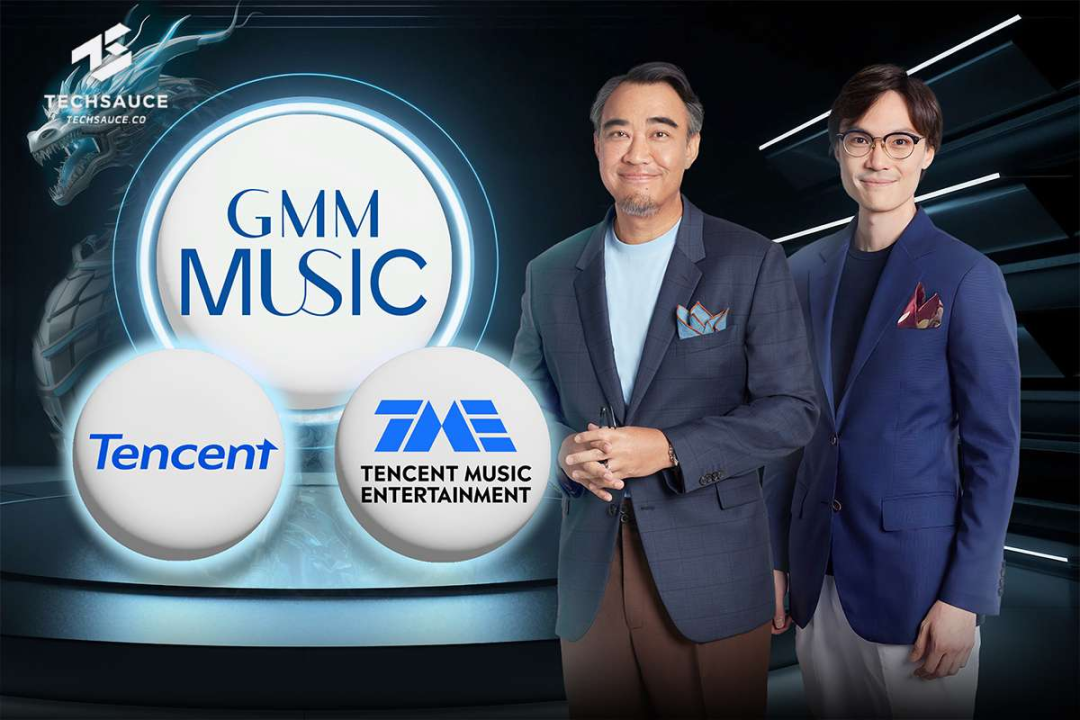
In 2026, the partners launched the cross-border label GX10 ASIA and signed JAYLERR as its first artist. According to GMM Grammy’s official announcement, the label aims to combine GMM Music’s artist-management capabilities in Thailand with Tencent Music’s digital platforms and audience data in China.
Whether this partnership will produce a genuinely international artist remains to be seen. At minimum, however, it shows that T-Pop’s expansion is shifting from accidental overseas discovery toward the deliberate construction of distribution, marketing, and regional partnerships.
Superfans Solve Monetization—and May Shift Music Away from the Center
Streaming has expanded T-Pop’s audience pool, but it does not necessarily generate sufficient revenue. SCB EIC estimates revenue per stream at only about THB 0.01 to THB 0.36. Concerts, fan meetings, photo books, random collectible cards, merchandise, VIP benefits, and brand endorsements have therefore become central to artist businesses.

One widely repeated set of figures requires clarification. The SCB EIC report says that superfans may account for only 1.9% of listeners while generating 42% of artist revenue. Those figures, however, come from SoundCloud/MIDiA industry data cited in the report; they are not the result of a direct survey of T-Pop listeners. What SCB EIC’s own T-Pop consumer survey found is that 86% of people who financially support artists spend across multiple categories and make repeat or additional purchases. SCB EIC report
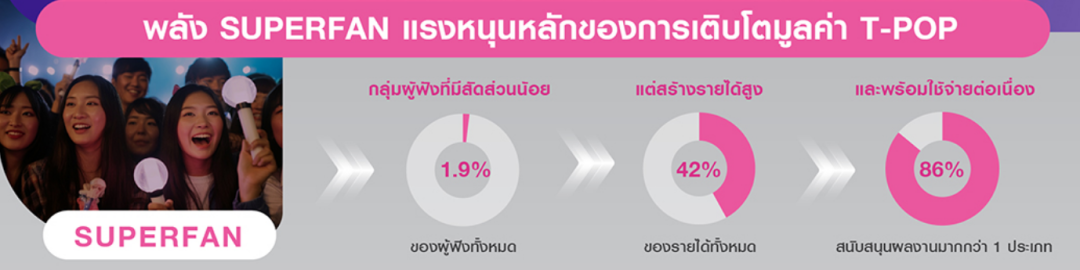
Although the two findings come from different datasets, they point toward the same commercial reality: a small group of highly committed consumers can support an artist’s long-term income more effectively than a large pool of low-frequency listeners. Billkin and PP Krit, who extended relationship-based fandom from their drama work into music, concerts, and endorsements, offer a representative example.

For the industry, this is a more stable revenue structure than dependence on a viral single. It also creates pressure in the opposite direction. When fan meetings, merchandise, and pairing-based promotions earn more than music releases, companies may allocate more resources to managing relationships than to A&R, production, copyright, and repertoire development. Superfans can extend an artist’s commercial life, but they cannot replace a music industry.
ONEE’s financial structure makes the shift especially visible. Its idol marketing business generated THB 3.55262 billion in 2025, accounting for 48.88% of operating revenue. The original article cited first-quarter 2026 figures of THB 1.08 billion and 59.30%. The latest available disclosure now shows that second-quarter idol marketing revenue climbed to THB 1.41683 billion, or 63% of operating revenue, up 75.83% year over year. ONEE 2025 company data ONEE first-half 2026 data
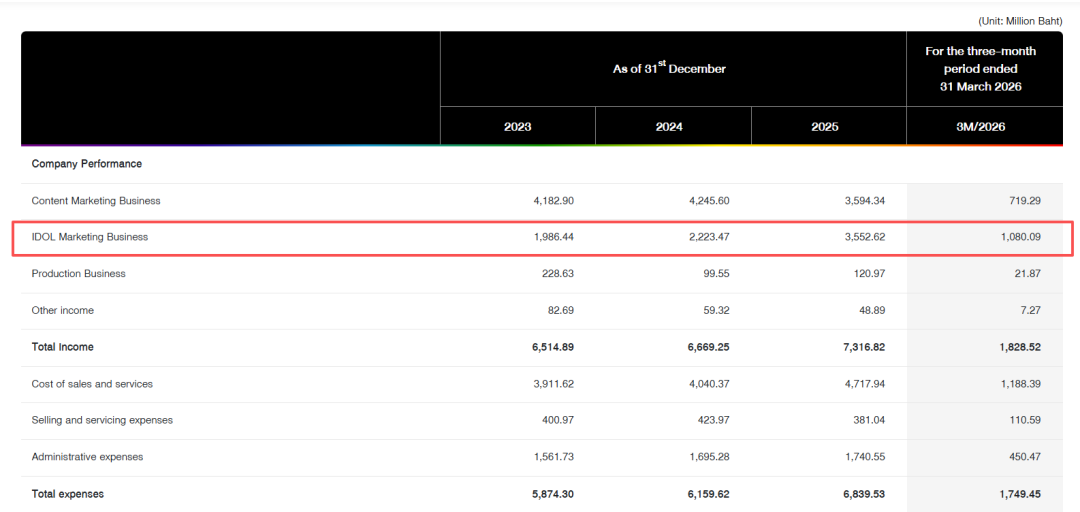
The figures prove that fandom monetization has moved from supplementary income to a core growth engine. They also warn against treating the success of T-Pop companies as proof that Thai songs, producers, and copyright assets are growing at the same pace.
Not Becoming K-Pop May Be T-Pop’s Opportunity
K-Pop is not a useless benchmark. The Korean industry offers a mature model for trainee development, production management, visual systems, copyright operations, international distribution, and global touring. Many of T-Pop’s current weaknesses do sit in those areas.
But if the goal is only to reproduce Korean styling, choreography, and music-video aesthetics, Thai music will struggle to establish an identity of its own. The most internationally compelling parts of T-Pop currently come from its lack of uniformity: the boundary between drama and music is looser; artists interact more directly with fans; BL and GL content offers emotional narratives outside conventional heterosexual idol culture; and Thai language, aesthetics, and performance styles have not been compressed into one industrial standard.
T-Pop therefore needs to learn from K-Pop’s infrastructure without copying its cultural surface. Training, A&R, copyright, distribution, and touring systems can be strengthened. What will determine whether global audiences remember T-Pop is whether Thai creators can turn local experience into a steady and sustained musical language.
From this perspective, the real question is not when T-Pop will become the next K-Pop. It is whether listeners will still stay for the songs and artists after a drama ends, a pairing completes its promotional cycle, and the short-video algorithm moves on to the next trend.
Conclusion
T-Pop’s expansion is not an illusion. Growth in company revenue, young listeners, domestic streaming share, overseas festival exposure, policy support, and cross-border capital all point to an industry opportunity larger than anything Thailand has had before.
Being seen, however, is only the first stage. Thailand’s music sector must now convert cross-media traffic into catalogues, copyright assets, production talent, international distribution capacity, and a sustainable live market. Superfans can provide cash flow. Thai dramas can open borders. Governments and platforms can build roads. None of them can complete the final step on behalf of the music itself.
T-Pop does not need to become a second K-Pop. It needs an industrial system capable of supporting its own looseness, gender expression, cross-media instincts, and local aesthetics. Only when external attention and internal capability grow together will “Thai pop music” move from a rising label to a sound that global audiences can recognize over the long term.
Images are retained from the original article. Copyright belongs to the original creators or relevant rights holders. Please contact us regarding any infringement concerns.
Sources
- Original article: Is an “Over-Ripened” T-Pop Still Unable to Become the Next K-Pop?
- SCB EIC: New Era of T-Pop—Growth Beyond Thailand
- Creative Economy Agency: Music Exchange 2025
- Creative Economy Agency: Music Exchange 2026
- GMM Grammy: Company Overview
- GMM Grammy: GX10 ASIA and Its First Artist, JAYLERR
- Tencent Music Entertainment: 2024 HKEX Filing
- ONEE: 2025 Company Data
- ONEE: First-Half 2026 Company Data
- Frontiers: Thai Boys’ Love Series and Idols as Soft-Power Diplomacy
- Cogent Social Sciences: Thai Boys’ Love Consumption and International Fandom