
From Napster to Suno: The RIAA Is Running Its Old Playbook at Fast-Forward Speed
Updated:
Early in the Napster years, a young RIAA lawyer named Mitch Glazier was sent onto college stages to persuade students to stop using peer-to-peer software. At one event he had to follow Chuck D, who was there to champion file-sharing. Expecting to be booed, he walked out with a garbage bag over his head. Glazier, now the RIAA's chairman and CEO, told that story on the November 9, 2026 episode of The Verge's Decoder podcast, hosted by Nilay Patel — who, by his own account, became a copyright lawyer because of Napster and once defended students sued for using Kazaa.
Image: The Verge / Photo: RIAA
The interview is an unusual document: the man who prosecuted the file-sharing war and one of the people who defended against it, agreeing that the AI companies are now the common problem. Glazier's summary of the shift is that, during Napster, fans and the industry stood on opposite sides, while with AI "we're kind of rowing in the same general direction."
That is a claim worth testing. The same trade association is, for the second time in 25 years, standing in the path of a technology wave. The more useful question is not whether the RIAA has changed sides in the culture war, but whether it has learned anything about how these fights actually end — and who gets left out when they do.
What the lawsuit era actually bought
The RIAA's first answer to file-sharing was to sue the people doing it. By the time the campaign stopped, it had targeted more than 35,000 Americans over more than five years, according to the Electronic Frontier Foundation. Patel described the mechanics from the defense side in the interview: universities handed over IP addresses, students were offered a settlement of around $5,000, and they went off to work "at the pizza place for a semester" to pay it.
When the RIAA wound the program down in late 2008, the EFF's verdict was blunt: the lawsuits "have not reduced unauthorized file-sharing and have not gotten a single artist paid." The industry pivoted to a "graduated response" model run through internet service providers — warnings, then possible throttling or disconnection — which the EFF criticized as due process outsourced to ISPs. (The EFF is an advocacy group that opposed the campaign throughout; its numbers come from tracking the cases, its verdict is its own.)
What actually rebuilt the business was licensing. Apple opened the iTunes Music Store on April 28, 2003, with the major labels' catalogs available legally at 99 cents a track; subscription streaming followed. By 2025, U.S. recorded music hit a record $11.54 billion in wholesale revenue, with paid subscriptions alone accounting for 55.3%, per the RIAA's own year-end figures.
Glazier draws a sharper lesson from a different case: YouTube. Google won its legal fight over user-uploaded content, he noted, but built Content ID and licensed music anyway, because the fans were there and music was essential to the platform. "You can win the case but lose the business," he said. In his reading, a technology company that wins on intellectual property but has no partnership with rights holders still ends up with a worse product.
That one sentence explains most of what the industry is doing with AI.
The same playbook, compressed
Compare the two timelines. Napster appeared in 1999; the first mainstream legal download store arrived roughly four years later. The AI version has moved much faster:
- June 2024: Universal, Sony and Warner, coordinated by the RIAA, sued Suno and Udio, alleging their models were trained on copyrighted recordings without permission. Glazier said at the time that it was not "fair" to "copy an artist's life's work" without consent or pay (Los Angeles Times).
- October–November 2025: Universal settled with Udio; Warner then settled with both Udio and Suno. In Warner's Suno deal, Suno agreed to phase out its existing models in favor of licensed ones, and to restrict downloads to paid subscribers, with caps (The Hollywood Reporter).
- 2026: Licensing spread. According to a Los Angeles Times report from September 2026, Udio signed with Merlin and Kobalt, Suno signed with BMG and Believe and launched its first models built on licensed music, and Spotify struck AI deals with Universal and Merlin.
At the same time, the litigation has not stopped. The same report says Sony filed a second lawsuit against Udio over more than 30,000 recordings, and that Sony and Universal filed a new suit alleging that Suno's latest model still infringes. Universal is therefore licensing to Udio and Spotify while suing Suno.
The pattern is the Napster-era sequence played at higher speed: litigate to establish that the right exists, then license on terms the litigation helped set. Glazier described the sequence himself: the Suno case is meant "to make sure that the rights are secured," after which "you let the marketplace develop from there."
What the settlements are designed to control is also visible. Udio's arrangement with Universal is a "walled garden" in which songs cannot be downloaded or distributed elsewhere; Warner's Suno deal caps downloads. Glazier, who says he does not see the terms because the RIAA represents competitors, framed the logic as protecting against "dilution": licensing gives rights holders leverage to stop AI output from flooding the same streaming services where human recordings earn money.
My inference: the lawsuits in this round are less about punishment than about pricing. In 2003 the industry sued its own customers and got nothing. In 2024 it sued venture-backed companies with something to settle with. The target changed, and that is the real lesson learned.
Glazier's three positions
Across the interview, Glazier set out where the RIAA stands on the three issues that will shape the AI music market.
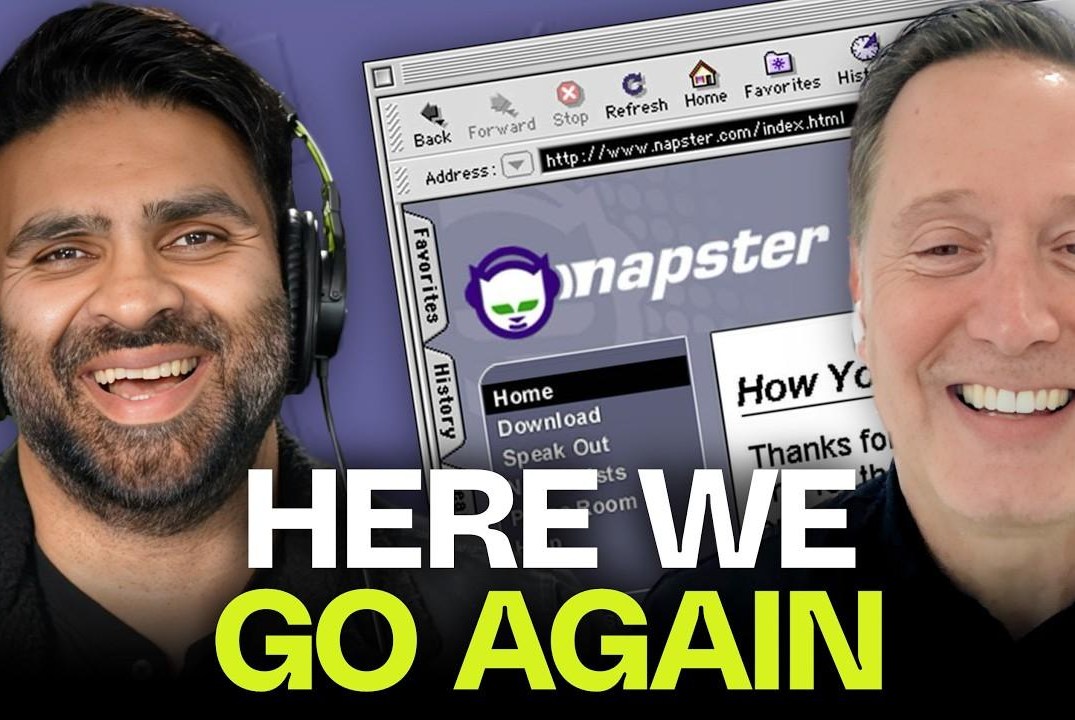
Mitch Glazier on The Verge's Decoder (video still)
Training. The RIAA's legal theory rests on the fourth fair use factor — the effect on the market for the original work. Glazier argued that Suno's output is "competing on the same platform right next to human-made music," for the same subscription fee, which makes it a substitute rather than a transformative use. He contrasted this with Google's search and book-scanning cases, where courts accepted that an index can lead people to the work instead of replacing it. Courts have not yet ruled on fair use in the music AI cases.
Labeling. Glazier sees labeling as the immediate market fix, and a fairly specific one. In July 2026, the RIAA, IFPI, the Recording Academy, SAG-AFTRA and others launched a voluntary track-level labeling program with two categories: "AI-Generated" and "AI-Assisted." Neither is mandatory for platforms; Deezer welcomed the framework without committing to it, and the Digital Media Association, which represents the major streaming services, said only that it was following it "closely."
In the interview, Glazier criticized Spotify for disclosing AI only in credits — "how many people look at the credits?" — and argued that labeling must happen at the track level. His most concrete point was about where the labeling has to start: fully generated AI music comes from the DIY world, not from labels, so the chokepoint is distributors like DistroKid and TuneCore. "The fully generated problem, which is a DIY problem, is a distributor problem," he said. That explains a lot about the industry's recent pressure on distributors, including the DistroKid takedowns covered previously on this site. Glazier also claimed that detection technology already works well for fully generated tracks, pointing to Deezer's low false-positive rate; by Deezer's own count, AI-generated uploads peaked at about 90,000 tracks a day in June 2026, more than half of everything uploaded daily.
Voice and likeness. Glazier noted that there is no federal right to one's own voice or likeness in the U.S., and that most state right-of-publicity laws cover only advertising and endorsement. The industry's answer is the NO FAKES Act, a revised version of which was introduced in May 2026. Glazier described it as a new intellectual property right closer to trademark than copyright, with a takedown process designed to learn from the DMCA: penalties for false notices, a counter-notice process, and a fast court procedure so that "a judge could actually decide the constitutional question — because nobody wants the platforms deciding constitutional questions."
Where the analogy breaks
The Napster-to-iTunes story is a flattering frame for the RIAA, and it has at least three weaknesses.
First, AI is not piracy. Napster distributed exact copies of recordings. Generative AI copies works in training and produces new outputs that may or may not resemble any single song. That is why the question is decided under fair use rather than simple reproduction, and why Glazier's own comparison to Google Books cuts both ways: Google won that case. The licensing deals may make the legal question less urgent for the companies that settle, but they do not answer it.
Second, "everyone on the same side" overstates the coalition. Glazier said the NO FAKES negotiations brought OpenAI, YouTube and Public Knowledge to the table. In June 2026, however, Public Knowledge joined the EFF, the ACLU, the Center for Democracy & Technology and others in a letter urging the Senate Judiciary Committee not to advance the bill in its current form. The EFF argued that the bill imports "many of the worst features" of the DMCA's notice-and-takedown system, with penalties of up to $750,000 per work pushing platforms to remove first and ask questions later. It also warned that the new likeness right could be licensed away by the very people it is meant to protect. Right-of-publicity scholar Jennifer Rothman, while calling the late-June substitute version "mostly improved," noted that it still allows licenses of a living person's digital replica for up to ten years, and that the bill was originally drafted mainly around record labels' interests. The bill has cleared committee and sits on the Senate calendar, with no floor date.
Third, labels and artists are not the same constituency. The RIAA formally represents the major labels, and Glazier said the music industry's interests are aligned "90 percent of the time." AI licensing is where the other 10 percent shows up. The American Federation of Musicians has sued Universal and Warner, alleging that recordings its members played on were licensed to Suno and Udio without paying those musicians. On June 22, 2026, 31 artist, songwriter and manager organizations, including the Music Artists Coalition and the Featured Artists Coalition, published an open letter against default opt-ins to AI uses (Music Business Worldwide). Independent musicians have filed their own class actions, with a lawsuit from country singer Tony Justice arguing that independent artists were "left without a seat at the table" in the majors' litigation (Billboard).
The named critics are pointed. "It's a new technology, but it's not a new corporate story," Damon Krukowski, a musician and legislative director at United Musicians & Allied Workers, told the Los Angeles Times. Drew Silverstein of BandLab put it more neutrally: "A label making a deal and an individual artist having a choice are not necessarily the same thing." The terms of none of these deals have been disclosed, including what artists will be paid.
This is where the historical parallel cuts against the RIAA. Streaming did save the recorded music business, but it also produced a decade of complaints about artist pay — something Patel raised directly when he said he worried the middle class of artists could be "totally hollowed out." If the AI deals repeat that pattern, the industry will have learned how to turn a disruptor into a licensee without learning how to pass the value through.
A small lobby against a large industry
One detail from the interview helps explain the RIAA's strategy. Glazier said the organization has 46 employees and a three-person lobbying team, while U.S. recorded music was worth about $11 billion wholesale last year — compared with a single AI company's $2 trillion market cap. He said the RIAA's real asset is not money but artists, "messengers that people trust."
That asymmetry explains why the industry prefers to set policy through private standards (labels, DDEX metadata, distributor detection) and narrow statutes, and why it leans on public sentiment. Glazier's bet is that fans will decide: as long as rights are secured, people will pay for a human connection with an artist, and labeling gives them the information to do so. He drew a line between fully generated music, which he expects fans to reject permanently, and AI-assisted work, which he thinks may one day be treated like synthesizers or Auto-Tune.
Whether that bet holds is an open question. Patel pushed back that Spotify users have tolerated soundalikes and slop without leaving for other services, and Glazier conceded that Spotify is moving "probably a little too slowly."
What has been learned, and what hasn't
Measured against the Napster era, the RIAA has clearly learned two things. It no longer sues fans; it sues companies that can pay. And it moves to licensing far faster, treating litigation as leverage to set the terms of a new market rather than as a way to stop one.
What remains unresolved is the part the old playbook never solved. The licenses are negotiated by rights holders, the terms are confidential, and the musicians, session players and songwriters whose work trained the models are, so far, asking from the outside for consent and a share. Glazier's line that the RIAA and fans are "rowing in the same general direction" may be true of the fight against unlicensed AI. Whether it is true of what comes after the settlements will depend on the deal terms — which nobody outside the companies has seen.
Sources
- Original article: Nilay Patel, "Hold up — I had a great time talking to the RIAA guy", The Verge / Decoder, November 9, 2026 — interview transcript; source of all Glazier and Patel quotes not otherwise attributed.
- Electronic Frontier Foundation, "RIAA v. The People Turns from Lawsuits to 3 Strikes", December 2008 — scale of the lawsuit campaign, shift to ISP-based enforcement, EFF assessment.
- Apple, "Apple Launches the iTunes Music Store", April 28, 2003 — launch date.
- Billboard, "U.S. Recorded Music Revenue Hit $11.5B in 2025", March 2026 — RIAA year-end wholesale figures.
- Los Angeles Times, "The RIAA, villain of the Napster era, turns its sights on AI firms", August 7, 2024 — Glazier's 2024 statement on Suno and Udio.
- The Hollywood Reporter, "Warner Music Group Settles Lawsuit With AI Music Platform Suno", November 2025 — settlement terms, download limits, status of other suits.
- Cerys Davies, "Why some musicians aren't happy about labels signing AI deals with platforms", Los Angeles Times (via AOL), September 21, 2026 — 2026 licensing deals, AFM lawsuit, Sony and Universal's continued litigation, quotes from Krukowski and Silverstein.
- Variety, "RIAA, Grammys, SAG-AFTRA and Other Groups Launch New Labeling Program for AI Music", July 10, 2026 — label categories, platform responses.
- TechCrunch, "Music streamer Deezer says more than 50% of daily uploads are AI-generated", July 21, 2026 — Deezer upload figures.
- Electronic Frontier Foundation, "The NO FAKES Act Could Silence Satire, Commentary, And News", June 2026 — coalition letter, critique of takedown regime and licensable likeness right.
- Jennifer Rothman, "NO FAKES Revised, Mostly Improved, and Put on Senate Calendar", Rothman's Roadmap to the Right of Publicity, 2026 — bill status and licensing-term critique.
- Billboard, "AI Class Action Lawsuit: Singer Sues Suno & Udio For Indie Artists", June 2025 — independent artists' class actions.
- Music Business Worldwide, "Irving Azoff's Music Artists Coalition among 31 groups warning against 'misuse' of artist and songwriter rights in AI deals", June 22, 2026 — the 31-organization open letter on AI opt-ins.