
"Data Doesn't Suffer": Why Nick Cave's War on AI Songwriting Was Never Really About Technology
Updated:
On November 9, 2026, Nick Cave answered two unrelated letters in a single post on his newsletter The Red Hand Files. One reader in Porto asked whether we can still separate the art from the artist. Another, in Bristol, had just watched a documentary on AI and wanted to know whether Cave was "a doomer or boomer." Cave answered both with one argument: song generators have, for the first time, made separating the artist from the art literally possible, and that is exactly what is wrong with them. He named Suno "the Great Cancellator."
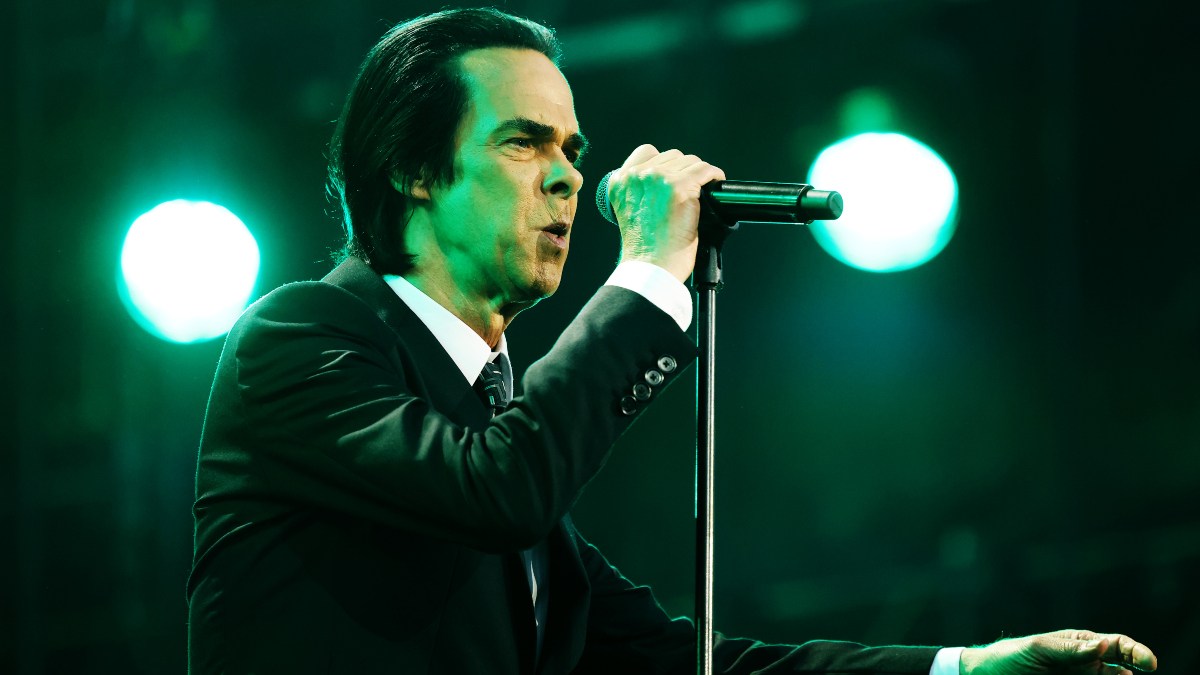
VICE reported the post the next day as a return to hard opposition after a brief softening in 2025. That is accurate as far as it goes. But read alongside the five letters Cave has written on AI since 2019, Issue #381 is less a reversal than the latest form of one consistent idea: for Cave, what makes a song worth having is not the object but the human effort that produced it. That idea explains the force of his anger. It also points to where his argument is weakest.
Five letters, one argument
Cave's newsletter, in which he answers readers' questions directly, has become an unusually complete record of how one songwriter has thought about machine creativity over seven years. Taken in order, the letters show a single thesis sharpening rather than changing.
January 2019 — "It lacks the nerve." Long before ChatGPT, a reader in Ljubljana asked whether AI could ever write a good song. In Issue #22, Cave responded to Yuval Noah Harari's prediction that AI would eventually out-write humans by tailoring songs to our individual emotional needs. Cave granted much of the premise: he wrote that AI could plausibly produce something as good as Nirvana's "Smells Like Teen Spirit." His objection was to what listeners actually hear. Listening to Kurt Cobain, he argued, we are hearing a troubled young man's escape from Aberdeen, Washington; listening to Beethoven's Ninth, a composer who was almost totally deaf. "What we are actually listening to is human limitation and the audacity to transcend it." His verdict was precise: AI could write a good song, "but not a great one. It lacks the nerve."
January 2023 — "This song sucks." Two months after ChatGPT launched, a reader in New Zealand sent Cave a set of lyrics the chatbot had written "in the style of Nick Cave." Cave said in Issue #218 that he had received dozens of these. His reply became the most widely quoted thing he has said on the subject: "This song sucks." The rest of the letter made the 2019 argument sharper. He called the chatbot's output "replication as travesty," and wrote that "songs arise out of suffering," meaning the internal struggle of making them. "Data doesn't suffer." He described the lyrics as "a grotesque mockery of what it is to be human."
August 2023 — the seventh day. Responding to a music-industry reader whose songwriter acquaintance used ChatGPT because it was "faster and easier," Cave in Issue #248 moved from aesthetics to theology. In Genesis, he noted, God rests on the seventh day, which implies that creation cost Him something. That cost, Cave argued, is what gives the created thing its meaning. ChatGPT, by contrast, treats the creative process as an inconvenience between the user and the product. He described it as "fast-tracking the commodification of the human spirit by mechanising the imagination."
July 2025 — "To some extent, my mind was changed." Then came the exception. In Issue #332, written for the 40th anniversary of the Bad Seeds' "Tupelo," Cave described his friend, the filmmaker Andrew Dominik, sending him an unannounced gift: a video in which archival stills of Elvis Presley had been animated with AI. Cave restated his "serious reservations" about writers using language models and about platforms that eliminate the artistic struggle. Then he watched the film twice, showed it to his wife Susie, and found it "an extraordinarily profound interpretation of the song." He wrote that his view of AI "as an artistic device" had softened, quoted Dominik's retort — "It's a tool, like any other" — and closed with a defense of changing one's mind: "Rigidity breaks; flexibility endures."
November 2026 — "the Great Cancellator." Issue #381 returns to the original line. VICE suggests the 2025 softening "may have just been because Dominik was also a friend"; that is VICE's interpretation, and Cave's new letter does not mention "Tupelo" at all. Read against the earlier letters, a simpler reading is available, and it is the one this article adopts (this is the author's inference): the two positions never actually collided. What moved Cave in 2025 was a human artist using AI to interpret an existing human song. What he condemns in 2026 is a system that removes the human from the writing of the song itself. In #332 he had already drawn that line, separating "AI as an artistic device" from "song-generating platforms that reduce music to a mere commodity."
Why Suno is the target, specifically
The Issue #381 passage on Suno is built from the same materials as the 2019 and 2023 letters. The platform, Cave writes, "has never loved or laughed or grieved" and "produces an imitation of the soul – a song – in fifteen seconds flat." The phrase "in fifteen seconds flat" carries the argument: speed is not incidental to the product but the whole of its promise, and it is precisely the thing Cave's theory of value has no room for.
Suno's own leadership has, at times, stated the opposing philosophy just as clearly. In January 2025, CEO Mikey Shulman told the 20VC podcast that "it's not really enjoyable to make music now," explaining that it takes time and practice to master an instrument or production software, and that "the majority of people don't enjoy the majority of the time they spend making music" (MusicTech). Placed beside Issue #248, the two statements almost answer each other: what Shulman calls the friction to be removed is what Cave calls the source of meaning. Shulman later told Billboard, "I really wish I had chosen different words" (Digital Music News).
The commercial context has also changed since Cave's first letters. Digital Music News reports that Suno's deal with Warner Music Group required it to retire its current model and launch a new one trained only on licensed recordings from rights holders who opted in. Whether Cave's own catalog sits in the training data is a separate dispute: in October 2026, the International Confederation of Music Publishers told Australian legislators that hits by Kylie Minogue and Nick Cave had already been used to train AI models without permission or payment (Digital Music News). Notably, Cave's objection in #381 does not rely on that copyright question. Even a fully licensed Suno would fail his test, because the problem he describes is not theft but absence.
The censorship barb
The final line of Issue #381 is easy to miss: "For those eager to rid the world of problematic artists – for these censorious forces remain persistent – it is surely cause for celebration, as these platforms promise to rid the world of artists altogether."
This connects the two letters he was answering. Cave has long held that work cannot be cleanly detached from its maker; in #381 he invokes Caravaggio, a murderer who painted works of "spiritual radiance." The jab at "censorious forces" suggests that he sees the impulse to purge flawed artists and the impulse to automate songwriting as two routes to the same place: art without the troublesome human attached. That is a provocative bridge, and readers who do not share his view of so-called cancel culture may find it a stretch. But it shows how central the "flawed, messy" artist is to his idea of what a song is.
Where the argument meets resistance
Cave's position is coherent, but it is not the only serious one, and it has real limits.
The tool argument. Dominik's "It's a tool, like any other" is the strongest counterpoint, and it comes from inside Cave's own letters. The composer Holly Herndon, who with Mat Dryhurst built Holly+, a model of her voice that others can sing through, describes AI as a creative instrument rather than a substitute for the artist. In a 2024 conversation with curator Hans Ulrich Obrist, she argued that the voice is "already inherently communal" and framed their choral-AI project, The Call, as "showing the training data as art-making itself, as human-generated art-making itself" (Art Basel). Dryhurst described a protocol that sends 50% of the profits from media made with Holly's voice back to her. In this view, the question is not whether a machine was involved, but where humans sit in the process and who gets paid.
The access argument. Shulman's clumsy 2025 remark contained a real claim: many people want to make music and are kept out by the years of practice it demands. Cave's phrasing in #381, that a songwriter "has lived and struggled in this world and earned the right to create a song," can be read as making struggle a credential. The author could not find and verify a signed published critique making this case against Cave directly, so it is presented here as an open question rather than an attributed position. Still, it is worth asking whether a theory that ties a song's value to its maker's hardship gives enough weight to people for whom the barriers are time, money, or disability rather than lack of nerve.
The listener problem. Cave's 2019 argument depends on what the listener knows: we hear Cobain's escape and Beethoven's deafness because we know the stories. That raises a question his letters do not fully answer (this is the author's inference): if a listener cannot tell whether a song came from a person, where does the "human limitation" they are supposedly hearing reside? Cave conceded in 2023 that AI might one day produce a song "on the surface, indistinguishable from an original." His answer is that it would still be "a kind of burlesque." That is a claim about what the song is, not about what anyone can detect, and it will not persuade readers who locate a song's value in the experience of hearing it.
A position about people, not machines
Cave's AI letters can be read as a technophobe's complaint, but the record does not support that reading. In 2025 he publicly admitted that an AI-assisted film had moved him and changed his mind, and he called that flexibility a strength. What he has never conceded, across seven years and five letters, is that a song can be separated from the person who struggled to make it. Suno's fifteen-second song is offensive to him not because it is bad (he allowed in 2019 that AI might write a good one) but because it is meant to make that person unnecessary.
Whether listeners, platforms and the next generation of songwriters accept that premise is still an open question. Cave's letters, however, make clear what he thinks is at stake: not a market or a set of rights but, in the words of Issue #248, "the very soul of the world."
Sources
- VICE — 'They Mock Creation Itself': Nick Cave Issues Chilling Warning About the Future of AI-Generated Music (Lauren Boisvert), November 10, 2026 — original article
- The Red Hand Files, Issue #381, November 2026 — Suno as "the Great Cancellator"; Caravaggio; "censorious forces"
- The Red Hand Files, Issue #332, July 2025 — Andrew Dominik's "Tupelo" film; "To some extent, my mind was changed"
- The Red Hand Files, Issue #248, August 2023 — "faster and easier"; the seventh day; "mechanising the imagination"
- The Red Hand Files, Issue #218, January 2023 — "This song sucks"; "Data doesn't suffer"
- The Red Hand Files, Issue #22, January 2019 — Harari; "It lacks the nerve"
- MusicTech — CEO of AI music generation firm Suno claims majority of people don't "enjoy" making music (Crystal Koe), January 15, 2025
- Digital Music News — Suno CEO Backtracks on 'People Don't Enjoy Making Music' (Ashley King), March 2026
- Digital Music News — ICMP: Kylie Minogue and Nick Cave hits already used to train AI (Michael Whalen), October 19, 2026
- Art Basel — AI choirs: Holly Herndon and Mat Dryhurst on data training as art-making, October 2024