
Can Live Nation Turn Concertgoers Into Subscribers? Inside Michael Rapino’s Quiet Club
Updated:
In early November 2026, Live Nation reported a $10.1 billion third quarter—up 19% year on year—with roughly 170 million tickets already sold for 2026 shows through late October, putting full-year attendance on pace to approach 180 million. Yet at the company’s investor presentation days later, the figure that best explained where CEO Michael Rapino wants to take the business was not the seats Live Nation filled, but the roughly 20 million concert seats it still leaves unsold each year.
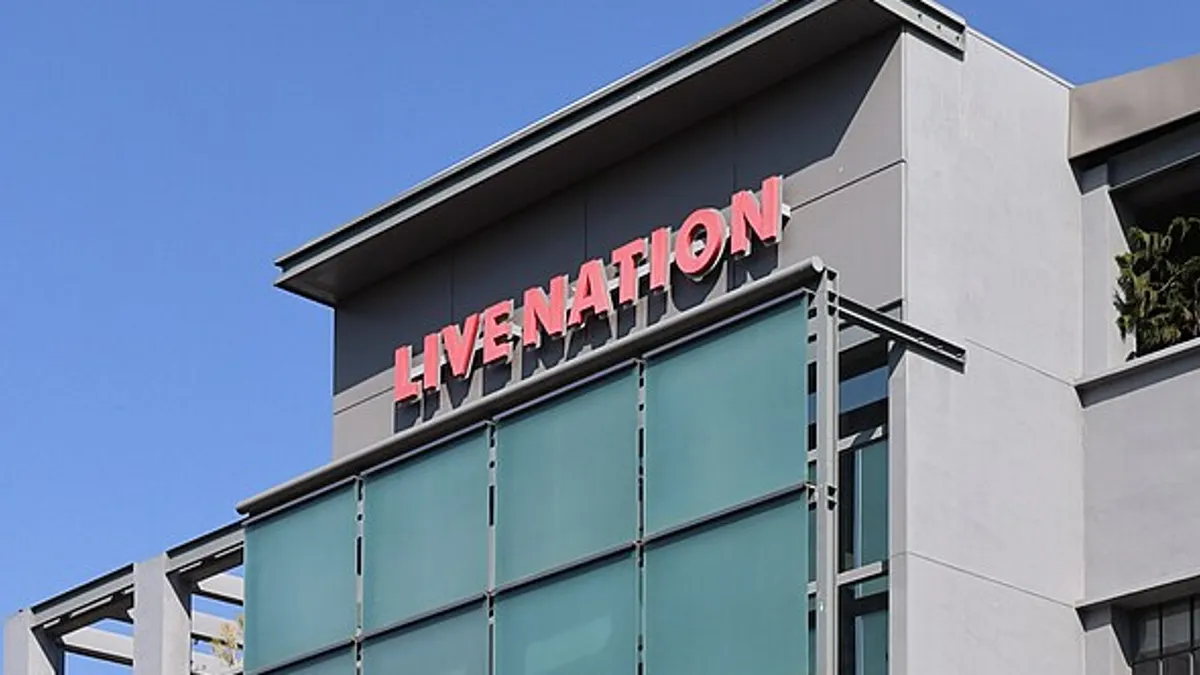 Photo Credit: CoolCaesar / CC by 4.0
Asked by Oppenheimer analyst Jed Kelley about the prospect of a fan subscription or membership product, Rapino pointed to Live Nation’s free All Access program. According to Digital Music News, he described it as a “work in progress” and “kind of a quiet little club we’re building,” adding that there is a “big story there over time of building a membership subscription business with fans.” No pricing, launch timeline, or tier structure has been announced.
On paper, recurring revenue is Wall Street’s favorite upgrade for a cyclical, event-driven business. In practice, live music has spent a decade resisting the subscription math that remade recorded music, video, and even moviegoing. Understanding whether Rapino’s “quiet little club” can become a real profit engine—or whether it will run straight into fan fatigue and regulatory scrutiny—requires looking past the headline buzzword and into the economics of perishable seats, owned venues, and concertgoer behavior.
The Inventory Problem Behind the Membership Pitch
Live Nation’s All Access program is currently free and operates in the U.S. and Canada, automatically enrolling fans who register for artist presales on Live Nation’s U.S. shows. At the November 2026 presentation, Touring President Omar Al-Joulani disclosed that the program has reached 14 million members—and claimed that “those 14 million people went to 34% more shows than they went to over the last three years,” as reported by Digital Music News. According to Music Business Worldwide, Al-Joulani linked All Access directly to using data and AI recommendations to fill those 20 million empty seats.
That detail matters more than the generic “superfan” framing. Concert promotion is a brutal inventory business: once an arena or amphitheater date is booked and an artist guarantee is locked in, an unsold seat expires the moment the lights go down. Selling that marginal seat—even at a discount or via a member perk—carries very little incremental cost, provided the fan buys drinks, parking, or merchandise once inside.
Live Nation’s real estate buildout makes that equation even sharper. According to its Q3 2026 earnings release, the company’s Venue Nation division hosted 26 million fans in the third quarter alone (up 17% year on year), expects more than 75 million fans across 2026, and is investing roughly $800 million of its $1.1 billion 2026 capital expenditure budget into venues. At the November investor presentation, management outlined a pipeline of 38 major venues (each with capacity above 3,000) representing $5.6 billion in total development capital—about $1.9 billion from Live Nation—with a target of lifting venue adjusted operating income from roughly $125 million in 2026 to $850 million by 2031.
In third-party stadiums, Live Nation shares the economics with team owners, landlords, and headline acts; in its own amphitheaters, theaters, and international arenas, it captures the high-margin food, beverage, parking, and VIP upgrades that grew at double-digit rates per ticket at large U.S. amphitheaters in Q3 2026. Paired with internal AI tooling—Ticketmaster Global President Saumil Mehta told investors that 98% of Ticketmaster engineers now use AI coding tools daily and that the platform is building an AI fan assistant while keeping checkout and inventory inside its own walls—a membership layer looks less like a standalone media subscription and more like a customer-acquisition flywheel for Live Nation’s own buildings (author’s assessment based on investor-day and SEC disclosures).
Why Live Music Resists the Netflix Formula
Even with 14 million free members and a fast-growing venue portfolio, turning concerts into a subscription runs headlong into a structural mismatch: live music is high-ticket and low-frequency.
Recorded music subscriptions work because the marginal cost of an extra stream is fractions of a cent and listeners use the service almost every day for roughly $11 to $12 a month. Concerts sit at the opposite extreme. According to Pollstar, the average ticket price for North America’s top 100 tours stood at $134.23 in 2025, averaged $122.15 in the first half of 2026, and climbed back to a quarterly record of $129.07 in Q3 2026—holding above $125 across a three-year plateau. Those figures reflect face-value averages before service fees, parking, travel, and concessions.
At those prices, most concertgoers simply do not go often enough to treat live events like a monthly utility. Survey data from Luminate’s 2026 U.S. Music 360 research shows that even as active fans nudge upward—the share of Gen Z respondents attending two concerts a year rose from 29% in Q1 2024 to 37% in Q1 2026, and more U.S. respondents reported attending three to four shows over 12 months—the core market still clusters around one to four concerts per year. Gen Z attendees spent an average of about $101 per month on live music in Q1 2026 (compared with $94 for millennials), yet 53% of surveyed fans still cited ticket prices as the main reason they did not attend more shows.
That arithmetic rules out a true “all-you-can-eat” stadium pass. If Live Nation bundled headline arena or stadium seats into a flat monthly fee, heavy users would immediately consume far more in artist guarantees and venue costs than their dues could ever cover, while casual fans who attend two shows a year would churn the month after their favorite tour passed through town.
What Past Experiments—From Lawnie Passes to AMC A-List—Actually Prove
Live Nation does not need to guess how physical-event subscriptions behave; both its own archive and the cinema industry have already run the experiment.
Inside Live Nation, every past pass that worked was tightly fenced around either scarce marketing stunts or low-marginal-cost excess capacity. Its Festival Passport—originally priced at $799 (and later $999 for 100-plus festivals)—was strictly capped at 1,000 non-transferable passes and gated through Verified Fan to block resale; it was a viral brand halo, not a mass-market subscription. Far closer to an operational model was the summer Lawn Pass (later rebranded as the Lawnie Pass), priced at $199 plus fees in 2022 and $239 all-in across 25 amphitheaters in 2024. That pass functioned because it applied strictly to open-air amphitheater lawns—high-capacity, company-operated spaces where extra bodies on the grass cost almost nothing and reliably buy $16 beers. Meanwhile, the company’s only true recurring consumer subscription to date, Veeps All Access (launched in October 2023 at $11.99 a month or $120 a year), sells digital livestreams and concert replays rather than physical seats, making it an entirely different cost structure from in-person All Access.
Outside music, the clearest template comes from movie theaters. MoviePass imploded because it acted as a third-party middleman buying full-price seats from exhibitors without capturing popcorn sales. By contrast, AMC’s Stubs A-List—which reached more than 1.1 million members by late 2026, accounting for roughly 20% of AMC’s U.S. attendance at $24 to $30 a month—survived precisely because AMC owns the auditoriums. As financial disclosures and analyst breakdowns from A-List’s early rollout showed, the margin comes not from the subscription fee alone, but from high-margin concessions (historically above 80% gross margin in U.S. cinemas) and full-price tickets purchased by non-member friends who tag along. That parallel explains why Venue Nation is central to Rapino’s ambition: an A-List-style attendance lever only works when the promoter owns the building and controls the bar.
Live Nation is also testing a third route: renting its ticketing pipeline to outside subscriptions. At the investor presentation, Global President of Media & Sponsorship Russell Wallach noted that Spotify Reserved—a multi-year deal launched in the U.S. in June 2026 and expanded to Canada in August 2026 that holds two tickets per eligible tour for an artist’s top Spotify Premium listeners via Ticketmaster—will expand to Australia and EMEA in 2027. Yet Digital Music News reported insider accounts (not independently verified) that the rollout encountered early friction, including limited access to preferred seats. Outsourcing fan curation to Spotify broadens discovery and monetizes distribution, but it also puts another platform between Live Nation and the fan relationship. Turning All Access into a paid club is Live Nation’s bid to keep that relationship—and the recurring margin—in-house.
The Counter-Case: Four Ways a Live Nation Subscription Could Backfire
Even if Live Nation builds a sensible perks-and-access tier rather than an unsustainable all-you-can-eat pass, four serious commercial and regulatory obstacles stand in the way.
1. Selection bias inside the “34% more shows” headline. All Access currently enrolls U.S. fans automatically when they sign up for artist presales. By definition, a fan who tracks tour announcements closely enough to register for a presale is already far more active than the average ticket buyer. That members attended 34% more shows than over the prior three years—during a period when global stadium touring surged—does not prove that All Access caused the extra trips, nor does it show how many of those 14 million free enrollees will hand over a credit card once a paywall appears (author’s assessment).
2. Ticket inflation and the “pay-to-pay” trust deficit. After years of dynamic pricing, Platinum markups, and stacked service fees, consumer goodwill toward Ticketmaster and Live Nation is already thin. If a paid membership merely grants earlier queue access or modest perks on top of $125-plus average tickets—without meaningfully waiving service fees or guaranteeing fair face-value inventory—fans are likely to view it as paying a monthly toll just for the privilege of paying full price. With more than half of surveyed U.S. fans already citing price as their primary barrier to attending more shows, an extractive tier could backfire fast.
3. Scalper and broker arbitrage. Every benefit that makes a live-music subscription attractive to real fans—guaranteed presale priority, lower fees, exclusive seat holds, or last-minute inventory drops—also makes it lucrative for commercial ticket brokers. Unless Live Nation locks paid memberships to verified identities, caps ticket quantities tightly, or enforces non-transferability and face-value resale exchanges, professional resellers will gladly pay a modest annual fee across hundreds of accounts to harvest prime seats. Yet aggressive transfer restrictions often spark backlash from ordinary fans who legitimately need to pass a ticket to a friend.
4. Antitrust and ecosystem-tying scrutiny. Live Nation is exploring a paid cross-ecosystem membership at the most sensitive legal moment in its history. Although the U.S. Department of Justice reached a separate settlement with Live Nation in March 2026 (still subject to Tunney Act court review), a bipartisan coalition of state attorneys general continued to trial—and on April 15, 2026, a federal jury in Manhattan found that Live Nation and Ticketmaster maintained an illegal monopoly over large concert venues. Live Nation is contesting the verdict via post-trial motions, remedies remain undecided, and the company booked a $450 million legal accrual across the first nine months of 2026. In that climate, bundling Ticketmaster presale access, Live Nation tour promotion, and Venue Nation onsite perks into a paid membership risks drawing fresh scrutiny from courts and regulators watching closely for tying and consumer lock-in.
An Access Club, Not an All-You-Can-Eat Pass
Strip away the streaming-era rhetoric, and Rapino’s hint points toward a very specific product. Live Nation does not need to invent a Netflix for stadium tours to extract value from a membership tier. The financially viable version looks closer to an airline status program crossed with Costco or AMC A-List for owned venues: a modest annual or monthly fee that unlocks early presales, partial fee relief, last-minute access to those 20 million unsold seats, and fast-lane or concession perks inside Venue Nation amphitheaters and arenas.
That model fits Live Nation’s balance sheet. Whether it fits concertgoers is another question. A membership that genuinely lowers friction, fills empty midweek seats at fair prices, and rewards repeat attendance inside owned venues could turn All Access into a durable second engine. One that simply erects another paywall in front of scarce, dynamically priced tickets will struggle to survive fan skepticism—and regulatory eyes—no matter how many millions of free accounts sit in the database today.
Sources
- Original article: Digital Music News — Live Nation Hints at a Serious Subscription Offering Ahead; Rapino Teases ‘A Big Story There’ (Ashley King, November 20, 2026)
- SEC Form 8-K — Live Nation Entertainment Q3 2026 Earnings Release (November 5, 2026)
- RouteNote Radar — Live Nation Plans Subscription Service as All Access Reaches 14 Million Members (November 20, 2026)
- Music Business Worldwide — Michael Rapino Talks Live Nation’s AI Strategy, Subscription Ambitions for 14M-Member All Access Program (November 2026)
- Spotify Newsroom — How Reserved by Spotify Works: A Step-by-Step Guide (June 18, 2026; updated August 17, 2026)
- Pollstar — Year-End 2025 Business Analysis (December 23, 2025)
- Pollstar — Mid-Year 2026 Business Analysis (June 22, 2026)
- Pollstar — Strength In Numbers: A Record-Setting Q3 2026 Surpasses $6B (September 22, 2026)
- Luminate — How Gen Z Is Shaping Live Music’s Future (2026)
- Relix — Live Nation Offering First Ever Festival Passport
- MusicRow — Live Nation 2022 Lawn Passes Available Now (March 2022)
- Relix — Live Nation Details 2024 Lawnie Pass (2024)
- Music Business Worldwide — Live Nation-Backed Veeps Launches ‘All Access’ Video Streaming Subscription Service (October 2023)
- Fortune — AMC A-List Subscription Members and Debt (November 4, 2026)
- The Motley Fool — Surprise: AMC Movie Theaters Make Money on Subscriptions (March 3, 2019)
- Paul, Weiss — Live Nation/Ticketmaster Antitrust Verdict: Key Takeaways From the States’ Jury Trial Win (April 2026)
- TicketNews — Live Nation Reports Record $10.1 Billion Quarter as Antitrust and Political Pressures Mount (November 2026)