
When an Album Becomes a Vertical Soap: Macy Gray, ReelShort, and Music's Hunt for Attention
Updated:
Scroll through the homepage of ReelShort on any given afternoon and the programming speaks a very specific dialect of mobile escapism: secret-billionaire romances, revenge plots, and supernatural cliffhangers with titles like My Cursed Merman Husband Rules the Deep and I'm a Witch, But I Just Want to Farm, as Music Ally dryly noted. Soon, sitting right alongside them in those vertical carousels will be a Grammy-winning soul singer debuting a new studio record.
According to a November 23, 2026 Variety exclusive, Macy Gray has partnered with ReelShort and its in-house production arm, Sunflower Studio, to premiere her upcoming album inside an original scripted microdrama. Both the vertical series and the album will carry the title The Trouble With the Truth. Casting is underway ahead of a planned January 2027 shoot, timed to a Q1 2027 music release through Gray's label setup, DNA Music/Hitmaker Distro. Gray will star in the series, with her new songs woven directly into its dramatic arc.
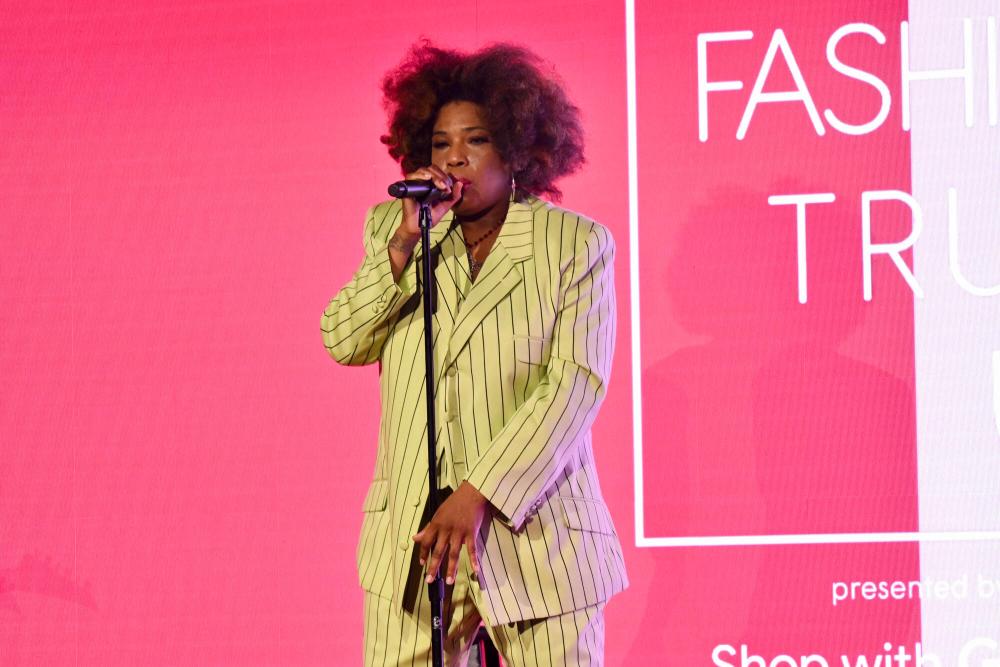 Macy Gray at the Fashion Trust U.S. 2024 Awards in Beverly Hills. Credit: Michael Buckner/WWD
One small discography correction is worth noting upfront. Variety framed The Trouble With the Truth as Gray's first new album in nearly a decade since 2018's Ruby. In fact, catalog records on AllMusic show she released a full-length band album, The Reset, in February 2023 as Macy Gray & The California Jet Club, and music press in 2025 covered an announced project titled Love Songs for Big Hearts and Robots featuring DNA Music/Hitmaker Distro credits (That Eric Alper). What The Trouble With the Truth actually represents is Gray's first solo studio album since Ruby—a distinction that matters because it shows an artist who has spent years actively experimenting outside the major-label cycle rather than emerging from a nine-year silence.
Stripped of press-release superlatives—"the first of its kind," as ReelShort billed it—the deal is less an eccentric celebrity detour than a snapshot of two entertainment economies converging out of necessity. One is a fast-growing vertical-video business trying to break its addiction to expensive social-media ads; the other is a hyper-saturated music streaming market where an established artist's new independent album can vanish in a week without an external storytelling engine.
Inside the $3.6 Billion Ex-China Microdrama Machine
To understand why ReelShort wants a soul album inside its app, it helps to look at the economics underneath the melodrama. Operated by California-based Crazy Maple Studio and backed by Chinese digital publisher COL Group, ReelShort adapted China's booming duanju (short-drama) model for Western phones in 2022. The formula is stripped to pure narrative velocity: 60-to-90-second vertical episodes packed with cliffhangers, seeded as trailers across TikTok, Instagram, and YouTube, and monetized inside the app once viewers hit a paywall and buy virtual coins or recurring subscriptions to keep watching.
The scale is no longer niche, even if research firms measure its boundaries differently. According to an August 2026 report from Media Partners Asia (MPA), microdrama revenue outside China climbed from $2.7 billion in 2025 to an estimated $3.6 billion in 2026, and is projected to reach $9.5 billion by 2031. MPA estimates ReelShort's own revenue surged from $97 million in 2023 and $400 million in 2024 to $785 million in 2025, putting it on pace for $1.05 billion in 2026—a 29% share of the ex-China market, ahead of DramaBox (21%) and DramaWave (13%). (Other trackers report higher gross numbers: Appfigures estimates cited in industry coverage put ReelShort's 2025 revenue near $1.2 billion, a divergence that typically reflects whether app-store commissions and direct web billing are counted gross or net.) Globally, including China, Omdia estimates microdrama revenue reached $11 billion in 2025 and projected $14 billion in 2026, with the U.S. accounting for roughly $1.5 billion—about half of all revenue outside China.
What makes these apps unusually intriguing to marketers is not sheer reach, but session intensity. Omdia's analysis of Sensor Tower mobile data, highlighted by Music Ally and eMarketer, found that U.S. mobile users spent an average of 35.7 minutes per day inside ReelShort—outpacing Prime Video (26.9 minutes), Netflix (24.8 minutes), and Disney+ (23.0 minutes). Yet the audience footprint remains far smaller than mainstream streaming TV: Similarweb data cited by eMarketer puts ReelShort at roughly 1.2 million U.S. monthly active mobile users, about one-tenth of Netflix's 12 million. As eMarketer put it, microdramas are "a frequency play," not a mass-reach substitute for prestige streaming.
That tension explains ReelShort's real strategic motive (an inference supported by MPA's margin data). Despite generating $785 million in 2025, ReelShort posted a net loss of roughly $12 million that year, largely because user-acquisition marketing absorbed 55% of revenue; separate Variety reporting cited by eMarketer notes that some microdrama campaigns devote up to 90% of budgets to paid social ads rather than production. MPA projects ReelShort will swing to its first meaningful profit in 2026—about $63 million in EBITDA and $40 million in net profit—by routing more billing to its own web store to bypass app-store fees, growing ad revenue, and trimming marketing intensity. At the exact same moment, TikTok's free, ad-supported microdrama app PineDrama (officially launched in January 2026) has already crossed 100 million downloads and roughly 7 million daily active users as of October 2026.
In that environment, paying a recognizable Grammy winner to anchor a Sunflower Studio original does something paid Instagram ads cannot: it buys earned mainstream press, signals cultural legitimacy to advertisers and talent, and pulls in an older, music-conscious audience segment without burning seven-figure Hollywood production budgets. As Sunflower Studio head Fiona Li told Variety, partnering with Gray lets the company explore "bringing vertical drama into the world of music and opening up new ways for artists and audiences to connect."
Three Eras of Music-Meets-Video: From Lemonade to TikTok Clips to Vertical Cliffhangers
To see where The Trouble With the Truth fits in music-marketing history, it helps to compare three distinct models for pairing an album with moving images.
| Dimension | Prestige Visual Album (2013–2016 peak) | Short-Form Social Virality (2020–present) | Microdrama Album Rollout (2026–2027 test) |
|---|---|---|---|
| Representative cases | Beyoncé (Lemonade), Frank Ocean (Endless) | TikTok / Reels / Shorts audio trends | Macy Gray × ReelShort (The Trouble With the Truth) |
| Typical production budget & timeline | Multi-million-dollar film shoots; months of post-production | Ultra-low (phone-shot clips, creator seeding); days | Under $300,000 for ~100 minutes; 7–9 shoot days, ~2 months script to launch (Emmy Magazine) |
| Distribution & monetization | Prestige TV premiere + DSP exclusivity (HBO/Tidal, Apple Music) | Free algorithmic feeds + "Add to Music App" funnel | Paid social trailers feeding into freemium coin/subscription or ad-supported mobile drama apps |
| Role of the album | Cohesive auteur statement; music drives the visual narrative | Fragmented 15-second hooks; single-track virality over album depth | Multiple album tracks embedded across serialized 1-to-2-minute dramatic episodes |
| Who can realistically use it | A-list superstars backed by major labels or platform subsidies | Emerging or pop acts with memeable hooks and constant content output | Mid-career, legacy, or crossover artists with acting presence and sync-friendly catalogs |
A decade ago, the visual album belonged almost exclusively to pop's upper stratosphere. When Beyoncé dropped Lemonade in April 2016 via an hour-long HBO film paired with Tidal exclusivity, PBS NewsHour examined it as an assertion of total artistic and commercial control—an event designed to drive subscriptions while reframing what an album could mean culturally. Four months later, Frank Ocean released the 45-minute Endless exclusively on Apple Music, turning a visual album into a contractual lever that satisfied his Def Jam obligation before he released Blonde independently. Both projects succeeded because platform giants were willing to subsidize cultural spectacle in a land grab for streaming subscribers.
That subsidy era largely faded, replaced by the TikTok discovery machine. Short-form clips democratized viral reach and drastically lowered promotional costs, while integrations like TikTok's "Add to Music App" built a direct bridge from viral sounds to streaming playlists. Yet the TikTok model has well-documented limits: it favors 15-second hooks detached from full-album storytelling, rewards youth-skewing trend participation, and leaves many mid-career artists struggling to translate social impressions into durable album listeners.
Microdramas attempt to occupy the middle ground between those two extremes. According to Emmy Magazine, a complete 60-to-80-episode vertical series running roughly 100 minutes typically costs under $300,000—aligned with SAG-AFTRA's low-budget microdrama contract tier—and films in seven to nine days at a clip of 15 to 20 script pages per day, moving from script to release in about two months. For a fraction of a traditional music-video campaign for three or four singles, an artist and platform can stage a feature-length dramatic narrative in bite-sized installments, giving an entire tracklist emotional staging and repeated viewer touchpoints.
Why Mid-Career and Independent Artists Are Hunting Outside Spotify
From Macy Gray's side of the table, the logic is rooted in a stark streaming reality. Gray is no obscure newcomer: her 1999 debut On How Life Is earned triple-platinum RIAA certification and a Grammy for "I Try," and she continues to tour internationally across Europe and Australia. Yet releasing a new solo album independently in 2027—backed by DNA Music and Hitmaker Distro rather than a major-label marketing war chest—means launching into the most congested distribution pipe in recorded-music history.
Figures from Luminate's 2025 Year-End Music Report, summarized by Hypebot and Songfacts, lay bare the bottleneck:
- 253 million tracks sat on music streaming services by the end of 2025, with roughly 106,000 new tracks uploaded every day (up 7% from 99,000 per day in 2024).
- 88% of all tracks logged 1,000 or fewer streams across the entire year, and 120.5 million tracks registered between zero and ten streams.
- While global on-demand audio streams grew 9.6% to 5.1 trillion, the mature U.S. market slowed—and U.S. "current" music (released within the past 18 months) actually declined 1.6% year-over-year. Songs released across the five-year span from 2021 to 2025 accounted for only 43% of streams, meaning older catalog dominates listening.
That creates a peculiar trap for veteran artists (an industry dynamic observable across legacy releases, though not unique to Gray). Listeners still stream "I Try" on nostalgia playlists, and fans still buy concert tickets to hear the classics. Getting those same listeners—let alone younger mobile users—to care about a new independent album is vastly harder. Algorithmic feeds optimize for proven catalog familiarity or fast-spiking Gen Z viral sounds; traditional music-press cycles rarely move streaming needles; and few indie distributors can afford six-figure video campaigns with uncertain ROI.
Partnering with Sunflower Studio changes the math in three concrete ways. First, it hands Gray an audience that streaming algorithms rarely serve her: Emmy Magazine notes that Western microdrama viewers skew predominantly female and demonstrate high daily session times. Second, it wraps an entire album in character-driven emotional context rather than dropping songs cold onto Release Radar. Third, it piggybacks on ReelShort's paid-social engine—an infrastructure that already buys hundreds of millions of dollars in TikTok, Instagram, and YouTube trailer placements every year to acquire viewers. Even if only a slice of those trailer impressions notices Gray's name and music, it delivers top-of-funnel visibility an independent rollout could rarely buy on its own.
The Skeptical Case: Four Reasons the Funnel May Break
Still, treating The Trouble With the Truth as the blueprint for music's next visual-album boom would ignore four serious structural flaws in the microdrama model.
1. The conversion chasm between plot dopamine and audio listening. There is currently no publicly verified conversion benchmark showing that microdrama viewers migrate to Spotify or Apple Music to stream featured songs. Microdrama engagement is engineered for rapid plot escalation—an emotional shock every 60 seconds, followed immediately by an auto-play cliffhanger or unlock prompt. Pausing mid-binge to look up a track, switch apps, and sit with a four-minute soul record directly interrupts the dopamine loop the platform is designed to protect. As eMarketer noted in its risk assessment of the format, microdrama marketing still suffers from "immature measurement, with no standardized third-party verification." High minutes-per-day inside ReelShort do not automatically translate into sustained streams elsewhere.
2. Paywall friction and UX hostility. Unlike TikTok or TikTok's free, ad-supported PineDrama app, ReelShort is fundamentally a direct-to-consumer micropayment machine: MPA reports that 85% to 90% of its revenue comes from consumer payments (with subscriptions driving 60% to 70% of consumer spend). Media analyst Janko Roettgers (Lowpass) has argued that microdrama apps frequently embrace "user-hostile design choices to make quick cash," locking later episodes behind virtual-coin walls and aggressive prompts. Premiering a new album inside a coin-gated app introduces a strange contradiction: music discovery usually thrives on frictionless access, yet fans who follow Gray into ReelShort may hit a paywall halfway through the story—and leave before hearing the back half of the record.
3. Aesthetic compression and the "background wallpaper" trap. Shooting 70-plus vertical episodes in seven to nine days on a sub-$300,000 budget leaves almost no room for slow musical staging. In a critique of corporate brand microdramas published on Sked Social, analyst Gabby Torres-Soler contrasted Issa Rae's hit vertical series Screen Time (which drew roughly 75 million views in its first week on TikTok because it relied on prestige-level scripting and acting) with heavy-handed promotional series like P&G's 50-episode deodorant drama The Golden Pear Affair. Her warning applies directly to music: "The format is not the moat. The cast is. The script is." If The Trouble With the Truth leans too hard on soap-opera tropes, Gray's songs risk being sliced into 15-second emotional cues—audible wallpaper behind arguments and plot twists—diluting the album's artistic identity rather than elevating it.
4. A one-off publicity fit, not a repeatable industry template. Even if The Trouble With the Truth works reasonably well for Gray, her circumstances are unusually specific. She already has decades of screen acting credits, an unmistakable voice and persona, and first-mover PR value as ReelShort's headline musical experiment. Most recording artists cannot credibly carry a 15-to-20-page-a-day scripted shoot, nor do most musical genres fit neatly inside serialized romance or melodrama. Furthermore, ReelShort's U.S. reach—roughly 1.2 million monthly active mobile users—is modest compared to YouTube, TikTok, or Spotify. Without a massive cross-platform release strategy outside the app, the vertical series looks less like a scalable replacement for the visual album and more like a clever, low-cost sync-and-PR stunt.
Conclusion: Not the New MTV, But a Symptom of Where Music Lives Now
Macy Gray's ReelShort experiment is unlikely to turn vertical soap operas into the new MTV. The gap between a 60-second cliffhanger addiction and attentive album listening is wide, ReelShort's U.S. user base remains a fraction of mainstream streaming platforms, and coin-gated paywalls are an awkward vessel for music discovery.
Yet writing the deal off as pure novelty misses the underlying pressure driving it. When 106,000 tracks land on streaming platforms every day and new releases lose ground to older catalog, audio distribution alone no longer creates narrative gravity—especially for independent and mid-career artists operating without major-label firepower. At the same time, vertical-drama platforms burning half their revenue on social-media ads need recognizable names to earn mainstream attention cheaply.
Whether The Trouble With the Truth succeeds in converting binge-watchers into album listeners when it arrives in early 2027, or fades as an intriguing footnote, it underlines a blunt truth about the post-streaming music economy: making a record is no longer the hardest part—finding any screen where audiences still linger for thirty-five minutes a day is.
Sources
- Michael Schneider, Macy Gray to Release Next Album Inside a Microdrama, Partnering With Vertical Platform ReelShort (EXCLUSIVE), Variety, November 23, 2026 (Original article).
- Stuart Dredge, Macy Gray is premiering her new album inside a micro-drama, Music Ally, November 24, 2026.
- Stuart Dredge, Omdia says 'micro-dramas are winning the battle for attention', Music Ally, February 23, 2026.
- ReelShort set to cross $1 bn as micro-drama market gathers pace (citing Media Partners Asia report ReelShort / Crazy Maple Studio: Inside the US$1B Micro-Drama Machine), Indian Television, August 6, 2026.
- FAQ on Microdramas: The mobile video format outpacing Netflix in daily engagement, eMarketer.
- Micro-Dramas: How Short-Form Vertical Series Took Over Hollywood, Emmy Magazine (Television Academy).
- Luminate Reports Music Streaming Saturation 2025–2026, Hypebot, January 20, 2026.
- Global Music Streams Hit 5 Trillion in 2025 With Oldies, Christian, and AI Music Leading the Charge, Songfacts, January 2026.
- Alec Chillingworth, What is PineDrama, and how does it work?, Epidemic Sound, November 3, 2026.
- With 'Lemonade,' Beyoncé shows she's an artist in control, PBS NewsHour, April 25, 2016.
- Janko Roettgers, Microdrama apps are embracing user-hostile design choices to make quick cash, Lowpass, October 23, 2025.
- Gabby Torres-Soler, Why Most Brands Are Going to Fail at Microdramas, Sked Social, June 15, 2026.
- Macy Gray & The California Jet Club – The Reset, AllMusic; and Macy Gray Announces 'Love Songs for Big Hearts and Robots', That Eric Alper, 2025.