
When AI Scalpers Raid the Drum Room: El Estepario Siberiano’s €230,000 Outcry and the Fragile Economics of Music Creators
Updated:
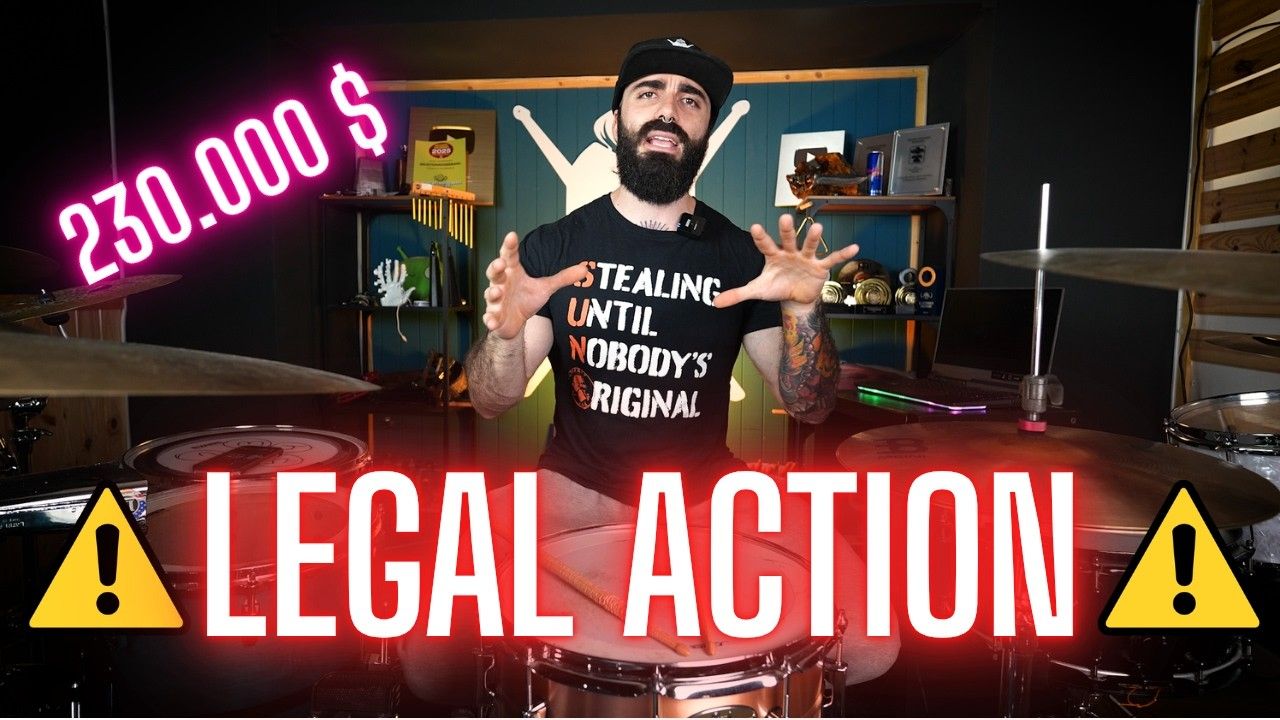
In late November 2026, Spanish drummer Jorge Garrido—better known to more than 10 million social-media followers as El Estepario Siberiano—ran his YouTube channel through The Atlantic’s AI Watchdog database. The result set off a furious video titled This A.I company stole ALL my CHANNEL?, quickly picked up by MusicRadar: 572 of his long-form drumming videos had surfaced in datasets used to train generative AI systems.
Garrido did the math on camera. Between roughly a week of rehearsal per upload and paying an audio engineer and a camera operator, he put his out-of-pocket cost at around €400 per video—roughly €230,000 invested over a decade (strictly €228,800 across 572 clips). Pointing to an AI-generated drum clip featuring a cartoon cat in place of a human player, he declared that tech firms had taken a decade of labor and his own capital to train tools capable of mimicking his craft for free, announcing his intent to take legal action and asking his audience for advice.
Most headlines around AI and music still revolve around major record labels fighting foundation-model developers in federal court, or artists trapped in automated Content ID disputes. Garrido’s outburst points to a different, structurally more lopsided battlefield: the direct commercial funnel of instrumental performers and music-education creators, where upstream dataset scraping feeds a fast-growing grey market of low-cost "AI scalpers"—automated copycat channels, reskinned avatar clips, and synthetic reaction farms that strip-mine human tutorials and performances for clicks.
From 572 Scraped Videos to an Automated Copycat Loop
To understand why Garrido’s reaction resonated far beyond the metal-drumming niche, it helps to look at how his career was built. Born in Valencia in 1996, Garrido spent years playing local orchestras and cover bands before joining Spanish heavy-metal act Saratoga from 2020 to 2023, later co-founding the band The Cost and touring with Residente—including a 2024 Mexico City Zócalo performance before roughly 180,000 people, according to biographical records compiled from Spanish music press and Drumeo. Online, he built an empire on extreme technical discipline: one-handed covers of Slipknot and Avenged Sevenfold, linear speed drills, and clean multi-mic drum-cam breakdowns that earned him YouTube Drummer of the Year at the 2023 Drumeo Awards and Drummer of the Year in 2024.
That kind of footage is catnip for generative video and audio pipelines. According to reporting by No Film School and Nieman Lab examining The Atlantic’s AI Watchdog investigation, more than 15.8 million YouTube videos from over 2 million channels ended up in training sets compiled or utilized by companies including Microsoft, Meta, Amazon, Nvidia, Runway, ByteDance, Snap, and Tencent—among them massive corpora like Microsoft Research Asia’s HD-VILA-100M and the academic YT-Temporal-180M set. A leaked internal Runway sourcing spreadsheet ("Video sourcing – Jupiter"), originally obtained by 404 Media and summarized by Nieman Lab, showed developers explicitly tagging channels for "walkthroughs," "show and tell," high-motion framing, and consistent human subjects. High-framerate drum videos with synchronized audio and stable overhead lighting fit that technical shopping list almost to the pixel.
Yet for working creators, model training is only half the threat. What visibly rattled Garrido was the downstream copycat economy already live on short-form feeds. In an earlier YouTube Short titled IT’S HERE TO STAY, he noted that his performances were already spawning AI imitators and synthetic reaction clips. "AI reactions to AI performers and then the cycle is complete," he warned, asking what would stop platforms like Meta from cutting human creators out of the recommendation wheel altogether. Together, the two complaints map out the modern scalper pipeline: foundation models ingest real musicians’ catalogs at near-zero marginal cost, and grey-market operators then deploy cheap video, audio, and avatar tools to flood Shorts, Reels, and TikTok with derivative spins that compete directly against the original creator in the same algorithmic feed.
Why Instrumental and Music-Education Creators Are More Vulnerable Than Record Labels
When major record labels confront AI infringement, they bring formidable structural armor: centrally registered master catalogs, direct Content ID administration, collective bargaining leverage, and multi-million-dollar litigation budgets. Independent instrumentalists and music-education creators operate under almost the exact opposite economics.
First, their platform ad revenue is already leaky by design. Much of what drives discovery for a drum or guitar YouTuber—covers of Slipknot, System of a Down, Nirvana, or Post Malone, as well as song breakdowns—relies on third-party musical compositions. Under YouTube’s cover-song monetization rules, rights holders frequently claim or share AdSense revenue via Content ID. Music educators face an even sharper squeeze: as Berklee College of Music’s analysis of Content ID and fair use documented, publishers routinely claim ad revenue even on brief instructional excerpts, leaving educators with little practical recourse.
Second, because ad payouts are thin and contested, the real business lives downstream of the video. Industry guides for cover musicians and YouTube educators—such as Orphiq’s breakdown of the cover-artist business model and vidIQ’s creator monetization analysis—consistently note that AdSense serves primarily as a top-of-funnel acquisition channel. Profitable instrumental creators convert attention into gear endorsements and brand sponsorships (in Garrido’s case, high-profile deals with Pearl Drums and Meinl Cymbals), direct-to-consumer merchandise (his official Shopify storefront sells branded T-shirts at €25 alongside caps and beanies), paid online courses, downloadable drum tabs and stem packs, Patreon communities, and live clinics.
That funnel makes music educators and instrumentalists far more exposed to AI scalpers than a traditional recording artist (an assessment drawn from comparing label catalog economics with creator-funnel structures):
- High production overhead meets near-zero cloning cost. Recording acoustic drums cleanly requires rooms, microphones, preamps, heads, sticks, rehearsal hours, and mixing—Garrido’s €400-per-video baseline is plausible for a multi-camera, engineered drum production. A grey-market operator needs none of it. With off-the-shelf stem separation, automated MIDI/drum transcription, AI voice dubbing into Spanish, Portuguese, or English, and generative avatar overlays, a copycat channel can repackage a creator’s groove, pacing, or visual hook in minutes.
- No Content ID shield for style, framing, or pedagogy. A label’s master recording triggers an acoustic fingerprint match the second someone re-uploads it. A cartoon cat performing a synthetically re-rendered drum pattern—or an AI-dubbed "faceless" tutorial paraphrasing an educator’s exercise—passes straight through standard audio fingerprinting while siphoning the casual viewer who might otherwise have subscribed, bought a course, or clicked an affiliate link.
- Brand-deal dilution. Gear sponsors pay top dollar for distinctive human reach and audience trust. If short-form feeds normalize synthetic drum spectacles and AI-narrated "reaction" clips at a fraction of the cost, mid-tier instrumentalists—who lack Garrido’s 10-million-follower moat—risk watching both organic reach and sponsorship rates compress.
The Cross-Border Enforcement Trap: Why One Creator Cannot Litigate Away a Grey Market
Garrido’s vow not to "let these billionaires walk off without facing any kind of consequence" captures genuine anger across the creator economy. Turning that anger into an enforceable legal outcome from Valencia, however, runs into four interlocking barriers.
1. The Registration Gap and the High Cost of U.S. Discovery
Most of the major AI labs implicated in The Atlantic’s dataset index are headquartered in the United States, where bringing a standard federal copyright infringement suit generally requires registering individual works with the U.S. Copyright Office—something independent YouTubers almost never do across hundreds of weekly uploads. (Nieman Lab noted that even large independent news shows like The Majority Report, with over 11,000 scraped videos, had registered none of them.)
To sidestep that barrier and avoid fair-use fights, a wave of U.S. creators—including h3h3’s Ted Entertainment alongside golf instructional channels Matt Fisher and Golfholics—filed proposed class actions against Nvidia (November 2025), Meta, and ByteDance (December 2025) leaning heavily on DMCA §1201 anti-circumvention claims, arguing that rotating-IP scraping bypassed YouTube’s technical download protections, as detailed by Piracy Monitor and Bloomberg Government. Yet even with experienced U.S. class-action counsel, those cases face protracted procedural warfare: in May 2026, Nvidia moved to dismiss the amended DMCA claims, arguing §1201 does not bar bypassing measures that merely limit copying rather than access, according to Law360. For a solo European creator funding counsel out of pocket, cross-border U.S. litigation can easily consume multiples of €230,000 before a court even certifies a class.
2. Europe’s "Machine-Readable Opt-Out" Catch-22
Suing at home in Spain or across the European Union is no simpler. Under Article 4(3) of the EU Digital Single Market (DSM) Directive (2019/790)—transposed into Spanish law via Article 67 of Royal Decree-Law 24/2021, per Wolters Kluwer’s Copyright Blog and CMS Spain—commercial text and data mining is broadly permitted unless rightholders have expressly reserved their rights "in an appropriate manner, such as machine-readable means."
Here lies the trap for platform-hosted creators, highlighted in European legal commentary from Garrigues: a YouTuber does not control YouTube’s robots.txt file, HTTP headers, or server-level metadata. While YouTube CEO Neal Mohan has stated that third-party scraping violates YouTube’s terms of service, and YouTube introduced an opt-in third-party AI training toggle in December 2024 (YouTube Help; TechCrunch), that toggle offers zero compensation, remains untested as a retroactive shield against datasets harvested years earlier, and leaves open whether Spain’s proposed—and heavily contested—Extended Collective Licensing (ECL) framework for AI training would ever compensate individual YouTubers meaningfully.
3. Anonymous Offshore Scalpers and Platform Whack-a-Mole
Even more elusive than Big Tech are the downstream grey-market operators running automated copycat networks. These entities frequently sit behind shell accounts and anonymous offshore profiles, generating hundreds of templated channels across jurisdictions where serving legal process is effectively impossible.
Platform moderation offers only porous relief. YouTube absorbs more than 20 million uploads per day. In July 2026, YouTube reorganized its "inauthentic content" monetization policy into three categories—"Generic or Repetitive Content," "Unsatisfying or Off-putting Content," and "AI Personas Related to Sensitive Topics"—yet as Tubefilter and TechCrunch reported, YouTube emphasized this was not a new ban and confirmed that AI-assisted channels remain monetizable if they add a "transformative spin." Meanwhile, YouTube’s AI likeness-detection system—expanded to all YouTube Partner Program creators in September 2025—requires opting in with biometric facial data and targets recognizable face or voice deepfakes. It does nothing to stop a cartoon cat reskinning a drummer’s rhythm, or an anonymous channel re-narrating a drum lesson in another language. Policing such clones via manual DMCA notices quickly turns into unpaid, never-ending whack-a-mole.
A Reality Check: What Siberiano’s Argument Leaves Out
Sympathy for working musicians does not mean taking every piece of Garrido’s case at face value. Several legal and commercial realities complicate the narrative.
First, the €230,000 figure is a self-reported production cost, not a measure of legal or commercial loss. Garrido’s estimate (€400 across 572 videos, or €228,800 before rounding) comes solely from his own video and has not been independently audited. More importantly, calling that entire sum "stolen from my pocket" conflates historical sunk cost with lost profit. Those same 572 videos already generated massive returns for Garrido over the past decade: they propelled him past 10 million followers, secured back-to-back Drumeo awards, landed top-tier Pearl and Meinl endorsements, built an international merchandise store, and opened doors to major live gigs. Courts assessing damages look at proven market substitution, lost licensing value, or statutory bands—not an artist’s cumulative ten-year studio receipts.
Second, copyright law draws a hard line between a recorded video and a musician’s skill. Under U.S. copyright doctrine—codified in 17 U.S.C. § 102(b)—protection covers original, fixed audiovisual expression and sound recordings, never underlying ideas, procedures, methods, or playing techniques. As intellectual-property commentary on drum-part protection (JD Supra) and prior U.S. litigation over standard beats (such as a 2005 Southern District of New York dispute summarized by the GWU Music Copyright Infringement Resource) illustrate, short drum grooves, stickings, and pedagogical drills are notoriously difficult to copyright on their own. Add the fact that a substantial share of Garrido’s viral videos are covers of copyrighted rock and metal songs owned by third-party music publishers, and establishing clean, exclusive ownership over every scraped clip becomes far messier than a viral rant suggests.
Third, crowdsourcing legal advice doubles as an attention-economy play. Asking millions of subscribers how to fight back is a legitimate way to locate specialized attorneys or gauge interest in a collective creator suit—MusicRadar itself speculated about a potential music-YouTuber class action. At the same time, high-emotion anti-AI videos reliably trigger algorithmic engagement, press pickup, and community solidarity (an editorial observation on creator-economy dynamics). Public outrage builds leverage, yet a viral callout is still miles away from a filed complaint.
Finally, individual litigation has a low structural ceiling. Even if Garrido joined a U.S. class action or secured a European settlement against one named AI developer, a courtroom victory against one firm would neither purge weights already trained nor shut down thousands of anonymous grey-market scalpers using open-weight video, stem-separation, and dubbing tools to strip-mine YouTube overnight.
When Attention Becomes Cloneable, What Remains Defensible?
El Estepario Siberiano’s €230,000 outcry matters not because one drummer is about to bring Silicon Valley to its knees, but because it marks the arrival of AI disruption inside the bread-and-butter funnel of working instrumentalists and music educators. Major labels are negotiating licensing frameworks over finished masters; solo musicians who built careers on demonstrating physical skill in a small room have no seat at that table, and far less legal armor when automated scalpers clone the top of their funnel.
Policy reforms—from clearer opt-out enforcement under the EU DSM Directive to collective creator litigation under DMCA §1201—may eventually raise the price of industrial scraping. They will not restore the pre-AI era in which owning a clean camera angle and a killer groove guaranteed algorithmic scarcity. For instrumental creators and music educators, the durable moat is increasingly shifting away from easily scraped short-form spectacle toward what grey-market bots cannot replicate or sign: live touring and in-person clinics, verified community cohorts, deep hardware partnerships, and the physical credibility of a human player actually sitting behind the kit. A generative model can animate a cartoon cat to mimic a blast beat; it still cannot headline a clinic, endorse a cymbal line, or earn a decade of human trust in the room.
Sources
- Original article: Beth Simpson, "'They stole a decade of my life and my effort and €230,000 from my pocket': El Estepario Siberiano threatens legal action against AI scalpers and wants your advice", MusicRadar, 23 November 2026.
- El Estepario Siberiano, This A.I company stole ALL my CHANNEL? and IT’S HERE TO STAY, YouTube.
- Wikipedia (citing Drumeo Awards, Drumming News Network, Meinl Percussion, and La Razón de México), El Estepario Siberiano; official storefront, elestepariosiberiano.com.
- Andrew Deck, "Hundreds of thousands of videos from news publishers like The New York Times and Vox were used to train AI models", Nieman Lab, 30 October 2025 (citing Alex Reisner, The Atlantic AI Watchdog).
- Jason Hellerman, "Nearly 16 Million YouTube Videos Were Scraped to Train AI Models", No Film School, 10 September 2025.
- Steven Hawley, "nVidia sued for allegedly scraping copyright-protected video from YouTube, in potential class-action", Piracy Monitor, 1 December 2025.
- Bloomberg Government, "Meta, ByteDance Hit With YouTubers’ AI Copyright Scraping Suits", December 2025; Law360 / MLex, "Nvidia pushes to dismiss amended US DMCA claims over YouTube scraping", May 2026.
- YouTube Help, "Monetizing eligible cover videos" and "Your content & third-party training".
- Berklee College of Music, "Fair Play: Asserting Fair Use in the Age of Content ID"; Orphiq, "Cover Artist Business Model: Making Money with Covers"; vidIQ, "How to Make Money on YouTube As a Musician".
- James Hale, "YouTube updates 'inauthentic content' monetization policy", Tubefilter, 13 July 2026; TechCrunch, "YouTube clarifies policies around AI slop and upsetting videos", 20 July 2026; TechCrunch, "YouTube will let creators opt into third-party AI training", 16 December 2024; Axios, "YouTube expands likeness detection to all creators", 16 September 2025.
- Wolters Kluwer Copyright Blog, "The New Copyright Directive: Text and Data Mining (Articles 3 and 4)" and "A first look at the Spanish proposal to introduce ECL for AI training"; CMS Spain, "Royal Decree-Law 24/2021 of 2 November"; Garrigues, "AI and copyright: from 'machine-readable' to 'machine-actionable' in the opt-out from TDM".
- JD Supra, "Beats Me – Intellectual Property Protection for Drum Parts"; George Washington University Law School Music Copyright Infringement Resource, 418 F.Supp.2d 369 (S.D.N.Y. 2005).