
Lanlao Signs with RCA Records China: After the Wild, Organic Breakout, What Can a Global System Actually Catch?
Updated:
On September 10, 2026, Sony Music China announced a global exclusive strategic partnership with rapper Lanlao SKAI ISYOURGOD, signed through its label RCA Records China. The official language was about "charting new territory" — but for anyone who has followed the Chinese internet over the past two years, that territory already existed: from a home studio in Huizhou to Memphis drum loops, from the "lai cai" meme flooding Douyin to AI cat covers on overseas TikTok, Lanlao's global audience arrived before the label did.
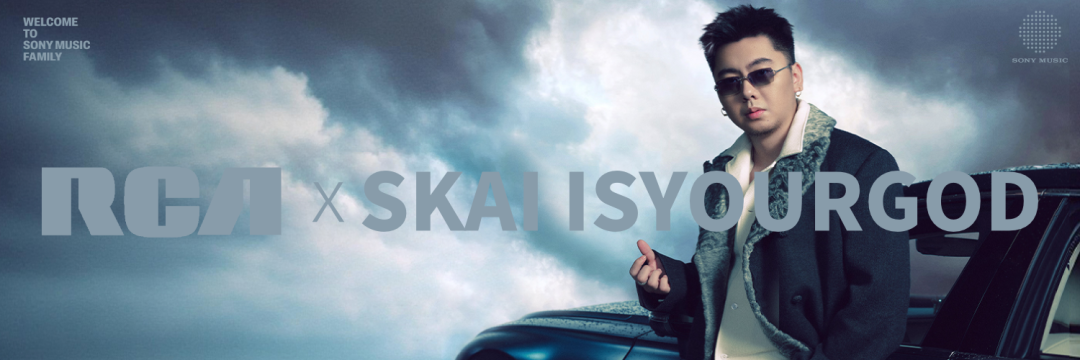
What makes this signing genuinely worth discussing is not "yet another Chinese artist signed to an international company" — it's a question of sequence. The usual path for Chinese-language music going global has been to sign first, then let the international company invest resources to "push the artist out." Lanlao's path runs in reverse: he first built a real overseas audience and market feedback through Chinese-language work, and only then did a major label come in. This is not an attempt to go global from zero; it is an experiment in fitting wild, organic growth into an industrialized system. Whether the experiment succeeds depends on things the press release didn't say.
First, Meet the Person: Huizhou, a Media College in Chengdu, a Power Company
According to the English Wikipedia entry, Lanlao was born in 1998 in Huizhou, Guangdong, to a father from Leshan, Sichuan, and studied performing arts at Sichuan University of Media and Communications in Chengdu. A July 2025 face-to-face interview with Red Star News filled in more detail: he worked as an extra on film sets and at an electric power company, and quit to do music full time after releasing his first studio album, Shunfeng Shunshui Shuncai Shen ("Smooth Sailing and God of Wealth"), in 2023. (Wikipedia gives his real name as Chen Xukai; Sixth Tone notes he has never publicly confirmed his name, so this remains unverified.)
An interesting coincidence: his first album came out on September 10, 2023, and the global exclusive signing was announced on September 10, 2026 — exactly three years apart. What happened in those three years is, in miniature, a specimen of "wild, organic" global breakout.
In August 2024, he released his second album, Stacks from All Sides (八方来财). Three songs from it — "Stacks from All Sides," "Karma Code" (因果), and "Blueprint Supreme" (大展鸿图) — detonated one after another. The work uses American Southern Memphis rap as its skeleton, sampling Korean singer Insooni's 1987 track "Beetle on Vinyl" and passages from the Cantonese opera The Flower Princess (帝女花), and packs small-time fortune-seeking street narratives into gloomy piano loops and 808 drums. Memphis rap grew out of the Black experience of 1980s Memphis; Lanlao ripped it "dissonantly" out of that context and dropped it onto the streets of Huizhou — and that dissonance itself became his signature.
The Numbers That Check Out — and the Ones That Don't
The signing announcement's scorecard: the "Stacks from All Sides" and "Blueprint Supreme" short-video topics have a combined 4.5 billion plays; the MVs have surpassed 24 million views on Bilibili and 67 million on YouTube; Lanlao topped Spotify's Chinese-language monthly listeners chart with an overseas monthly listener peak above 5 million; his world tour dates sold out.
Checked one by one, these figures split into two categories.
Independently verifiable: The Spotify milestone is real. Red Star News reported on July 10, 2025 that when Spotify updated its Chinese-language artist chart that July 7, Lanlao had surpassed Jay Chou with more than 3.022 million monthly listeners, taking the No. 1 spot. Sixth Tone, in its August 2025 feature, said his monthly listeners were "approaching 5 million." As of this writing, the official MV for "Stacks from All Sides/Karma Code" has passed 44 million views on YouTube, and the official "Blueprint Supreme" MV is around 15.9 million — with several official lyric-video versions on top, the "67 million cumulative on YouTube" claim roughly matches what's visible on the platform. Sixth Tone also noted that the Douyin topic for "Lanlao" had more than 1.7 billion views.
Still "announcement-grade" for now: The "4.5 billion topic plays" and "24 million on Bilibili" figures cannot be cross-checked through any third-party channel, and "all tour dates sold out" likewise comes from the press release, with no ticketing data to back it. These numbers may well be accurate — but readers should know their source is the two signing parties, not independent measurement.
What deserves more attention is the artist's own attitude toward these numbers. In that Red Star News interview, Lanlao's response to the "surpassed Jay Chou" narrative was: "I don't think I can compare with him — he hasn't put out music in a long time, and the marketing accounts are really mindless sometimes. What do I have to compare with him?" He likewise denied rumors that Stacks from All Sides had earned him 120 million yuan: "If I had that 120 million, why would I still be doing interviews? It's not that much. What the album brought me is that I went from a 20-yuan takeout order to a 90-yuan one." He described himself as "just lucky — the times made the man." The soaring metrics narrative of the signing announcement and the artist's own cold self-mockery are two sides of the same story.
The Domestic Side: Virality and the Contempt Chain, Simultaneously
The overseas-breakout narrative makes it easy to forget that Lanlao went through an entirely opposite storyline at home at the same time. A long March 2025 essay in The Paper, "Lanlao and Stacks from All Sides: Fortune Can't Smile Forever, Because…," documented the full tension of that thread:
"Stacks from All Sides" was derided as a vulgar viral hit, parked at the bottom of the internet's cultural contempt chain. Some musicians posted angry videos claiming such songs barely involve creation at all — find a catchy melody, distort it, add 808 drums, and you're done. Comment sections filled with a slur mocking his thick southern accent. That accent — a Guangdong Hakka man speaking Mandarin mixed with traces of Guangxi, Hainan, Minnan, even Southeast Asian cadences — read as "flippant" and "unserious" to a mainstream ear calibrated to northern pronunciation, and became, in the essay's words, a kind of "original sin."
The Paper's stance was a defense: Lanlao isn't trying to "Sinicize" rap; he's narrating that very experience of cultural dissonance — the juxtaposition of the most local Guangdong street life with the purest Memphis flavor sketches a utopia of the small-time hustler. Whether or not one accepts that defense, the fact remains: the same Lanlao is an exotic Eastern spectacle on TikTok ("Understanding 0%, Vibing 100%"), the target of slurs in parts of the Chinese internet, and a city calling card in the Huizhou government's promotional videos. All three identities are true simultaneously — and that is the necessary background for understanding this signing.
The Overseas Side: Why It Works Even If You Don't Understand the Words
An analysis published in March 2025 by "South Home," the Guangdong provincial government's English-language platform, broke down the transmission mechanics: TikTok users were first hit by an AI video of a "singing cat," then a beauty vlogger doing makeup to the "lai cai, lai cai" beat, then AI versions of Kendrick Lamar and Travis Scott "covering" the song — audiences who didn't understand a word of Chinese could still ride the Memphis-style rhythm, the auspicious "Lai Cai" (bring in wealth) greeting, and meme-grade repetition into a wave of derivative creation.
Sixth Tone added another layer: Lanlao's Mandarin, flecked with Hakka, Cantonese, and Teochew, carries a diasporic quality of accent that led many Southeast Asian Chinese listeners to assume at first that he was Malaysian Chinese — and the homecoming-and-hitting-it-rich narrative in his songs is precisely the shared backstory of generations of Chinese who went to sea to make their living. In other words, he first won the global Chinese diaspora, then spilled over to non-Chinese listeners via the universal grammar of Memphis rhythm and meme propagation. For the global audience the sequence was: heard first, understood later — and understanding may still not have happened, which does nothing to stop the vibe.
Nor is this an isolated case. A January 2026 Bloomberg feature, "From Bad Bunny to Chinese Rap, Hyperlocal Music Is Going Global," places Chinese rap within the same "hyperlocal" globalization trend that Bad Bunny embodies: the more specific the local expression, the more likely it is to become a global cultural product. Lanlao's rise happened to land squarely in the updraft of that trend.
After the Signing: What a System Can and Cannot Provide
Per the announcement, RCA Records China will build on Lanlao's existing style and audience — deepening Chinese-language original content on one hand, and on the other connecting Sony Music's global resources into a fuller operating chain across overseas promotion, cross-border collaborations, and international touring.
In fact, the collaboration had already begun before the signing: on April 7, 2026, the rap group 伍條柒 (Wu Tiao Qi / "5 Idiots") — Lanlao with SoulHan and Y.H.L — released their self-titled mixtape through a joint global release with the label. And six days after the signing announcement, on September 16, Lanlao released "Diplomat" (外交官), his first single under RCA Records China, featuring Project Pat — the Memphis rap veteran and brother of Three 6 Mafia co-founder Juicy J. Choosing Project Pat as the first move after signing sent an unmistakable signal: the label knows where Lanlao's roots are.

But the boundary of what a system can provide is also clear. The Red Star News interview revealed that Lanlao's team still consists of three or four staff members, all old friends; he has refused to expand, on the grounds that "splitting money with people I don't know is pointless." After the signing, this micro-team faces an international company's promo calendars, the industrial demands of global touring, and a continuous output requirement — for a creator used to writing each song "in about an hour," entering a multi-department global machine raises the question of whether his creative persona gets systemically diluted. That is a more important variable than any metric.
For Lanlao, the test is converting the passing attention of viral hits into a stable identity as an artist. For RCA Records China, the test is amplifying the existing overseas heat without sanding down the localness that produced it. Label resources raise reach and widen the collaboration radius, but resources cannot substitute for content — and that polite sentence from the announcement context is precisely this partnership's hardest constraint. The artist himself put it more bluntly in an interview a year earlier: "If one day I'm not popular anymore, as long as I don't starve, that's fine." That looseness is part of what makes his work charming — and it sits in natural misalignment with the KPI logic of the global music industry. How that misalignment gets managed will decide where this experiment goes.
Sources
- Music First Voice (音乐先声): Lanlao signs global exclusive deal with Sony Music's RCA Records China (original article, in Chinese)
- Sony Music China official Weibo: welcoming Lanlao to the Sony Music family (via Sina)
- Wikipedia: Skai Isyourgod
- Sixth Tone: The Unlikely Global Rise of Chinese Rapper Lanlao
- Red Star News (via QQ News): Did "Blueprint Supreme" put Lanlao past Jay Chou — and earn him 120 million yuan? The artist responds (in Chinese)
- The Paper: Lanlao and "Stacks from All Sides": Fortune Can't Smile Forever, Because… (in Chinese)
- South Home (Guangdong): How do songs of Huizhou rapper "SKAI ISYOURGOD" suddenly go viral overseas?
- YouTube: "Stacks from All Sides/Karma Code" official MV
- YouTube: "Blueprint Supreme" official MV
- YouTube: "Diplomat" feat. Project Pat official MV
- Bloomberg: From Bad Bunny to Chinese Rap, Hyperlocal Music Is Going Global