
$70 Million in Duelling Claims: Why Summer Walker's War with Interscope and LVRN Exposes Streaming-Era Contract Fault Lines
Updated:
On the evening of November 18, 2026, R&B star Summer Walker filed a $20 million cross-complaint against Interscope Records, alleging breach of contract and demanding that parent company Universal Music Group (UMG) surrender profits tied to her audiovisual recordings, digital content, and YouTube channel (Paste Magazine; Digital Music News). The filing answered Interscope's own $50 million-plus lawsuit brought six weeks earlier in Los Angeles County Superior Court (Music Business Worldwide). Together with a parallel legal fight unfolding in Georgia between Walker and her founding label-management partner, Love Renaissance (LVRN), the dispute has turned one of modern R&B's most commercially reliable careers into a multi-state courtroom standoff.
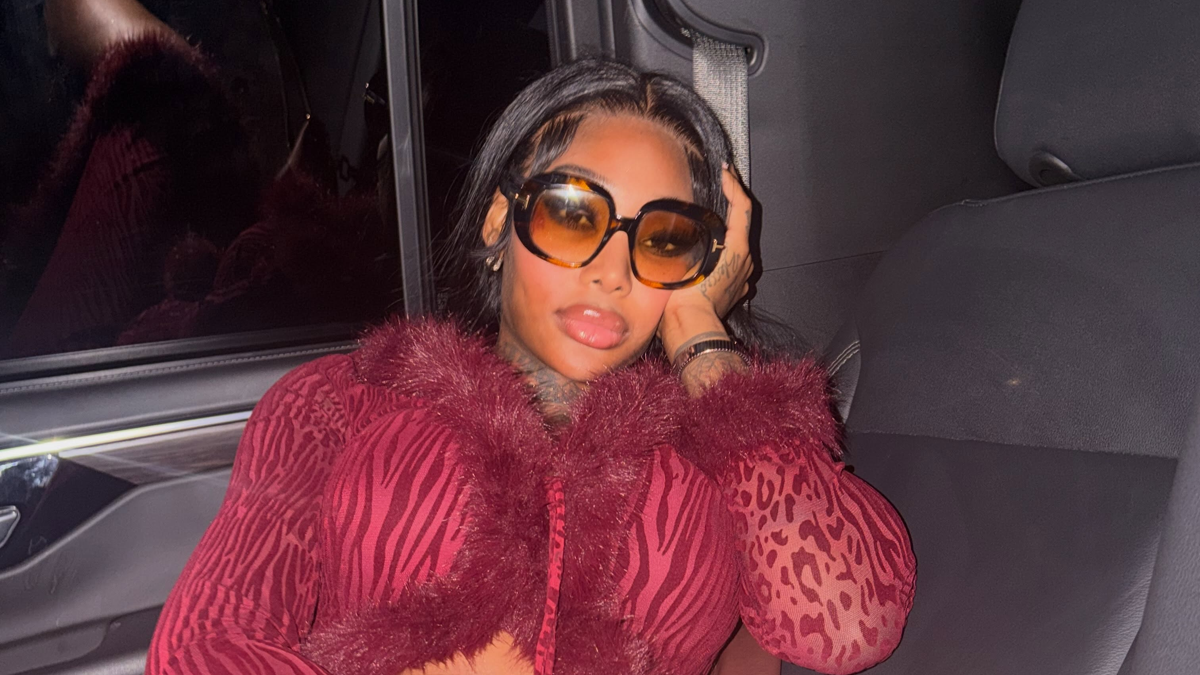
Photo Credit: Summer Walker / Instagram (via Digital Music News)
Strip away the headline numbers, and the clash is less about one artist's acrimonious breakup than about a structural contradiction built into the streaming-era record business. Walker has delivered three consecutive Top 2 albums on the Billboard 200 — including a No. 1 with Still Over It in 2021 — and headlined major arena dates (Music Business Worldwide). Yet nearly nine years after signing her 2017 recording agreement, she and her label partners cannot even agree on whether her contract is over, how many albums she has delivered, or who owns the money flowing from her digital likeness.
Inside the Two-Front Battle: From August Exit Notice to $20 Million Cross-Complaint
What reads at first glance like a single artist-versus-major-label feud is actually an interlocking dispute spanning two jurisdictions — Los Angeles, California, and Fulton County, Georgia — driven by how Walker's original 2017 deal was assembled. According to Music Business Worldwide and The FADER, Walker signed in 2017 with Atlanta-based LVRN — which operated simultaneously as her label and management firm — under a joint-venture recording arrangement with Interscope. (While Digital Music News and Paste Magazine report that she was 19 when signing the late-2017 agreement, Law Commentary more narrowly notes that her business relationship with LVRN began at age 19, with the disputed contract dating to 2017.)
The legal escalation unfolded across four months in 2026:
- August 2026 — Termination Notice and Georgia Suit: Walker's attorneys sent written notice invoking California's "seven-year rule" to stop providing recording services under her contract effective August 27, 2026 (Music Business Worldwide). Around the same time in late August, Walker sued LVRN in Fulton County, Georgia, alleging fraud, fraudulent concealment, breach of fiduciary duty, and breach of contract (The FADER; Law Commentary). Her complaint claims LVRN locked her into an oppressive dual-role contract, misappropriated funds earmarked for touring, recording, marketing, and merchandise, concealed accounting records, and withheld revenue from YouTube and Amazon content featuring her name and likeness.
- October 9, 2026 — Interscope's $50 Million+ Lawsuit: Acting just before a statutory 45-day deadline expired, Interscope filed a seven-page complaint in Los Angeles County Superior Court seeking more than $50 million in damages to be proven at trial (Music Business Worldwide). Interscope alleges Walker fulfilled only three of five promised studio albums — Over It (2019), Still Over It (2021), and Finally Over It (released November 14, 2025, per Universal Music Canada) — and still owes two albums plus an EP. Earlier projects Last Day of Summer (2018) and CLEAR (2019), Interscope contends, were "pre-album projects" excluded from the count (Digital Music News). A hearing in the California case is scheduled for April 15, 2027, according to Law Commentary (a detail not independently confirmed in the other reviewed reports).
- November 9, 2026 — LVRN's Counterclaim: LVRN countersued Walker in Fulton County, denying that it abused its dual role, stole funds, or hid records (Law Commentary). Instead, LVRN alleges Walker breached the 2017 agreement by halting payments owed on her 2026 Still Finally Over It tour (7% of proceeds), her songwriting public-performance royalties (20%), and business opportunities LVRN says it helped secure (15%) — which Paste Magazine and Digital Music News report include a Savage x Fenty partnership with Rihanna's brand, a 2026 FIFA World Cup appearance, and a supporting slot on Chris Brown's 2025 tour. LVRN's filing calls Walker "stubbornly litigious," alleges bad faith, and seeks dismissal of her complaint plus damages and attorneys' fees.
- November 18, 2026 — Walker's $20 Million Cross-Complaint Against Interscope: As reported by Paste Magazine and Digital Music News, Walker escalated the California front by filing a $20 million cross-complaint against Interscope for breach of contract. Her filing alleges Interscope held only limited rights to use her name, image, and likeness (NIL) for promotional purposes, yet improperly collected revenue from her audiovisual recordings, digital content, and YouTube channel. Beyond $20 million in damages, she asks that UMG disgorge profits earned from those assets.
As of press time, Interscope and UMG had not issued a public response to Walker's November 18 cross-complaint (Paste Magazine), and no separate public statement from LVRN beyond its November 9 court filing has been reported. Earlier in the dispute, however, both camps signaled a striking contrast between courtroom aggression and diplomatic phrasing. When filing its October suit, an Interscope spokesperson told Billboard (cited by Music Business Worldwide) that "the statutory deadline makes it necessary to file suit in order to preserve the terms of our contract," adding that the label admired Walker's catalog and still hoped for an "amicable resolution." Walker's attorney, Keith Moten, told Rolling Stone that she would "vigorously defend against Interscope's claims" while remaining "open to a constructive resolution" (The FADER); after LVRN's November 9 counterclaim, Moten argued it failed to address the financial misconduct alleged in Walker's complaint or relieve LVRN of its obligation to account for her money (Law Commentary).
Four Contract Mechanisms Turning Hitmakers into Litigants
Why does an artist with a No. 1 album and global touring demand end up trading eight-figure lawsuits with the very companies that helped launch her career? The Walker dispute sits at the intersection of four recurring friction points baked into modern recording contracts.
1. California's "Seven-Year Rule" — and Its 1987 Recording-Artist Carve-Out. Under California Labor Code § 2855(a), no personal-services contract can be enforced against a worker beyond seven years from the start of service — a rule famously cemented in film when actress Olivia de Havilland prevailed against Warner Bros. in 1944. Recording artists, however, face a statutory exception added in 1987 after lobbying by the Recording Industry Association of America (RIAA). Under § 2855(b)(1) and (b)(3), a musician must give written notice specifying a future exit date, and if the artist leaves with contracted albums still undelivered, the label may sue for monetary damages — provided it files within 45 days of that date (California Labor Code § 2855). That 45-day clock explains why Interscope sued on October 9 after Walker's August 27 exit date, even while telling the press it wanted an "amicable resolution." Artist advocates tried in 2022 to repeal the 1987 carve-out through California bills AB 983 and AB 2926 (the FAIR Act), but both stalled in the State Senate (Yahoo Sports).
2. Album-Delivery Quotas vs. Streaming-Era Release Cycles. Traditional major-label contracts are measured in deliverables (often four to six studio albums), not calendar years. When artists release full-length albums every two to four years — and open their careers with mixtapes or EPs that contracts routinely classify as "pre-album projects" — a five-album obligation can easily stretch past a decade. In Walker's case, Last Day of Summer (2018) and CLEAR (2019) built her early audience, yet Interscope's complaint excludes both from her five-album requirement, leaving her two albums and an EP short after nearly nine years (Digital Music News).
3. Recoupment, Royalty Accounting, and Digital NIL Creep. Early-career contracts signed before an artist breaks typically pair modest upfront advances with recoupable recording, marketing, and tour-support expenses — meaning the artist earns net recording royalties only after those costs are recovered from the artist's share — alongside lower starter royalty rates (in Walker's case, her counsel pointed to a conditional 16% rate, per Digital Music News). Once an artist reaches headliner scale, friction shifts to accounting transparency and ancillary revenue: who audits budgets, how 360-style slices of touring, merchandise, and brand deals are calculated, and where "promotional" rights to an artist's name, image, and likeness end when YouTube channels and Amazon storefronts become standalone profit centers. Walker's $20 million cross-complaint against Interscope and her Georgia complaint against LVRN both target exactly that gray zone between promotion and monetization.
4. Multi-Party Joint Ventures and Dual-Hat Imprints. Contemporary stars rarely sign with a single entity. Instead, a boutique imprint discovers and develops the artist — sometimes doubling as manager — while a major label funds distribution and global marketing through a joint venture. That structure creates overlapping lines of authority, potential conflicts of interest when one company acts as both fiduciary manager and counterparty record label, and legacy lock-in when corporate partners move on. Consider LVRN's own trajectory: in January 2023, Matt Pincus's investment firm MUSIC acquired a minority stake in LVRN at a valuation above $100 million, and LVRN transitioned its newer roster into an independent distribution deal with Sony Music's The Orchard — yet CEO Tunde Balogun noted in June 2026 that LVRN remained partnered with Interscope specifically on Summer Walker and 6lack (Music Business Worldwide). When a relationship fractures inside a legacy joint venture, the artist does not face one negotiation table; she faces simultaneous lawsuits in two states under separate agreements.
Not an Isolated Fight: How Similar Label Clashes Have Played Out
Walker's predicament echoes a well-established pattern across hip-hop, R&B, and rock over the past two decades — where disputes over album definitions, 360 splits, and California's seven-year rule have repeatedly pushed marquee performers into court.
The closest streaming-era parallel is Megan Thee Stallion's three-year battle with 1501 Certified Entertainment (2020–2023). Like Walker, Megan signed an early-career contract with a boutique independent label (1501, founded by former MLB player Carl Crawford) paired with major-scale marketing and distribution (300 Entertainment, later owned by Warner Music Group), under a 360 arrangement and a 60/40 profit split favoring the label (The FADER). After Megan broke into the mainstream, the dispute boiled down to an uncannily familiar question: what counts as an album? In 2022, Megan sued to have her October 2021 project Something For Thee Hotties — clocking in at 45 minutes and 2 seconds — recognized toward her album delivery count, while 1501 countersued to reject it as a mixtape and demanded millions in touring, merchandise, and other revenue (The FADER). Neither side won a sweeping courtroom precedent; in October 2023, both parties announced a confidential settlement to "amicably part ways" (Yahoo / USA Today).
On the California § 2855(b) track specifically, the textbook precedent remains Virgin/EMI's 2008 lawsuit against Thirty Seconds to Mars. Nine years into the band's recording contract, frontman Jared Leto invoked California's seven-year statute to exit; EMI/Virgin responded with a $30 million breach-of-contract claim over undelivered albums (Rolling Stone). By April 2009, rather than litigating the undefined meaning of § 2855(b)(3) "damages" to a verdict, the band and Virgin settled and signed a renegotiated multi-album contract (Exclaim!). Geffen/UMG's 2000 seven-year-rule clash with Courtney Love and Hole similarly ended in settlement, while regional Mexican hitmakers Fuerza Regida were still locked in a seven-year-rule dispute with Rancho Humilde in 2026 (Music Business Worldwide). Across these cases, the statutory rule rarely acts as a clean exit door; it acts as a trigger for high-stakes renegotiation.
The Other Side: Unproven Pleadings, Label Economics, and the Logic of Leverage
It is tempting to cast every artist-versus-label lawsuit as a straightforward story of corporate exploitation. Three caveats argue for restraint before drawing conclusions from this week's filings.
First, a countersuit is a pleading, not a verdict. None of the central claims on either side have been tested in discovery or adjudicated by a court. Whether Interscope actually exceeded its contractual promotional rights on YouTube, whether LVRN misdirected budgets or concealed records, whether Walker improperly withheld contracted percentages of tour and brand revenue, and whether Interscope could ever substantiate $50 million in damages for two unmade albums all remain disputed allegations. Notably, California Labor Code § 2855(b)(3) authorizes labels to seek "damages" for undelivered phonorecords without defining how to calculate lost profits on albums that do not yet exist — leaving headline figures like "$50 million" and "$20 million" as opening legal stakes rather than audited valuations.
Second, labels have a coherent economic rationale for defending multi-album stability. From the perspective of major labels and trade groups, signing an unknown artist at the start of her career is a venture-capital bet in which most acts never recoup their upfront investment. Interscope has pointed out that Walker's 2017 terms reflected an early-career signing backed by substantial label investment in building her audience (Digital Music News). During California's 2022 legislative battle over AB 983, the California Chamber of Commerce and industry opponents argued that labels rely on multi-album commitments and nonrefundable upfront advances to finance artist development — warning that stripping away § 2855(b)'s damages remedy would deter investment, drive down artist advances, make it harder for diverse emerging acts to get signed, and drain an estimated $400 million to $600 million from a California music sector they valued at $39.5 billion in GDP. Even critics of legacy record deals acknowledge the underlying tension: if breakout stars can exit freely the moment their catalog turns profitable, labels will price that risk into smaller upfront checks for newcomers (this is the author's synthesis of both sides' economic arguments).
Third, escalating counterclaims often function as settlement leverage rather than a march to trial. Look closely at the rhetoric surrounding the court papers: Interscope stressed that it sued because the 45-day statutory window forced its hand and expressed hope for an "amicable resolution," while Walker's lawyer emphasized her openness to a "constructive resolution" (Music Business Worldwide; The FADER). Facing a $50 million claim, filing a $20 million cross-complaint targeting UMG's digital and YouTube monetization resets the negotiating board — giving Walker offsetting exposure to bring to the table alongside her Georgia claims against LVRN. Just as Thirty Seconds to Mars renegotiated with Virgin/EMI and Megan Thee Stallion struck a confidential exit from 1501, the most likely endgame is not a landmark judicial ruling on § 2855(b), but a privately priced buyout, catalog compromise, or restructured deal.
Conclusion: A Settlement Waiting for a Price Tag
Summer Walker's $20 million cross-complaint ensures that her departure from the 2017 LVRN/Interscope structure will not be quiet or cheap. Regardless of how a California or Georgia judge weighs each side's claims, the fight exposes an unresolved structural gap in the modern music economy: recording deals built around five-album quotas, 360-style slices, and a 1987 statutory exception are colliding head-on with streaming-era release timelines, independent imprint spin-offs, and artist-driven digital monetization on platforms like YouTube and Amazon. Until contracts — or California law — catch up with how careers actually scale today, the industry's biggest R&B and hip-hop stars will keep renegotiating their freedom through the courthouse.
Sources
- Digital Music News — Legal Warfare Between Interscope/UMG and Summer Walker Escalates with a $20 Million Countersuit (original article, November 19, 2026)
- Paste Magazine — Summer Walker Hits Back at Interscope With $20 Million Cross-Complaint (November 19, 2026)
- Music Business Worldwide — UMG's Interscope sues Summer Walker for $50M+ after she moves to exit her deal under California's 'seven-year rule' (October 12, 2026)
- Digital Music News — Interscope/UMG Sues Summer Walker for $50 Million (October 12, 2026)
- The FADER — What's going on with Summer Walker's lawsuits? (October 14, 2026)
- Law Commentary — Summer Walker LVRN Counterclaim Over Tour Royalties (November 14, 2026)
- Universal Music Canada — Summer Walker Releases Her Highly Anticipated Third Studio Album Finally Over It (November 14, 2025)
- FindLaw — California Labor Code § 2855
- California Chamber of Commerce — CalChamber Opposes Bill Jeopardizing State's Music Industry (AB 983) (June 20, 2022)
- Yahoo Sports — FAIR Act to Overturn California's 'Seven-Year Statute' Fails in State Senate (2022)
- The FADER — Megan Thee Stallion's dispute with her label, explained (August 30, 2022)
- Yahoo / USA Today — Megan Thee Stallion and former record label 1501 Entertainment settle 3-year legal battle (October 20, 2023)
- Rolling Stone — Virgin/EMI Sue 30 Seconds to Mars for $30 Million, Leto Fights Back (August 18, 2008)
- Exclaim! — 30 Seconds to Mars Settle With Virgin, Re-Sign With Virgin (April 2009)