
The Gear Industry's Sealed Boxes Crack Open: Inside inMusic's Bet on Vibe-Coded Mods
Updated:
Music hardware has spent decades teaching its owners the same lesson: the box is sealed, the firmware is proprietary, and the warranty sticker is a dare. So when the parent company of Akai, Moog, and Native Instruments says it will hand out source code, an SDK, and a reset button so anyone can rewrite their gear, it is worth pinning down exactly what changed — and what didn't. The short answer, according to inMusic CEO Jack O'Donnell: five weeks.
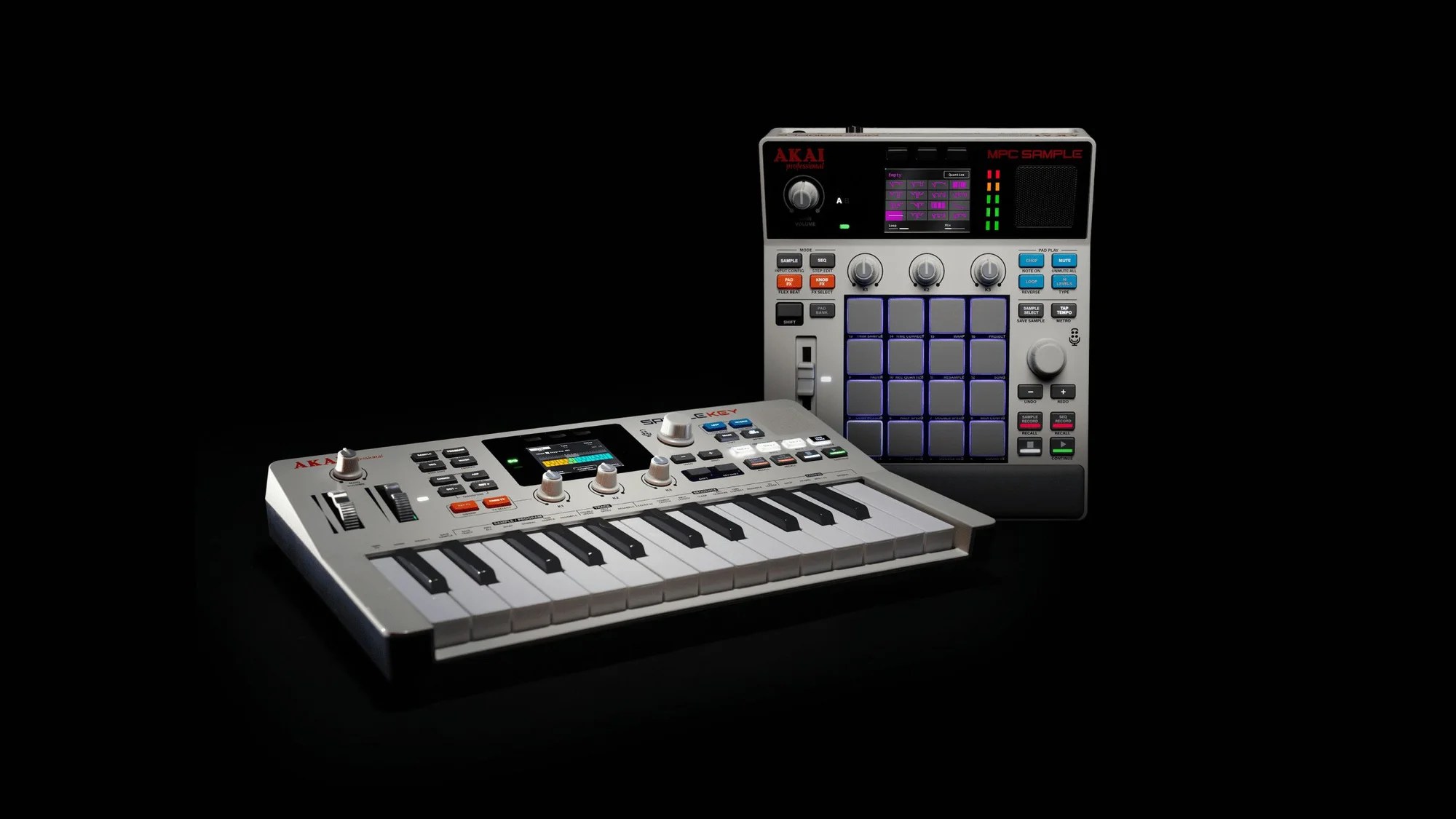
The MPC Sample and Sample Key, the devices at the center of inMusic's open-modding push. Image: inMusic
In an interview with The Verge, O'Donnell said the company will "provide a toolbox to the community… the inner workings of, say, an MPC or Sample so that people can do what they want." The toolbox has three parts: open-source code for devices like the teased MPC Sample Key, a software development kit to make modifications safer, and — the detail that caught every forum's attention — "a reset button," so experimenters can fail their way back to factory condition. Akai has already started seeding pre-release hardware to outside developers, and demos show the Sample Key running third-party synths, Native Instruments' Massive, and even a fully custom community-built OS.
Five Weeks That Rewrote the Task List
O'Donnell's own timeline is the story's best credential. "I can tell you it wasn't on our task list five weeks ago," he told The Verge. "It just all of a sudden has to be on a task list now."
What happened in those five weeks is documented in unusual detail. A Dubspot audit of the custom-firmware scene found that 18 of 23 active mod repositories were created on or after September 12, 2026. In roughly a month: replacement firmware packs for the 1990s Akai MPC2000 and MPC2000XL, an "Open500" OS for the MPC500, a DOOM-branded graphical OS for the Roland SP-404MKII, full OS swaps that turn a sub-$100 M-VAVE FM-1 pocket synth into three different instruments, mods for the AlphaTheta CDJ-3000 club player, and more — across Elektron, Roland, Akai, Arturia, Ableton, and AlphaTheta hardware. A community directory launched on GitHub on October 11 cataloged roughly 260 firmware projects across 19 brands within 48 hours.
The enabling technology is what programmers now call vibe coding — describing software in plain language and letting an AI agent write it, a term coined by Andrej Karpathy in early 2025. In gear terms, the practical effect is that AI coding agents absorbed most of the tedious reverse-engineering labor that historically kept closed instruments locked down. Akai's own demo clips showed MPC synths "built by Claude," per The Verge's October report. What used to require a specialist willing to spend months disassembling firmware now requires a laptop and patience — which is why the modding population stopped being a rounding error and became a market.
Before Vibes, There Was JJOS
It would be a mistake to read this as the birth of hardware modding. As CDM's Peter Kirn recalled, the phrase "custom firmware" entered music-gear culture around 2006 with JJOS — an unofficial, unauthorized firmware for the Akai MPC1000 and MPC2000XL that added features and even fixed bugs Akai hadn't. Its developer, rumored to be a veteran MPC engineer, was never publicly identified, and the project never had Akai's blessing. Owners bought it anyway, for years.
The difference in 2026 is not the desire to mod; it's the scale and the manufacturer's posture. inMusic is attempting to convert an activity it once merely tolerated into one it sanctions, staffs, and sells. At January's NAMM show in Anaheim (January 26–30, 2027), the company will show 22 new products and plans to let musicians hack many of them on-site at a "Creator Lab," with engineers in the room. That includes Moog products — an unlikely fit for firmware mods given their analog circuits, but O'Donnell argues it works "if we open it up correctly," by building a developer platform that works around the analog section rather than through it.
What "Open" Actually Means Here
The most useful caveat comes from Kirn, who has seen the technical materials: open modding does not necessarily mean open-source firmware, and certainly not open-source hardware. On some devices, the model will resemble what Ableton did with Extensions — custom code (AI-assisted or hand-written) running in a sandboxed environment alongside the stock OS, with the ability to ssh into an unlocked MPC and return to normal afterward. Kirn predicts "sandboxing" will be the industry's next buzzword, because isolating the playground protects both the experimenter and the stage instrument.
That distinction matters for anyone expecting a fully liberated MPC. "Openness doesn't require incompleteness," O'Donnell said in the company's press release, adding to CDM: "I don't believe in just releasing a blank canvas." Official firmware stays official, tested, and free; the mod layer is an addition, not a replacement. Which portions of the codebase actually get published — and under what license — remains to be seen when the SDK ships, and until then, "open-source MPC" is a marketing phrase with an asterisk (this is the author's assessment, not a documented limitation).
The Holdout and the Warning Label
Not everyone is rolling out a welcome mat. Elektron, whose boxes sit at the center of the mod wave, banned sharing mod files and links on its official forums on September 16, 2026, while still allowing general discussion. Its statement is the industry's concise case against: modifications "could brick them (potentially rendering them unusable), prevent future updates, affect warranty coverage." On the DJ side, Beatport's tech channel ran an episode bluntly titled "Your CDJ Is Not the Place for Vibe-Coding" — a reminder that in a booth, at 2 a.m., subtle DSP glitches are worse than no features at all.
The skepticism is not hypothetical. Dubspot's reporting notes that bricking gets the headlines, but the quieter traps — DSP timing errors, version lock-in, and abandoned repositories — are more likely to ruin a session. Even M-VAVE, the budget-hardware maker whose $100-class FM-1 supercharged this trend (and which shipped its own SDK), sees constant community threads about modded units that no longer boot. inMusic's reset button is a direct answer to that failure mode; how well it works in practice is unverifiable until hardware ships.
The Moog Question: Openness on Credit
For Moog owners, the announcement lands on more complicated ground. inMusic acquired Moog in 2023, and three months later cut a large portion of the Asheville staff, with former employees saying production was being relocated to Asia. The brand's community has been openly wary ever since. "Open to modders" is a message that will have to outrun that history; goodwill toward tinkerers and goodwill toward a storied American synth maker are different currencies, and the second one is earned back slowly (this is the author's observation of community sentiment, not a claim about the company's intent).
There is also an uncomfortable neighbor in this story. Behringer — the company whose clone-heavy catalog made it the industry's villain for many enthusiasts — is now among the loudest open-source advocates, having announced a $150 open-source MPC One clone (Kick), an SP-1200 clone, and other open designs. Openness as marketing is already here, which is precisely why the details of inMusic's implementation, not the press release, will decide whether this is a genuine shift or a coat of paint.
Why It Can Work Anyway
Strip away the hype and the stakes are concrete for working musicians. Devices that accept community firmware can outlive their manufacturer's support window — see the MPC2000, discontinued for two decades, getting new swing curves and filters in 2026. Personalization stops being a preset browser and becomes actual capability. And if Dubspot's forecast holds, moddable hardware will command a secondhand premium the way unlockable phones once did, because buyers are no longer purchasing only what the factory shipped.
Kirn, balanced as ever, names the condition under which the whole thing collapses: if "open source" strips the credit, compensation, and community that make original engineering sustainable, the AI boom will push manufacturers to lock down harder, not open up. inMusic, he notes, has at least been talking about the value of labor — its own engineers' and outside contributors'. O'Donnell's formulation to The Verge is blunter about the alternative: "you can try to wall them off, which is just a losing battle… and so we want to embrace them."
For an industry that has treated its firmware like a trade secret since the MPC was a floppy-drive sampler, that is not just a product announcement. It is an admission that the walls stopped working — and the first coherent attempt to build a door.
Sources
- The Verge — How Akai and Moog are embracing vibe-coded mods (Nov 6, 2026)
- The Verge — Akai is embracing vibe-coded mods with an open-source MPC (Oct 28, 2026)
- CDM / Peter Kirn — Mods for everyone: inMusic is opening up MPC, more new gear to coders (Nov 5, 2026)
- Dubspot — The Custom Firmware Boom: Where Vibe-Coded Gear Goes Next (Oct 14, 2026)
- Elektronauts — On Elektron's policy on third party firmware (Sep 2026)
- Blue Ridge Public Radio — Three months after InMusic acquisition, Moog cuts jobs (Sep 25, 2023)
- NAMM — The 2027 NAMM Show dates and times
- Wikipedia — Vibe coding