
Who Pays for Fake Streams? Inside the Music Industry’s Battle Over Streaming Fraud, AI Bots, and Black-Box Enforcement
Updated:
On October 6, 2026, federal prosecutors in New York announced an 18-month prison sentence and roughly $8.09 million in forfeiture and restitution for Michael Smith, a 54-year-old North Carolina musician who became the first person in the United States sentenced to federal prison for AI-assisted music streaming fraud (Digital Music News). Over seven years, Smith paired hundreds of thousands of AI-generated songs with thousands of automated accounts to siphon royalties from streaming services. Six weeks later, as International Fraud Awareness Week closed in late November 2026, Helen Smith, Executive Chair of the European independent music trade body IMPALA, used that verdict to sharpen a broader warning: streaming manipulation is no longer a statistical nuisance—it puts "the integrity of the digital music market" on the line (Digital Music News).
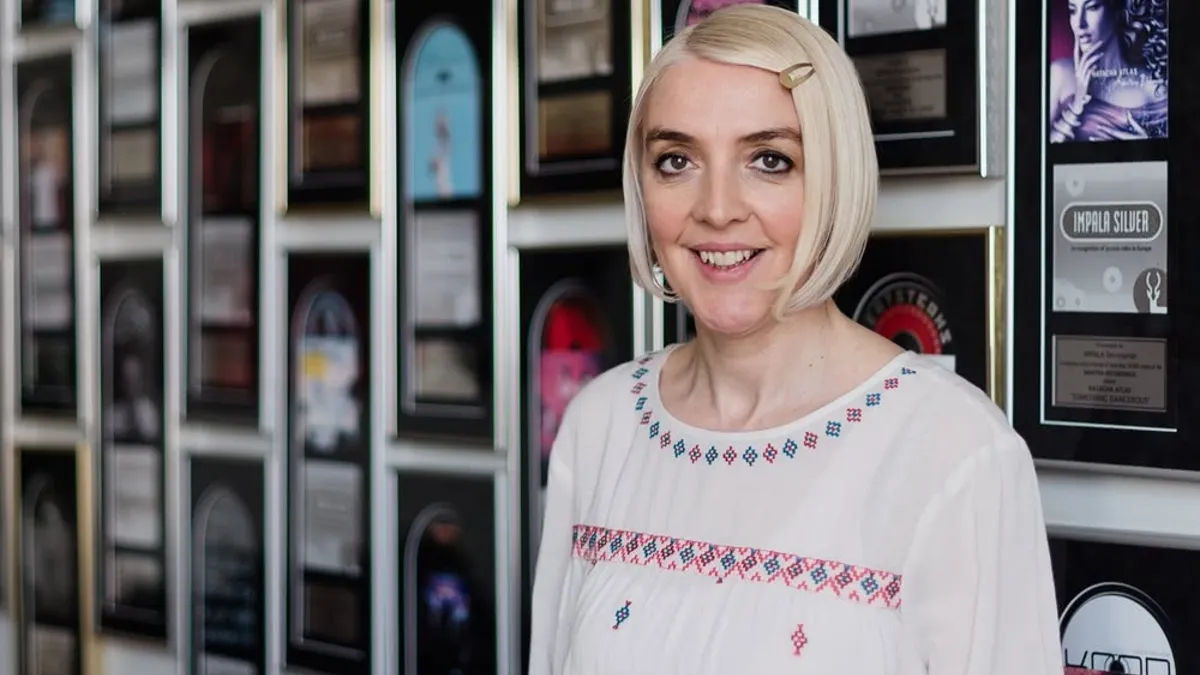
Photo Credit: Helen Smith / IMPALA
On the surface, streaming fraud looks like the rarest thing in recorded music: a consensus issue. Major labels, independent trade groups, distributors, and streaming platforms all agree that fake plays steal money from real artists. Beneath that agreement, however, sits a messy governance battle with no easy truce. The industry still cannot agree on how big the fraud problem actually is, has split its anti-fraud work across overlapping voluntary coalitions with gaping membership holes, and has begun deploying automated per-track fines that risk punishing the very independent artists those rules are supposed to protect.
From 1% to 10%: Why Nobody Agrees on the Size of the Bill
Any serious debate over streaming fraud runs into a measurement wall almost immediately. Estimates of the problem vary by an order of magnitude depending on who is counting, what data they can see, and what business they are in.
The most rigorous multi-party baseline remains the January 2023 study published by France's Centre national de la musique (CNM). Drawing on 2021 streaming logs supplied by Spotify, Deezer, and Qobuz alongside five major distributors—Universal, Sony, Warner, Believe, and Wagram, representing more than 90% of Spotify's top 10,000 tracks and over 75% of Deezer's total French volume—CNM found that between 1% and 3% of plays in France were detected as fraudulent, equivalent to 1 billion to 3 billion fake streams stripped from payouts.
Even that landmark benchmark carried glaring blind spots. CNM explicitly noted that its figures reflected only manipulation platforms managed to detect, leaving undetected fraud uncounted; moreover, Apple Music, YouTube, and Amazon Music did not supply quantitative streaming data for the study (Digital Music News). The CNM data also punctured the stereotype that streaming fraud is solely a vanity game for chart-chasing pop stars: on Spotify and Deezer, more than 80% of detected fake plays occurred in the long tail outside the top 10,000 tracks. Fraudsters leaned heavily on cheap entry points—6% to 13% of abnormal activity across participating platforms originated from free trial tiers, while on Deezer, 54% of abnormal plays came from family plans and 65% from desktop computers.
At the opposite end of the spectrum sit commercial fraud-detection vendors. Beatdapp, a Canadian analytics firm whose co-CEO Andrew Batey has become one of the industry's loudest voices on streaming manipulation, estimates that roughly 10% of global streams are fraudulent—putting annual industry losses at $2 billion or more (Digital Music News). That estimate has circulated widely across trade press, though it has never been independently audited and comes from a vendor selling anti-fraud software. Meanwhile, Nermina Mumic, CEO of royalty-auditing firm Legitary, has cautioned against treating bot fraud as the sole drain on artist income, arguing that mundane data and metadata errors may cost rightsholders comparable or larger sums in royalties that are "simply not getting generated" in the first place.
The truth likely sits somewhere between CNM's 2021 floor of detected manipulation and Beatdapp's $2 billion ceiling—and the arrival of industrial-scale generative AI has almost certainly pushed the baseline upward since CNM gathered its pre-ChatGPT dataset (author's assessment based on the divergence in methodology and timeframe).
Pro-Rata Math Meets AI Scale: Why Independents Take the Brunt
To understand why IMPALA frames streaming fraud as an existential threat to independent labels, it helps to look at the plumbing of streaming payouts. Most major streaming services still operate on a pro-rata royalty pool: subscription fees and ad revenue from a given market are collected into a single pot and divided among rightsholders strictly according to each track's share of total eligible streams.
As CNM's study spelled out in plain terms, any sharp jump in stream volume without a matching increase in paying subscribers automatically lowers the unit value of every stream. Fake plays do not conjure extra money from platforms; they dilute the pool and transfer revenue out of legitimate artists' pockets into fraudsters' accounts.
Before generative AI, running a large-scale bot farm still required a bottleneck resource: enough distinct tracks to spread plays thinly across catalogs so automated loops would not trip obvious chart alarms. Generative AI removed that friction. In Michael Smith's 2017–2024 scheme, AI-generated audio let a single operator flood platforms with hundreds of thousands of synthetic tracks while automated software cycled through thousands of accounts. At peak intensity in April 2023, prosecutors found that Smith's bots—relying heavily on family plans—generated 80.9 million streams in a single month, nearly nine times the 9.3 million streams Taylor Swift's entire catalog drew on YouTube Music over the same period (Digital Music News).
Public telemetry from Deezer shows how rapidly that playbook has scaled across the open market. According to Deezer's own disclosures, daily deliveries of fully AI-generated tracks climbed from roughly 30,000 in September 2025 to 60,000 in January 2026 (39% of daily deliveries), topped 75,000 in April 2026 (more than 44%), and reached roughly 90,000 tracks per day by mid-2026—crossing half of all daily uploads on peak days (Music In Africa; Digital Music News). Yet those synthetic tracks account for only 1% to 3% of total listening on Deezer, and the platform reported that up to 85% of streams on fully AI-generated tracks in 2025 were fraudulent and excluded from royalty payments. (These figures are Deezer's internal measurements and have not been independently verified, though no other major streaming service publishes comparable daily breakdowns.)
The collateral distortion extends beyond direct royalty theft. Fake listening scrambles recommendation algorithms—weakening genuine engagement signals and degrading an artist's "recommendability," as CNM warned—while eroding listener trust. In a November 2026 Deezer/Ipsos survey, 74% of respondents believed their playlists contained zero fully AI-generated tracks, yet Deezer's internal data on more than 53,000 users migrating from other platforms in October showed nearly 57% already had at least one synthetic track sitting in their playlists (Digital Music News).
For independent labels and self-funded artists, the damage is asymmetrical. As Helen Smith argued in her November 2026 statement, independent companies operate with far thinner margins and smaller compliance teams than major labels, leaving them less equipped to monitor anomalous traffic across dozens of territories or escalate disputes inside streaming platforms. She also flagged an easily overlooked externality: hosting, transcoding, and streaming millions of bot-played synthetic tracks nobody actually hears inflates the energy and climate footprint of digital music infrastructure.
Two Coalitions, Zero Binding Rules: The Industry’s Governance Split
IMPALA's prescription, laid out across its Digital Music Plan and Streaming Manipulation Guidance, treats prevention at the intake gate as essential: stricter artist verification, robust "know your customer" (KYC) screening for high-volume uploaders, pre-delivery vetting by distributors, stronger detection of fake accounts, and targeted financial deterrents—including carriage fees and penalties aimed at persistent offenders. Alongside anti-fraud defense, IMPALA pushes broader structural fixes, from aligning music's share in bundled subscription price hikes and adding payment boosts for new releases and diverse repertoire to questioning whether delivery obligations should still apply to audio unlikely to be monetized legitimately.
Translating those principles into enforceable market rules, however, has exposed a quiet institutional divide. Today, the recorded music industry's anti-fraud effort is split across two overlapping voluntary alliances with conspicuously different rosters.
On September 14, 2026, IFPI launched the Streaming Integrity Initiative (SII) with more than two dozen initial public backers—including Universal Music Group, Sony Music Group, Warner Music Group, their distribution arms (ADA, AWAL, FUGA, The Orchard, Virgin Music Group, Revelator), and independent organizations and distributors such as IMPALA, Merlin, WIN, HYBE, CD Baby, Ditto Music, RouteNote, Symphonic, Secretly Distribution, and Too Lost (IMPALA; Digital Music News). Built around five baseline commitments—Verify, Vet, Act, Share, Measure—SII aims to stop bad actors from hopping between distributors after being banned.
Yet look closely at who is missing from SII's initial roster and what the pact actually binds them to do:
- No streaming platforms signed it. DSPs are urged to support the effort and detect fraud at the source, but they are not signatories to SII's commitments.
- Major open-intake DIY distributors stayed off the initial list. Notably, DistroKid and TuneCore/Believe—two of the highest-volume gateways for self-released tracks—did not appear among the inaugural public signatories.
- There is no compliance audit or enforcement teeth. SII is a voluntary baseline with no published auditing mechanism or sanctions for signatories that cut corners, and cross-distributor intelligence sharing is strictly bounded by "where legally permissible" under data-protection law.
Meanwhile, the older Music Fights Fraud Alliance (MFFA)—founded in June 2023 by Spotify, Amazon Music, DistroKid, TuneCore/Believe, CD Baby/Downtown, EMPIRE, Symphonic, UnitedMasters, and Vydia—sits on the other side of the divide. By April 15, 2026, MFFA had expanded to more than 35 organizations, adding major collective management and publishing players including ASCAP, GEMA, SOCAN, SoundExchange, Songtrust, ICE Services, and Ditto Music (SoundExchange). Yet MFFA operates largely behind closed doors—a limitation IMPALA explicitly criticized in its own guidance when calling for more open and inclusive anti-fraud discussions.
The result is a fractured governance map: the major-label and trade-association coalition lacks the DSPs and several top DIY aggregators, while the DSP-backed alliance has limited transparency and accountability to smaller independents (author's synthesis of the SII and MFFA structures).
The Other Side of the Crackdown: Black-Box Fines and Collateral Damage
If the industry's trade-group statements make tougher financial penalties sound like an obvious win for independent musicians, the reality on the ground since April 2024 tells a far more uncomfortable story.
On April 1, 2024, Spotify began charging labels and distributors per track whenever its systems detect "flagrant artificial streaming" (Spotify for Artists). On paper, the policy targets distributors that tolerate known bad actors. In practice, Spotify's public documentation refuses to state the fee amount, omits the numeric percentage threshold that triggers a charge, discloses nothing about how its detection models operate, and offers no formal artist appeal process—instructing artists simply to contact their distributor or label.
Distributor disclosures fill in what Spotify leaves blank. Both EmuBands and a footnote in IMPALA's guidance note that Spotify levies a €10-per-track monthly charge on flagged releases. EmuBands states plainly in its FAQ that under its terms and conditions, "this fine is then passed on to you"—meaning the distributor bills the artist or rightsholder directly, alongside potential royalty withholding, catalog removal, or account suspension.
That pass-through structure turns an anti-fraud deterrent into a minefield for innocent independent artists, for three structural reasons:
- The botted-playlist trap. Anyone on the open web can drop an unsuspecting artist's song onto a third-party bot-driven playlist—sometimes as a bait-and-switch pitch by shady promotion services, sometimes without the artist ever interacting with them. Spotify acknowledges that artists can be added to botted playlists against their will, calling it "a small minority" of cases, and points them to its Playlist Reporter tool. Yet EmuBands warns artists bluntly that it has seen tracks added to bot-driven playlists while genuine rightsholders were "completely unaware," and those artists were still fined. Reporting suspicious spikes early may improve an artist's odds, but it carries no guaranteed immunity.
- Collective liability meets black-box evidence. As Rolling Stone documented in its investigation of Spotify's early 2021 bot purge (Rolling Stone Australia), independent acts such as Los Angeles singer Callie Young and Manchester trio Heavy Salad had releases pulled with no warning, no evidence, and no meaningful appeal; distributors including DistroKid and LANDR admitted Spotify sent lists of flagged tracks without revealing how they were detected. When platforms shift flat per-track fines onto low-margin DIY distributors without providing auditable proof, distributors face an obvious economic incentive: rather than absorb €10-per-track penalties or spend staff hours contesting opaque DSP flags, it is cheaper to automate takedowns, pass fines straight to the artist, and terminate accounts at the first sign of trouble (author's inference from the incentive structure).
- Incompatible cross-platform standards. As CNM's French study documented, platforms do not even measure fraud on the same unit of analysis: Deezer and Qobuz ran detection algorithms at the user-account level—which CNM explicitly noted can generate false positives—while Spotify operated primarily at the track and album level, and most distributors lacked access to platform user data altogether. Add the persistent perception of a double standard—where fan armies for major-label superstars coordinate mass looping campaigns with little visible sanction while obscure indie tracks vanish overnight—and trust in enforcement erodes from both sides.
Crucially, even IMPALA recognizes this vulnerability once you look past headline soundbites. In its detailed Streaming Manipulation Guidance, IMPALA states that it supports financial penalties only "provided that checks and balances are in place to prevent wrongful sanctions against genuine artists and tracks." It explicitly concedes that "DSPs can make mistakes," calls on platforms to distinguish fraudsters from artists whose catalogs were exploited without their knowledge, and presses DSPs to give clearer explanations when streams are stripped. The gap between those nuanced safeguards on IMPALA's policy page and the blunt, automated enforcement DIY artists currently face on streaming platforms is where the real governance fight sits.
Integrity Requires Due Process, Not Just Higher Walls
The Michael Smith sentencing proved that industrial-scale streaming fraud is no longer a victimless technical glitch—it is prosecutable wire fraud that can drain millions from a shared royalty pool. And Deezer's 90,000-track daily tide of synthetic uploads makes clear that generative AI has permanently lowered the cost of attacking pro-rata economics.
Helen Smith is right that leaving the intake gates unguarded penalizes legitimate independent labels and artists who cannot afford enterprise fraud teams. Tighter KYC verification, pre-delivery screening, and criminal enforcement against organized bot farms are necessary parts of the answer.
What the current crackdown misses, however, is that market integrity cannot be rebuilt through black-box deterrence alone. When platforms keep detection criteria secret, refuse to harmonize standards across services, and push flat per-track fines down the chain to distributors without binding appeal rights, the financial risk of policing the system gets dumped onto the smallest legitimate creators—the exact asymmetry IMPALA warns against. Closing the fraud leak without punishing innocent artists will require more than new voluntary pledges: it demands independent audits of DSP detection systems, standardized evidence sharing across platforms, and an enforceable due-process channel that separates real fraudsters from artists who were simply targeted by bots.
Sources
- Original article: Ashley King, "IMPALA’s Helen Smith on Taking on Streaming Fraud: ‘The Integrity of the Digital Music Market Is at Stake’", Digital Music News, November 20, 2026.
- Centre national de la musique (CNM), "Fake streams, real phenomenon: the CNM working with the industry to fight streaming fraud", Official Press Release, January 16, 2023; see also Dylan Smith, Digital Music News, "Fake Streams France Study", January 18, 2023.
- IMPALA, "Streaming Manipulation Guidance" and "Music companies unite in new commitment to combat streaming fraud in order to protect artists, songwriters and fans" (Streaming Integrity Initiative), September 14, 2026; see also Digital Music News, "Streaming Integrity Initiative", September 14, 2026.
- SoundExchange, "Music Fights Fraud Alliance Elects New Leaders and Welcomes 12 New Members", April 15, 2026.
- Digital Music News, "Michael Smith Sentenced to 18 Months in Prison, Ordered to Pay $8 Million in Streaming Fraud Case", October 6, 2026.
- Digital Music News, "How Much Does Streaming Fraud Cost the Music Industry?", July 9, 2024 (Beatdapp and Legitary estimates).
- Music In Africa, "AI-generated music surges on Deezer as synthetic uploads spike sharply", April 2026; and Digital Music News, "AI Music Kill Switch Survey", November 19, 2026 (Deezer/Ipsos survey).
- Spotify for Artists, "Artificial Streaming"; and EmuBands, "How to Avoid Spotify Penalty Fines".
- Jason Keil, "Spotify Bot Takedowns", Rolling Stone Australia (republished from Rolling Stone), August 26, 2021.