
After a Government Hotline Became a Ballot Box, Time Fengjun Was Not the Only Casualty
Updated:
Xuzhou's 12345 hotline took in nearly 50,000 concert-related complaints in ten days. What turned the episode from entertainment gossip into a public issue was not how loudly fans argued. It was that a civic helpline was used, by two opposing fan camps at once, as a voting machine.
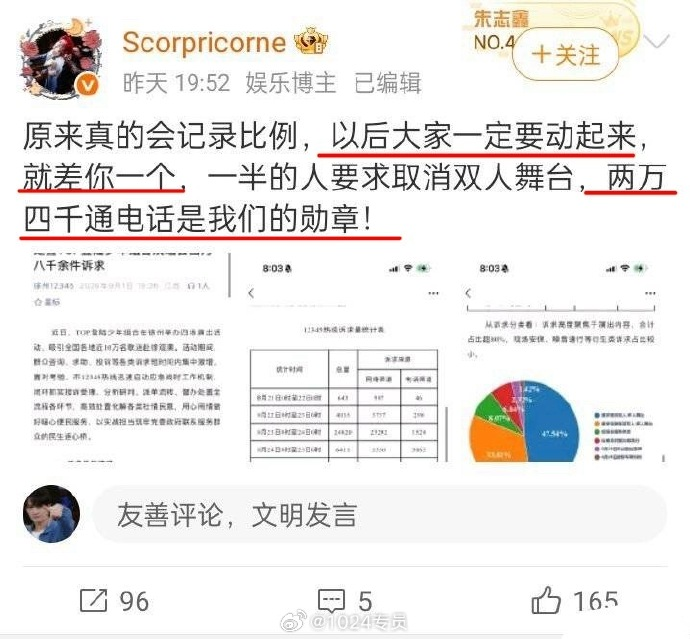
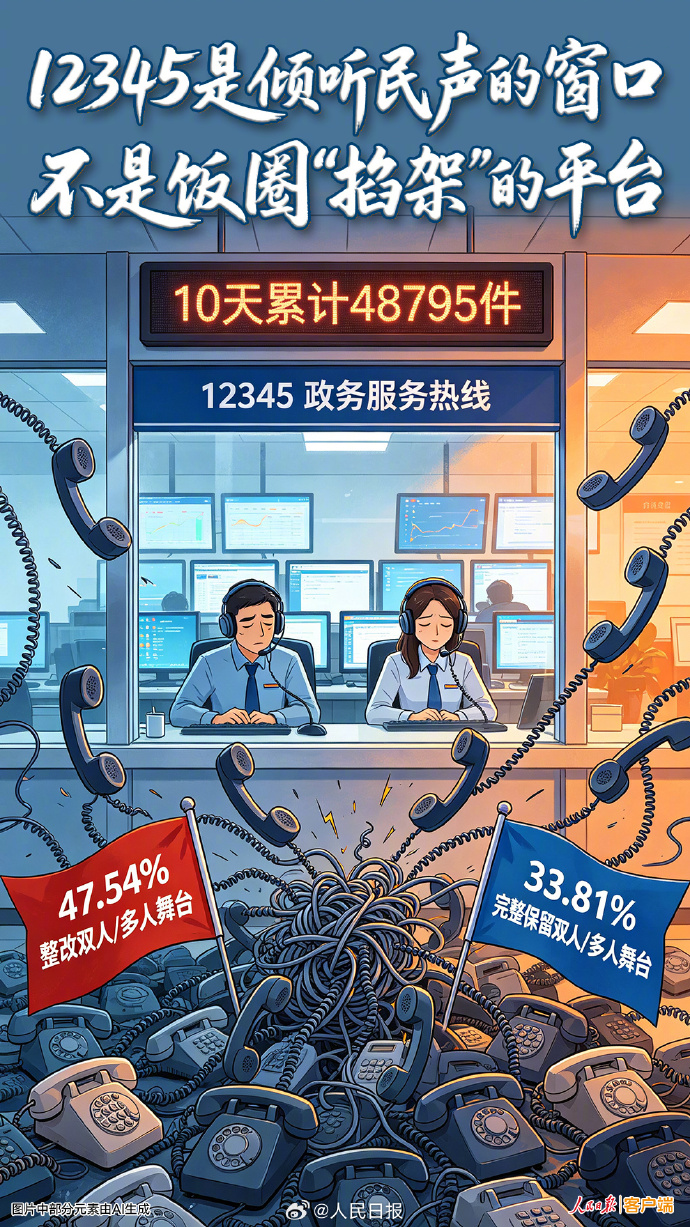
From 00:00 on August 21 to 08:00 on August 31, Xuzhou 12345 recorded 48,795 complaints tied to the TOP Landers concerts: 42,430 through online channels and 6,365 by phone. More than 80 percent focused on the show itself. 47.54 percent demanded that duet or multi-person stages be overhauled; 33.81 percent demanded that they be kept intact. Security, noise, and traffic — the usual civic concerns — were a minority. The Paper, reprinting a People's Daily app commentary
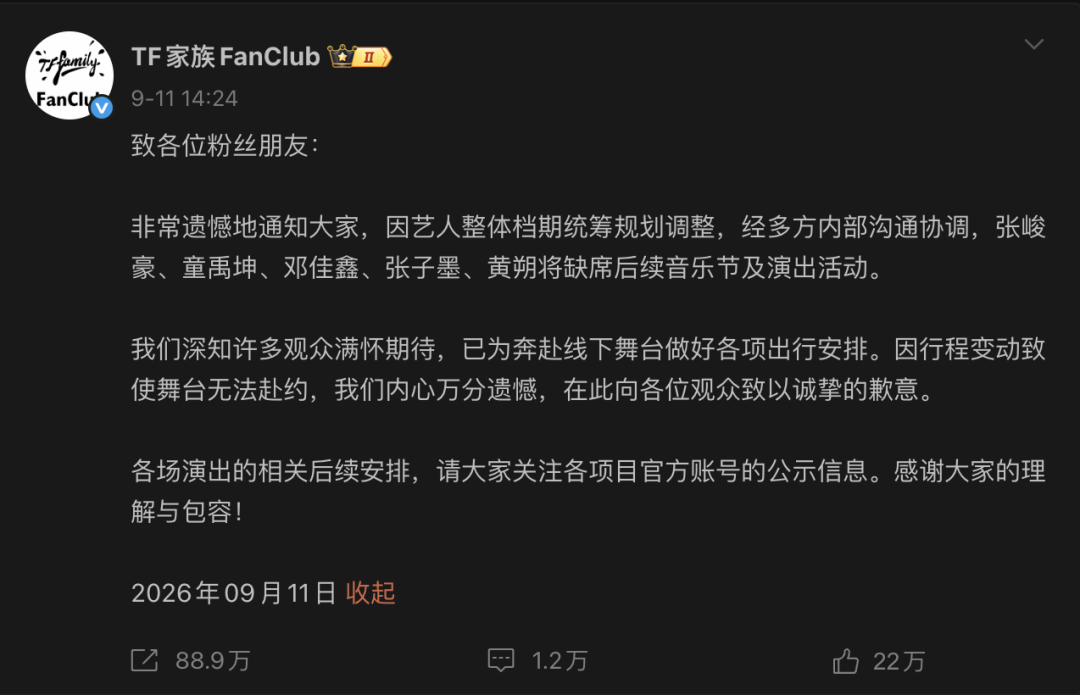
At the same time, crowd clashes downstairs from Time Fengjun's Chongqing office at Changjiang International had already forced the company to suspend in-person trainee rehearsals. On September 11, the TF Family FanClub announced that Zhang Junhao, Tong Yukun, Deng Jiaxin, Zhang Zimo, and Huang Shuo would miss upcoming festivals and performances because of an "overall adjustment to artists' schedules." Fans summed up the chain reaction as "the whole building goes silent" and "guilt by association across four generations."
Calling this merely a trainee-idol company eaten by its own fans does not explain enough. The more useful question is how an organizing capacity trained by the idol industry over the past decade, after regulators shut down its old interfaces, has been rerouted into complaint systems, government hotlines, and public opinion.
Two overlapping storms were not the same kind of problem
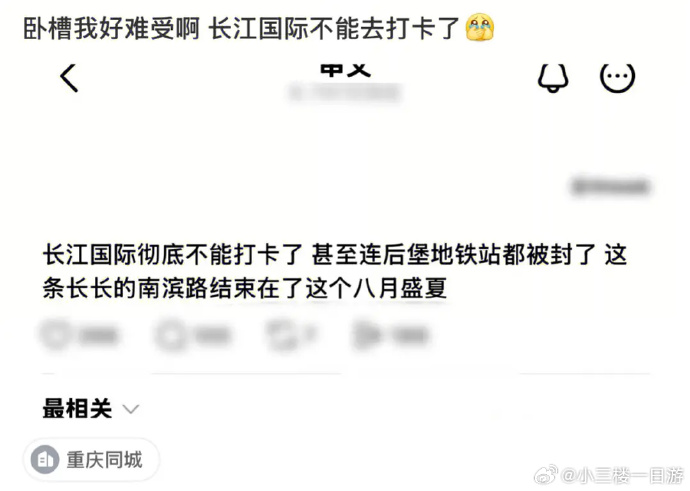
From mid-August, crowds kept gathering on Nanbin Road in Chongqing's Nan'an District, downstairs from Time Fengjun's offices in the Changjiang International building. Long-term fan stakeouts mixed with people who livestreamed outdoors, heckled, and confronted fans. Videos also showed close-range filming and verbal provocation aimed at underage trainees and fans.
The clash escalated on the evening of August 17. The Nan'an Public Security Bureau said in an August 20 bulletin that at about 19:30 that night, a crowd gathered downstairs from an entertainment company on Nanbin Road. A quarrel led to water-throwing and chasing. Police, the district culture and tourism commission, and the local street office arrived to stop the disorder, gave legal education to several people involved, and continued investigating those suspected of disrupting public order. Phoenix News reprint of the Ping'an Nan'an bulletin
The next day, Time Fengjun posted a notice in the building: trainees would immediately suspend on-site group training at Changjiang International, with no date set for resumption, and fans should not linger after checking in. Property management confirmed the notice to reporters. The company said it had already called the police. The street office noted that crowding there had long caused blocked lanes, traffic jams, and car-chasing.
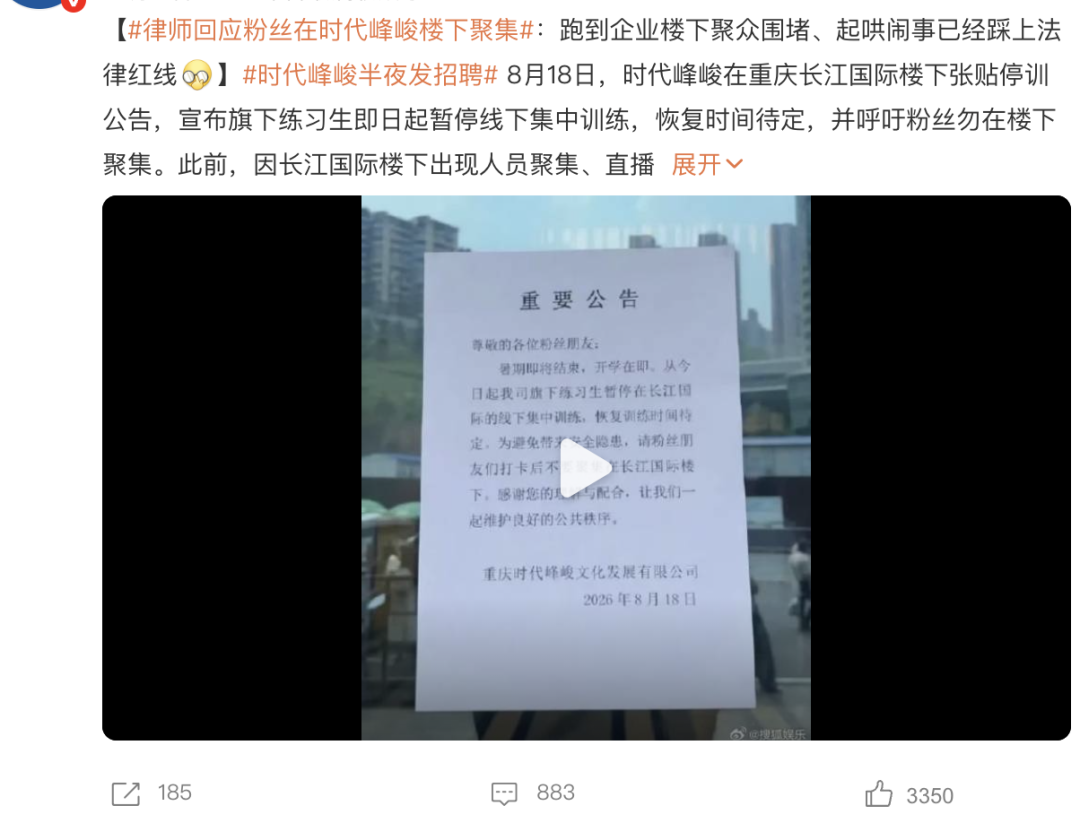
This was a street-level order problem. A trainee system had stacked rehearsals, commuting, and fan check-ins onto the same building, leaving underage trainees' daily routes exposed in public space. Once the standoff escalated, suspending training was almost the only option.
Xuzhou was a different layer. TOP Landers played four nights at Xuzhou Olympic Sports Centre, on August 25–26 and 28–29. Hotline data showed that most complainants were fans, with a smaller number of parents. The fight was not about noise or traffic. It was about who stood with whom on stage. That kind of staging is already highly politicized inside fandom, because it maps directly onto camera time, positioning, and resource allocation.
Once complaint volumes were turned into a pie chart, they stopped being opinions and became trophies. Some people on social media called "24,000 phone calls" a "medal," and urged others to "get moving — you might be the one who tips it."
Xuzhou 12345 activated an emergency system: 24/7 staffing from August 23 to 30, night-shift operators raised from 15 to 43, eight consecutive days and nights of work; 41,768 homogeneous online complaints closed in batches; and 31 leads involving threats of violence referred to police. On September 1 the local hotline account posted an article about the response; it was deleted the next day. On September 2, Weibo said accounts that had incited fans to flood the government hotline as pressure would be muted.
On September 4, the People's Daily app drew the line clearly: citizens have a legal right to call 12345, and audience complaints about a show are normal, but nearly 50,000 filings in ten days had already clogged the line. How a stage is set is a production decision, not a matter of public welfare. A government hotline is not a fan-club "back garden" for pulling votes. The commentary also cited Jiangsu's 12345 ordinance: using the line repeatedly without legitimate reason, or occupying it for a long time, disrupts normal operations and can trigger legal liability. The Paper
Chongqing was about public order and the protection of minors. Xuzhou was about public resources being weaponized. Collapsing both into "fans acting up again" flattens the problems that actually need handling.
What can be verified about the "silent building," and what is still rumor
What can be verified now is the training-suspension notice, the official announcement that five artists would miss later shows, the Xuzhou hotline numbers, and the central-media commentary. Broader claims of a business slowdown — delayed long-form video updates, a slower merchandise cadence, the Gao Hui store dropping its "hot seller" tags — come mostly from fans and industry watchers. The company has not issued a full public account.
As for reports that TOP Landers faces disbandment, that a major October announcement is coming, or that culture and tourism authorities have placed Time Fengjun under special supervision and halted large numbers of second- through fifth-generation shows, those remain industry rumors and fan-community talk. No public notice from a regulator has been found. Treating them as established fact overstates the evidence.
A more cautious reading is that the company is shrinking offline activity that needs permits, crowd management, and is likely to reignite factional fights. That is not the same as an entire building being "punished by association." It is already enough to show that once fan mobilization spills into government systems, the operating cost spreads quickly from one group to artists of other generations.
A Rednet commentary adds an angle that is often skipped: stage choreography was never within 12345's remit, yet fans treated the hotline as the "only outlet," in part because the agency had long defaulted to "no response, no communication." The procedural cost of 48,000 homogeneous tickets is the cost of fan relations that the company should have carried, shifted onto city public services. Rednet The Paper reprint
That view does not excuse flooding the hotline. It names the other half of the responsibility. Trainee agencies depend on fans' organizing power for data, sales, and live shows, then push communication costs outside the door when resource fights explode. The loop turns because the company is one of the people pushing it.
This capacity did not appear overnight. It changed sockets
The organizing power that later made fandom feared was, at first, exactly what the idol industry liked. Task-splitting, unified talking points, screenshot audits, and timed surges were a production line for turning enthusiasm into charts and sales. Platforms offered the easiest proof: reposts, comments, super-topic rankings. Data is not the same as commercial value, but in a period of highly similar artists it was the fastest signal that could be compared.
Cai Xukun's Weibo post that supposedly passed 100 million reposts in 2018 pushed the mechanism into public view. The Xingyuan app later showed that boosting had already been productized. Beijing Fengtai District Court found that developer Cai Kunmiao, from January 2018 to March 2019, built the software without authorization from Weibo's operator and sold the ability to repost without logging into the official client, including automatic batch forwarding. By the time of the case, users had logged in with more than 190,000 control-end Weibo accounts; illegal proceeds were 6,253,752.86 yuan. On December 31, 2020, Cai was sentenced to five years in prison for providing programs used to intrude into computer information systems, plus a 100,000-yuan fine. China News Service
The judgment redacted the number of small accounts bound to those control ends. Media reports of "tens of millions of bound accounts" should not be reused as a precise figure. What is solid is that a pipeline already connected fan support, third-party tools, and platform interfaces.
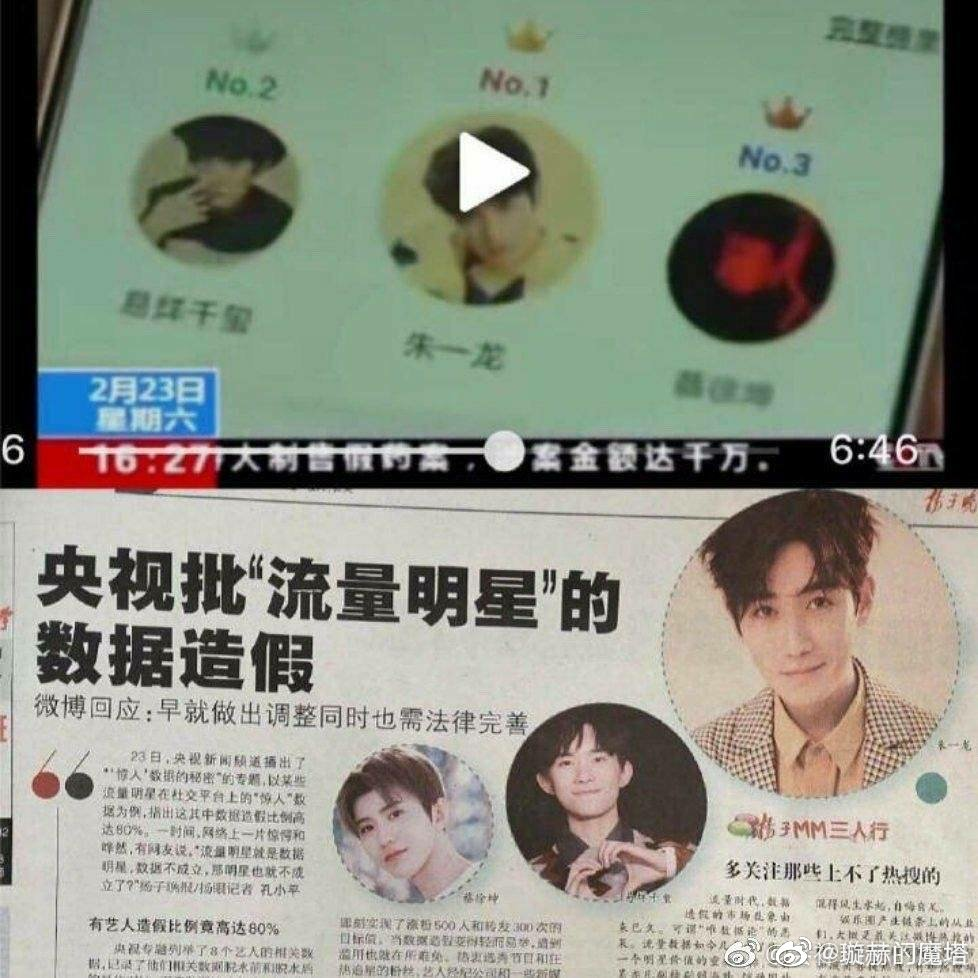
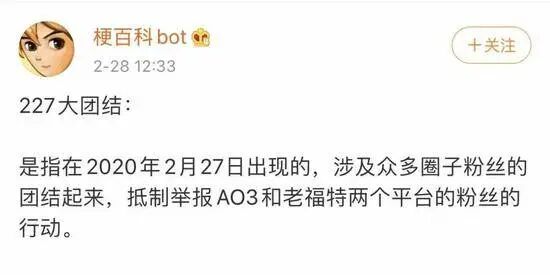
The 2019 Jay Chou super-topic battle turned a Douban post — "if his Weibo numbers are so weak, why are concert tickets still hard to buy?" — into a mass topic. Running in parallel with data wars was reporting. February 2020's "227 incident" was a clear escalation: anger at a single real-person fanfic, organized from below, widened into mass complaints against AO3, Lofter, and other platforms. On February 29, users in mainland China found AO3 unreachable; the fight then spread into boycotts of endorsements, review-bombing, and arguments over the limits of fan creation. The Paper
Regulators then cut the old sockets. In August 2021, the Cyberspace Administration of China issued a notice on further governing "fan-circle" disorder, requiring platforms to drop celebrity personal and group charts, clear groups built around voting, support rallies, fundraising, and comment control, ban consumption rankings, task-unlock perks, and paid votes, and restrict minors from ranking campaigns. CAC
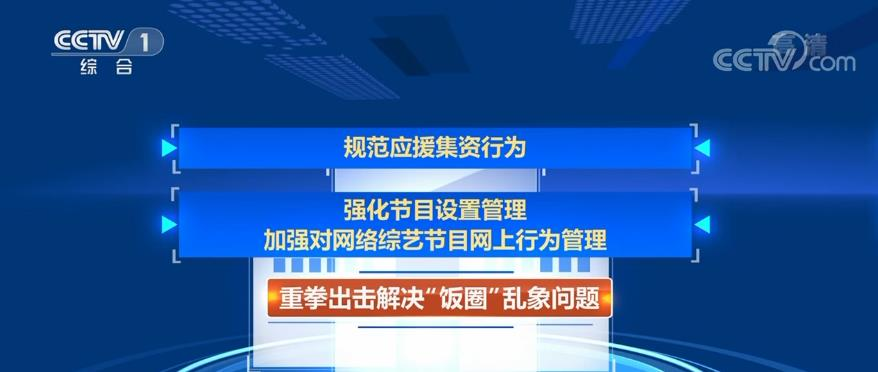
Sockets can be switched off. Organizing habits do not vanish with them. Big-fan hierarchies, group management, task-splitting, and timed mobilization remain. When leverage inside platforms shrinks, some of that action is relabeled "rights protection," and the same forwarding assembly line is moved onto complaint numbers, report letters, and government hotlines.
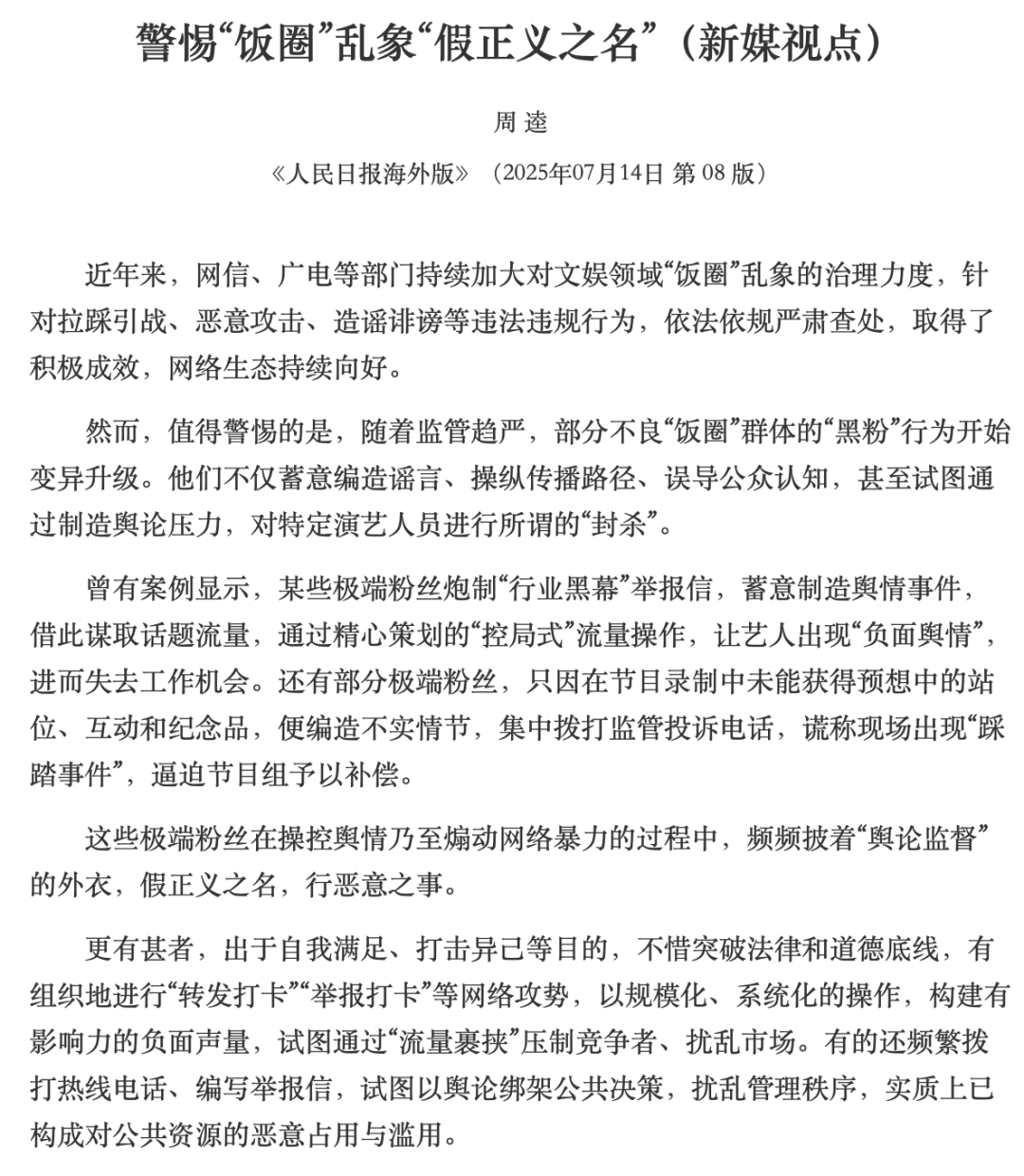
People's Daily Overseas Edition reported in 2025 that some extreme fans, unhappy with standing positions, interactions, or souvenirs from a taping, fabricated a stampede and mass-dialed regulators to demand compensation. Xuzhou made the migration path even clearer: when platforms no longer offer enough ranking and volume leverage, public-administration systems can be treated as the next amplifier.
The template has already left entertainment
Treating fan circles as a disease unique to idol fans underestimates how copyable they are. The pattern does not depend on a particular age or gender. It depends on three things appearing together: a strong identity, a clear rivalry, and a platform interface that can carry both emotion and organized action.
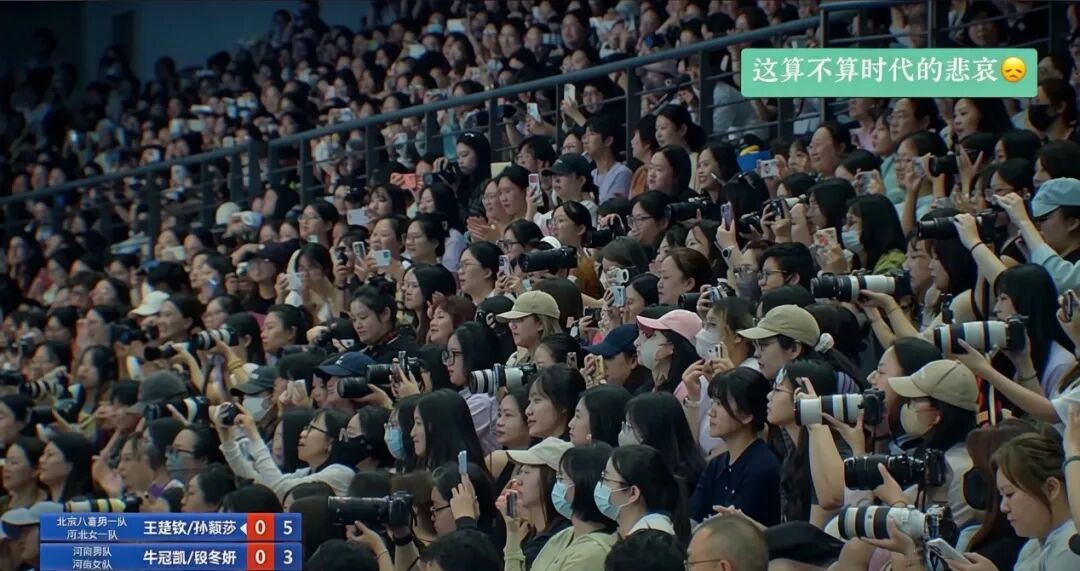
Sport has already supplied a sample. From diving to table tennis, fan pile-ons, bottomless ambush filming, and online abuse have dragged athletes into the traffic swamp. On March 18, 2026, the General Administration of Sport held a deployment meeting for a "deepening governance year" and listed "resolutely governing sports fan-circle disorder" as a key task. General Administration of Sport A national sports publicity meeting in May went further, calling for a joint plan with cyberspace and public-security authorities, and for resistance to deformed fan culture to be written into athlete selection, transfer, placement, and event organization. Xinhua
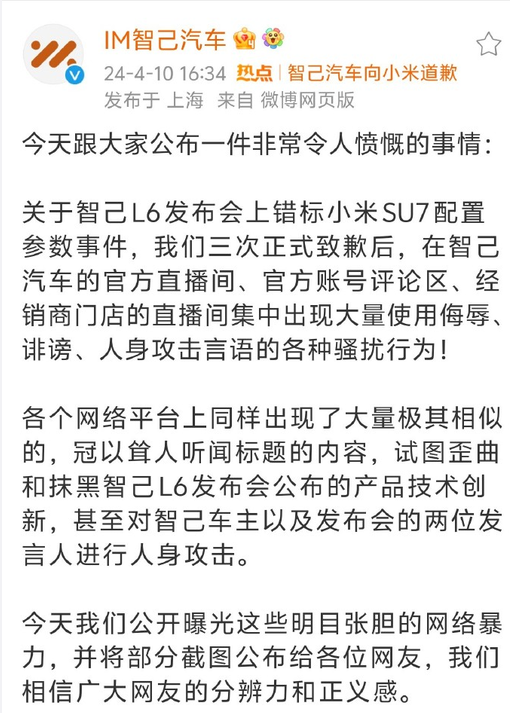
New-energy vehicles swapped the same logic onto specs, sales, and technical routes. On April 8, 2024, IM Motors mislabeled a Xiaomi SU7 powertrain spec at the L6 launch and later apologized several times. The dispute quickly moved from corporate PR into multi-platform combat between the two user bases. IM later said that after the apologies it still faced insults, defamation, and personal attacks, and issued a report letter claiming organized online violence and traffic bullying. National Business Daily
On September 10, 2025, the Ministry of Industry and Information Technology, the CAC, and four other departments launched a three-month campaign against online disorder in the auto industry, explicitly listing organized "fan-circle" posting of false negatives, emotional agitation, flame wars, and smearing rivals as enforcement priorities. CAC According to CCTV's Focus Interview on January 29, 2026, the CAC had by then directly accepted more than 28,000 complaints from carmakers, overseen the removal of more than 111,300 related posts, and muted or closed 3,612 accounts. CCTV
The target shifted from a rival idol to a rival brand and to car-owner identity. The workflow of anti-hate campaigns, check-in tasks, assignments, and pressure-by-reporting barely changed. Phones, esports, stand-up comedy, and e-commerce show a similar camp logic: a consumption preference is rapidly upgraded into an identity fight.
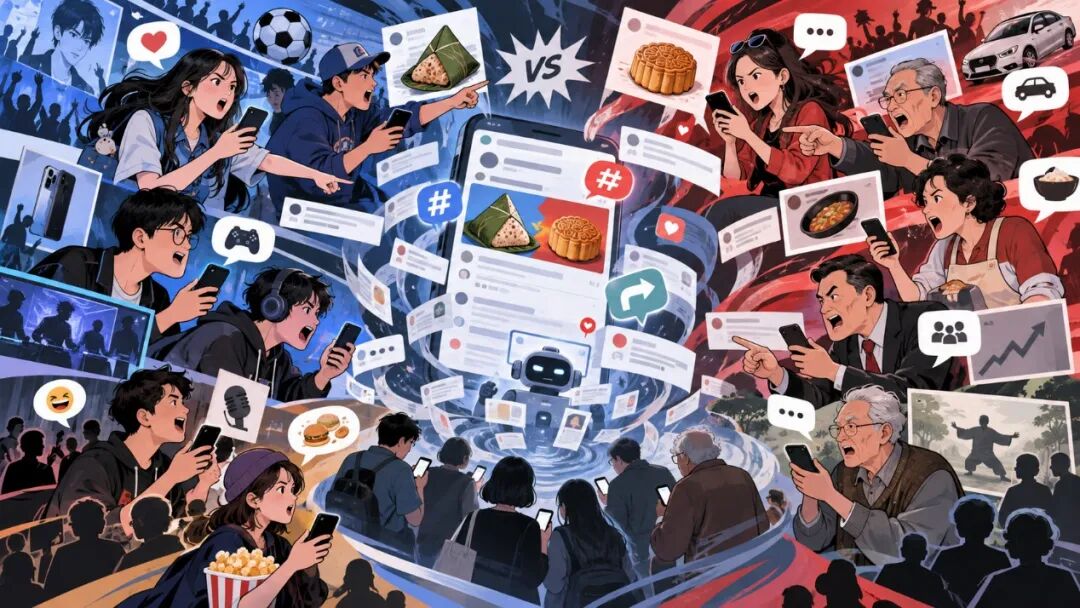
The problem is not that "fans went crazy." It is that a public channel was commandeered
Reading the Xuzhou episode as punishment of Time Fengjun misses the dangerous part. Fan organizing power used to be an asset for the company. Once it turned toward complaints and government hotlines, the asset became a risk, and artists of other generations paid for it too. If the conclusion stops at "a trainee factory got what it asked for," the commandeering of a public system still has not been named.
There are three more precise layers.
The first is platforms and agencies. They once rewarded organizers who could turn emotion into data, then, after old tactics were banned, failed to offer a stable enough channel for communication and resource explanation. That is the "channel mismatch" Rednet pointed to.
The second is the hotline itself. 12345 was designed to "receive a complaint and handle it at once," which works for sudden civic problems and is weak against tens of thousands of homogeneous, mutually opposed filings with no public interest. Xuzhou later batch-closed 41,768 online tickets — a field workaround. Jiangsu's ordinance already treats unjustified occupation of the line as punishable. What is missing is not a principle, but a mechanism that can, at the first surge, pull "ballot-style complaints" out of civic work orders.
The third is public argument. Once picking sides, sticking labels, and piling on become the default way to handle disagreement, the damage is no longer limited to one company or one idol. On the days the hotline was flooded, the people who could not get through were ordinary residents of Xuzhou.
Fan circles are not an island in internet society. They are a mirror that was noticed early: how identity forms, how groups gather, how opposition escalates, and how a public interface can be borrowed to manufacture volume. Time Fengjun's silence is worth watching. What is more worth watching is that this template no longer needs an office tower. It can go straight into a city's public services.
*Images in this article follow the original piece and remain the property of their authors or rights holders; please contact us for removal in case of infringement.
Sources
- Original article: Time Fengjun was "punished across four generations," but fan-circle logic was already everywhere
- The Paper: Central media on a government hotline flooded by fans of a group
- Rednet: Xuzhou 12345 received 48,000 concert complaints; public resources are not a fan battlefield
- The Paper reprint of the Rednet commentary
- Phoenix News: Chongqing police bulletin on the gathering and water-throwing downstairs from Time Fengjun
- CAC: Notice on further governing "fan-circle" disorder
- China News Service: Xingyuan app developer sentenced at first instance
- The Paper: The 227 incident, from fandom to the public
- General Administration of Sport: Deployment meeting for the sports "deepening governance year"
- Xinhua: Sports authorities continue to govern fan-circle disorder
- CAC: Six departments launch a campaign against online disorder in the auto industry
- CCTV Focus Interview: Investigation of online disorder in the auto industry
- National Business Daily: IM Motors apologizes for mislabeling Xiaomi SU7 specs