
The ELVIS Act's First Day in Court: How Elvis's Heirs and Eminem's Publisher Cornered Suno
Updated:
On November 6, 2026, two federal complaints landed against the AI music generator Suno in the Northern District of California within hours of each other. One was filed on behalf of a coalition of Elvis Presley rights holders — Elvis Presley Enterprises, ABG's ABG EPE IP LLC, Raleigh Music Publishing, and a chain of songwriter trusts and heirs — and runs 51 pages. The other came from Eight Mile Style, the publisher that controls roughly 270 Eminem compositions, including "Lose Yourself" and "The Real Slim Shady" (Variety, Detroit Free Press). The same four attorneys — Richard Busch, Mark Block, David Niemierzycki and Andrew Davis of Adams & Reese — signed both.
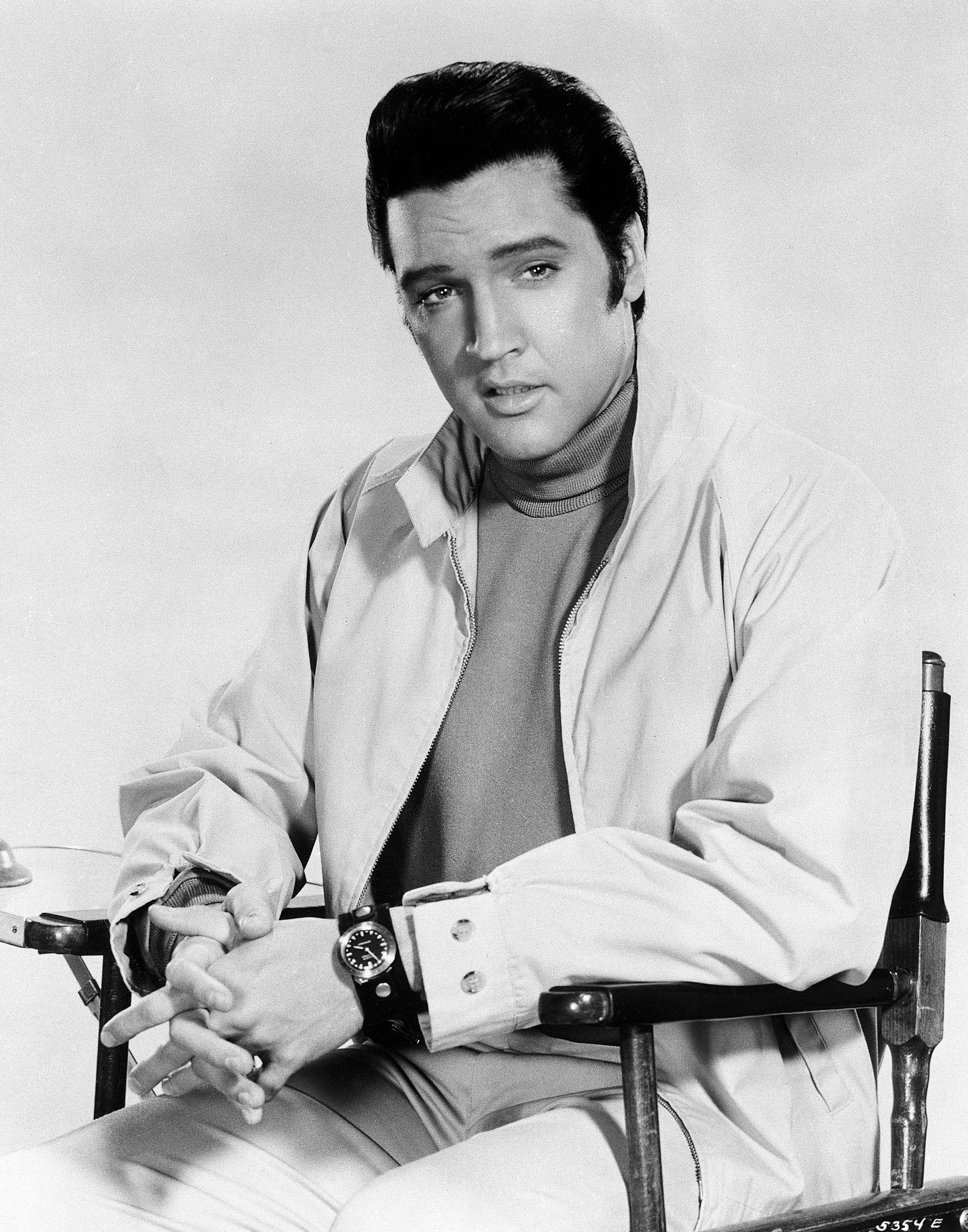
Neither Eminem nor any Presley heir is suing as an individual; these are business entities enforcing catalogs. But read together, the two filings are less a news event than a litigation strategy laid bare: pair the strongest possible voice claim with the strongest possible copyright claim, aim both at the same defendant's weakest documented point, and in the process give Tennessee's 2024 ELVIS Act its first serious courtroom test. The Verge's report framed the news as two more suits in a pile; the filings themselves suggest something more deliberate.
Two Complaints, One Squeeze Play
The Presley complaint (case 3:26-cv-13398, full text via Memphis's WREG) pleads five causes of action: violation of the ELVIS Act (Tenn. Code § 47-25-1101 et seq.); Tennessee common-law right of publicity; direct copyright infringement; circumvention of technological protection measures under DMCA § 1201; and removal of copyright management information under § 1202.
The arithmetic in the prayer for relief is the loudest part. On the copyright count, the plaintiffs list 859 works in Exhibit F and demand statutory damages at the willful-infringement ceiling of $150,000 per work — $128.85 million on paper. The § 1201 claim adds $2,500 per work ($2.15 million); the § 1202 CMI-stripping claim adds $25,000 per work ($21.48 million). The ELVIS Act claim seeks actual damages and profits "believed to exceed $50 million" — and, in a detail that could only appear in an Elvis case, treble damages, on the theory that Presley's 1958–60 Army service makes him a "member of the armed forces" under the Tennessee statute's enhanced-remedies provision.
The Eight Mile Style complaint is narrower and purely about composition copyrights: 269 songs, $150,000 each, about $40.4 million, plus $672,000 over stripped copyright metadata — roughly $41 million total, per the Detroit Free Press. Like the Presley group, Eight Mile Style is litigating on a second front: in June 2026 it sued Meta for roughly $110 million over 243 recordings stored across Facebook, WhatsApp and Instagram, a case a Michigan federal judge allowed into discovery after Meta's lawyers called it "fanciful" (Variety).
Why the ELVIS Act, and Why Tennessee Law in a California Courtroom
The ELVIS Act claim is the doctrinally interesting one, because copyright cannot get you there. A voice, unlike a song, is not a copyrightable work — that gap is exactly what made the 2023 "Heart on My Sleeve" Drake/Weeknd clone so hard to pin down. The ninth circuit's old line from Midler v. Ford Motor Co. (1988), quoted at length in the complaint, supplies the theory: "To impersonate her voice is to pirate her identity." Tennessee's ELVIS Act, effective July 2024, hardened that logic into statute — the first state law to put "voice," including its simulation, on par with name, image and likeness, and to reach not just users but the distributors of tools "the primary purpose or function" of which is producing a particular person's voice.
There is a second, quieter move here worth noticing. The case was filed in San Francisco, but the ELVIS Act is Tennessee law. To bridge that, the complaint builds a choice-of-law argument brick by brick: Elvis was domiciled in Tennessee from age 13, died there, is buried at Graceland; his likeness licensing saturates the Tennessee economy (the complaint itemizes Memphis licensees down to a candy company's $49,000 in annual Elvis-themed sales); and Recording Academy advocates asked the Presley camp's blessing before naming the bill. Under California's "governmental interest" conflict analysis, the plaintiffs argue, Tennessee law must govern Elvis's posthumous rights. Suno, by contrast, is a Delaware corporation headquartered in Cambridge, Massachusetts, that opened a San Francisco office in 2026. Whether a Tennessee statute designed to protect Tennessee artists can reach a Massachusetts company's training pipeline through a California courtroom is precisely the kind of question defense lawyers are paid to ask.
Exhibits Aimed at a Motion to Dismiss Filed Three Days Earlier
The sharpest tactical feature of the Presley complaint is its timing relative to a different case. On November 3, 2026, in the class action brought by Jason Isbell, David Lowery and other musicians in Massachusetts (1:26-cv-14005, filed September 1), Suno's motion to dismiss stated that its "outputs do not … reprise specific melodies from songs someone else wrote; and they do not replicate the auditory characteristics of any real artist's voice," and that Suno "has never allowed prompts for specific artists or copyrighted songs."
The Presley complaint quotes those sentences, then answers them with exhibits: five recorded Suno outputs alleged to infringe both Elvis's voice and specific copyrights (a "Blue Suede Sin Medley" mashing "Can't Help Falling in Love," "All Shook Up" and "Don't Be Cruel"); 33 more voice-only examples; a still-live "Elvis in The Jailhouse Rock" output with over 125,000 plays; an "Elvis Presley" playlist on Suno's own Explore tab; and — the detail a jury will either laugh at or remember — outputs generated from lyrics alone that spell out "E L V I S P R E S L E Y," with no artist prompt at all, which the plaintiffs say proves the model retrieves the identity from its training data, not from the user's request. The complaint also describes a Pro-tier "Voices" feature letting users save and re-deploy a stored vocal tagged "Elvis."
The Eight Mile Style complaint runs the same play from the other direction. Suno blocks the prompt "Eminem"; the complaint's workaround prompt is "aggressive rap, rapid-fire flow, dark humor, male rapper, horrorcore," which it says still yields a Slim Shady-style track, and its exhibits include outputs with verbatim or near-verbatim lyrics from "Lose Yourself," "The Real Slim Shady" and "Houdini," plus a track using an AI-generated image of Eminem as cover art (Mubert's analysis of the filing). A third-party service, HookGenius, openly sells "Suno-ready" artist-specific prompts — the complaint even cites its Eminem page. In the Isbell case Suno has argued there is "nothing unlawful" about asking for a song in the vein of an artist. The new complaints are, in effect, an attempt to force the company to defend that sentence next to a transcript of its own model singing "Can't Help Falling in Love" (this framing is the author's read of the filings, not a stated claim).
The Defense Case — and Why It Is Narrowing
Suno's public response, via spokesperson Cat McCormack, is that it exists "to help people create new, original music," prohibits unauthorized use of artists' work, blocks artist-name and song prompts, and screens uploads with third-party providers. In court, its deeper defenses are familiar ones: fair use of training data, and the position that style imitation by description is lawful.
Both flanks have taken real fire in 2026. On July 31, the Munich Regional Court ruled for GEMA, Germany's collecting society, finding Suno trained on GEMA-managed songs without payment, needed a US license for the US-based training, granting an injunction, and ordering disclosure of revenue tied to the infringed works (Forbes); Denmark's Koda and Canada's SOCAN have filed parallel suits. In the US, a federal appeals court rejected a fair-use defense over AI training on September 29 (Music Business Worldwide), and the new complaint leans on Bartz v. Anthropic, in which a Northern District of California judge held that indefinitely retaining pirated books in a training archive "is not fair use" and that there is "no carveout … for AI companies."
Suno's counter-story is that it has been settling and licensing its way out of the war: a landmark Warner Music Group partnership in November 2025, alliances with BMG and Believe, and a label-backed "v6" model in September 2026. The plaintiffs' answer is to quote the arrangement against the company: UMG and Sony promptly sued over v6 as "the fruit of the same poisoned tree," and the new complaint argues that paying some rightsholders while litigating against the rest is itself evidence that a functioning licensing market existed all along. Meanwhile Suno's business has only grown — a $400 million Series D at a $5.4 billion valuation in June 2026, more than 2 million paid subscribers and roughly $300 million in annual revenue by February (Forbes), with 404 Media's reporting on leaked source code — 2 million-plus YouTube clips, some 13 years of audio, scraped via Bright Data — hanging over the discovery phase.
The Other Side of the Line: Impersonators, Parody, and Tennessee Law in San Francisco
A case named after Elvis carries its own irony, and not only because the statute needed the estate's permission to use the name. Elvis impersonation is one of the most culturally sanctioned imitation traditions in American music — the complaint itself notes that Bruno Mars came to prominence as a four-year-old "Little Elvis" impersonator. Human imitation as homage, training and tribute has always been legal; what the ELVIS Act and this suit target is something narrower, a commercial product that manufactures the identity itself. Where exactly that line sits — a wedding-impersonator's baritone, a drag tribute, a prompt that says "rockabilly, 1950s Memphis male vocal" — is not obvious, and the statute's own carve-outs for parody, comment, satire and "fleeting or incidental" use concede the difficulty. Suno's "nothing unlawful about asking for the vein of an artist" position is not frivolous on this terrain.
The constitutional questions are bigger. Legal commentators flagged them from the start: First Amendment tension, federal copyright preemption, and — most pointed for this case — the dormant Commerce Clause. A Vanderbilt Law analysis argues that after Congress's One Big Beautiful Bill Act curbed federal AI regulation, the states are the main regulators left, precisely when the negative Commerce Clause is most available to strike their laws down as extraterritorial. A Tennessee statute reaching a Massachusetts company's servers via a California court is the fact pattern that doctrine was built for, and AI-litigation trackers already expect such challenges to multiply.
Skepticism is also warranted about the headline numbers. Statutory-damages demands are opening positions, not forecasts; courts almost never award the $150,000 ceiling per work across hundreds of works, and the $200-million-plus notional total across both complaints says more about the lawyers' framing than about any likely judgment (this is the author's assessment). What the numbers do guarantee is settlement pressure, and Suno has shown it prefers partnerships to verdicts.
What This Case Will Actually Settle
Strip away the rhetoric — "The next Elvis won't pick up a guitar" is the complaint's own line — and three genuinely unsettled questions are now on a docket. Whether a state voice-cloning statute can constitutionally reach AI training and generation conducted elsewhere. Whether "style by description" prompt engineering, which every generator permits, can be separated from identity cloning, which every generator claims to prohibit. And whether exhibits of user-triggered outputs can be pinned on the platform itself, given the complaint's careful insistence that it sues for "Suno's own conduct, not any act by a user."
The federal backup for the first question is already moving: the NO FAKES Act (S.4591), which would create a national, posthumous, inheritable voice-and-likeness right, cleared the Senate Judiciary Committee in June 2026 (Congress.gov) — a bill Elvis's own heirs would not need a choice-of-law argument to invoke. Until it passes, though, the meaning of the ELVIS Act will be written the way Elvis's posthumous rights were originally written in 1977–87: by whichever judge gets the case first (see the Tennessee Bar Association's history of that decade-long fight). Fifty years after his death, Elvis is once again the test case for whether a persona outlives the person — this time against a defendant that, unlike the poster printers of 1977, has $5.4 billion of venture money and a model that has already heard every song he sang.
Sources
- The Verge: Elvis and Eminem rights holders are suing Suno (original article)
- Variety: Elvis Estate, Eminem Publisher File Lawsuits Against AI Startup Suno
- WREG: Elvis Presley's music owners file new lawsuit against AI music generator (full complaint text, Case 3:26-cv-13398)
- Detroit Free Press: Eminem song publisher seeks $41M in copyright lawsuit
- Reuters: Jason Isbell, other musicians sue Suno over AI training
- Mubert: Eminem Suno Lawsuit — Eight Mile Style Wants $41M, or $150,000 for Each of 269 Songs
- Forbes (Virginie Berger): Suno Loses Copyright Lawsuit To GEMA
- Forbes (Conor Murray): AI music platform Suno reaches 2 million subscribers
- Music Business Worldwide: A US appeals court has rejected a fair use defense over AI training
- 404 Media: Hack Reveals Suno AI Music Generator Scraped YouTube, Deezer, and Genius
- Warner Music Group: WMG and Suno Forge Groundbreaking Partnership
- Vanderbilt Law: The Irony of the Dormant Commerce Clause and AI Regulations After the One Big Beautiful Bill Act
- Tennessee Bar Association: ELVIS Law — The Battle for Name, Image and Likeness
- Congress.gov: S.4591 — NO FAKES Act (119th Congress)