
Ninety Thousand Songs a Day: After the AI Music Glut, What Actually Becomes Scarce
Updated:
In June 2026, the streaming platform Deezer reported a milestone: AI-generated tracks exceeded 50% of its daily uploads for the first time, averaging around 90,000 tracks per day. For comparison, in January 2025 the figure was roughly 10,000 tracks a day, about 10% — a ninefold increase in sixteen months. And that is just one platform's tally: industry statistics indicate that Suno's users now generate about 7 million songs per day. The company announced in February 2026 that it had passed 2 million paying subscribers and reached $300 million in annual recurring revenue, and its CEO said in a recent interview that the real numbers are now "far beyond" those figures (Music Ally).
"Infinite supply" is no longer a metaphor; it is a verifiable statistical fact. So the real question changes accordingly: when generation costs almost nothing, what becomes scarce in the music industry?
The Other Side of the Flood: Massive Intake, Negligible Consumption
An explosion in supply does not equal prosperity in consumption. According to aggregated data from Deezer and industry trackers (Business of Apps), AI-generated tracks make up more than half of the platform's daily uploads yet account for only about 1% to 3% of actual streams — and roughly 85% of flagged AI uploads are associated with streaming fraud. In other words, the overwhelming majority of AI-generated content is never truly "heard": it is generated, and then it sinks.
These numbers sketch the real structure of the AI music market: production costs are approaching zero, while human attention has not grown at all. Economics operates here in its bluntest form — when supply expands without limit against fixed demand, scarcity necessarily migrates from production to somewhere else. Wherever it lands, that is where the competition begins.
A Chinese Sample: Three Kinds of Human Capability, Verified
A recent in-depth report by the Chinese music-industry outlet 音乐先声 (Music Frontier), based on interviews with three AI virtual-singer creators from Douyin's "AI New Voice Plan 2.0," happens to offer three microscopic case studies of what that scarcity actually is. The three paths could hardly be more different, yet they point to the same conclusion: AI compresses the cost of execution, not the cost of judgment.
Cultural Understanding Cannot Be Generated by a Prompt
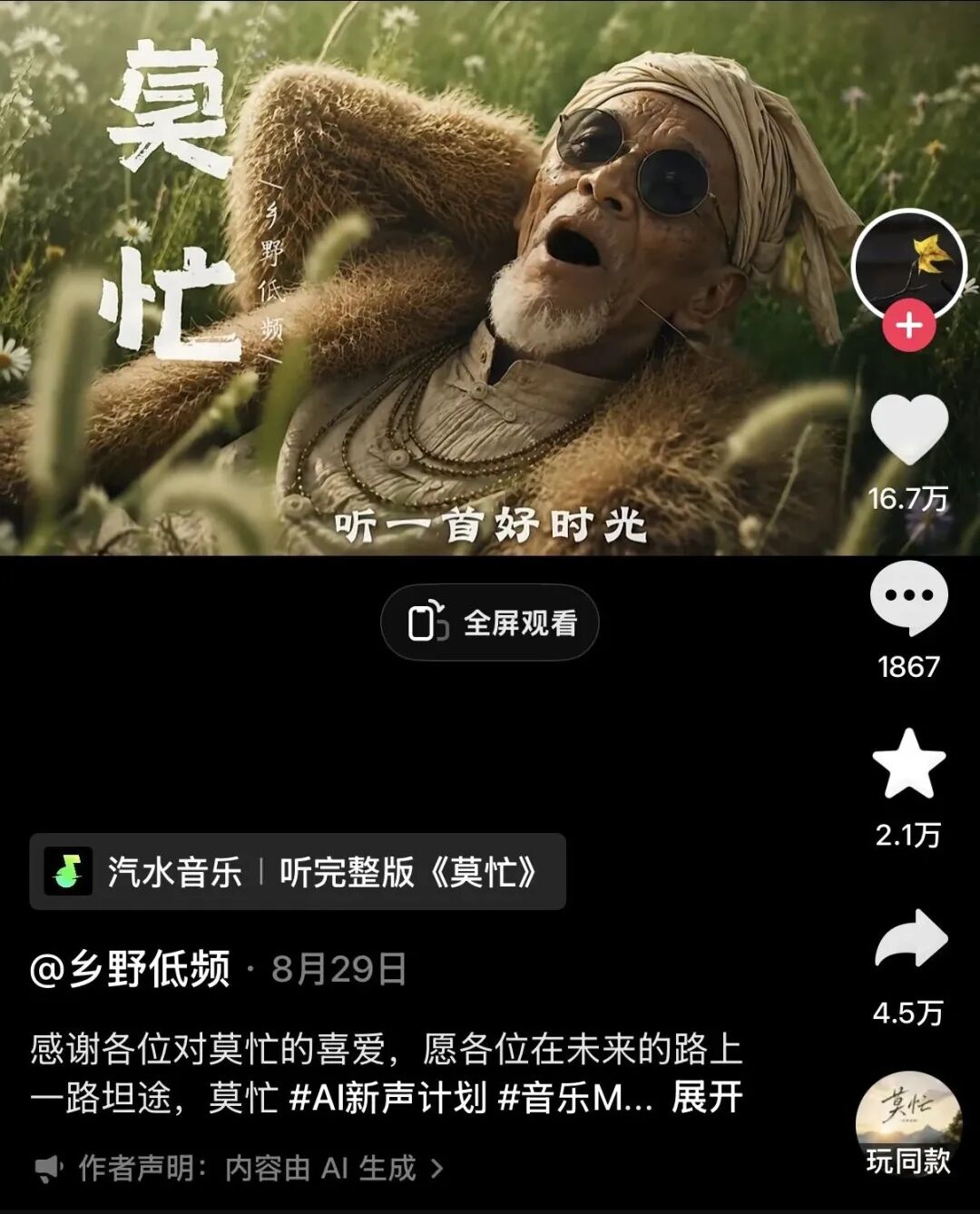
"乡野低频" ("Rural Low Frequency") is a virtual band built around Shi Mancang, a northwestern Chinese country elder, and his three granddaughters. Its creator, Cheng Hailin, has formal training in traditional and folk music. As Music Frontier reported, his creative decisions involve how brass and bamboo flutes should combine, and whether the dialect, vocal style, and regional musical temperament stay coherent; to choose the surname "Shi" for his lead character, he dug into local records from northern Shaanxi. On the sound side, he skips the platform's stock voices entirely, instead deploying local models trained on sliced recordings of a real singer's dry vocals, then repeatedly adjusting the melody.
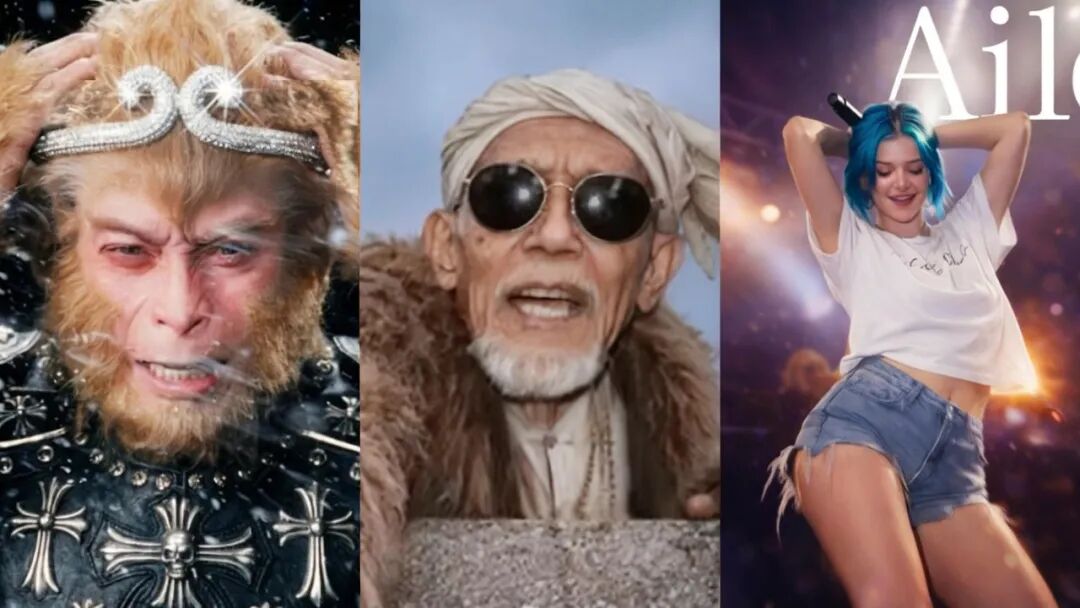
The paradox this case exposes is sharp: ethnic flavor, dialect, and regional elements can all be typed into a prompt today, and AI can instantly generate the surface features of a "northwestern temperament." But what determines whether a work holds together is whether those elements form internally consistent cultural relationships. The latter depends on the creator's training and accumulation — precisely the part the model cannot supply.

Aesthetic Judgment: AI Raised the Floor, Not the Ceiling
SP, the creator of the virtual rapper Lil WuKong, comes from a background in mixing, music production, and hip-hop. Rather than applying the ready-made "Chinese style + rap" formula, he went back to the original text of Journey to the West to re-extract the rebelliousness and wildness that decades of popular adaptations had smoothed away, so the character could stand credibly in a contemporary rap context. His workflow: generate a large batch of options first, then filter them against aesthetic standards he set himself — AI mass-produces the candidates; the human decides.
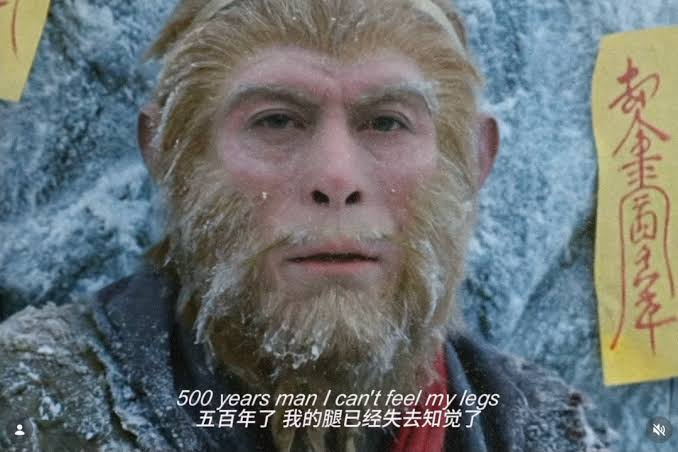
According to SP in the interview, the MV stage still cannot be fully automated and depends on extensive manual work: screening shots, adjusting frames, fixing lip-sync. His verdict on generative tools is worth quoting: AI raised the average but did not automatically raise the ceiling — if "done" is the only requirement, delivery takes a week or two; if genuine satisfaction is the bar, the timeline can stretch indefinitely, and even finished tracks get remade as new models appear.

A Non-Conservatory Creator's Method
Wang Yue, creator of the blue-haired virtual singer Ailee, has no traditional music-theory training. By his own account, he initially "really didn't love music" — what he loved was technology, and he grew to love music only after his work kept earning industry recognition and positive market feedback. His method runs in reverse: generate randomly first, wait for a melody that genuinely moves him, then work backward to what theme and lyrics it suits. The Ailee character was never fully designed in advance either; she "grew" through continuous releases.
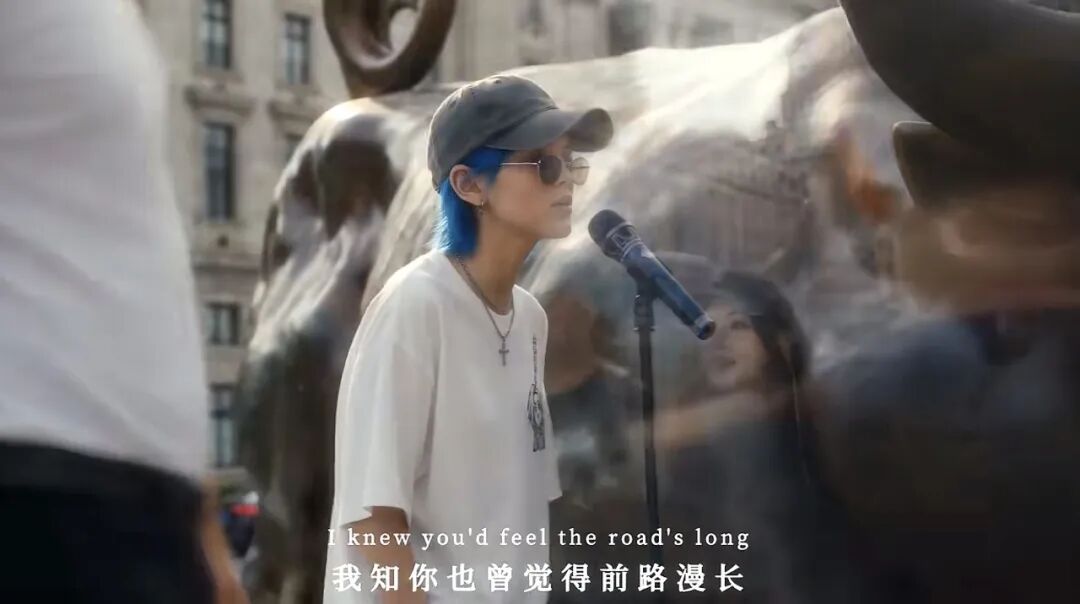
That is closer to how a real artist's persona forms — a singer's image has always been confirmed gradually through work, visuals, and sustained expression. AI expands the possibilities; the human judges what is worth continuing. The division of labor holds even in the hands of an untrained creator.

The International Counterpart: Chart Entries and Controversy, Simultaneously
While Chinese creators refine their methods, international AI acts have already pushed into the heart of the charts. The AI singer Xania Monet entered Billboard's Adult R&B Airplay chart with "How Was I Supposed to Know?", becoming the first known AI artist to debut on a Billboard radio chart through radio airplay — the music was generated with Suno by creator Telisha "Nikki" Jones, and Forbes reported that the project signed a deal worth around $3 million. The AI country act Breaking Rust took "Walk My Walk" to No. 1 on Billboard's Country Digital Song Sales chart, the first AI-generated country song to do so.
But charting and controversy are two sides of the same event. Country is precisely the genre most invested in authenticity, and NPR's coverage asked the question directly: will core country fans accept an AI act with no lived experience behind it? Xania Monet's creator says she treats the virtual singer "as a real person" — a strategy that wins markets while sharpening the debate over disclosure obligations and listeners' right to know. The faster commercialization runs, the sharper the question "whose music is this?" becomes.
The Counterargument: Legal, Fraud, and Trust Uncertainties
The original report describes the prospects of AI virtual singers in fairly optimistic tones, but three uncertainties belong on the other side of the scale.
First, the law. The copyright lawsuits the RIAA filed against Suno and Udio in 2024 have reshaped the landscape: Warner Music settled with Udio and then Suno, converting litigation into licensing deals; Universal followed; Merlin and Kobalt reached settlements in 2026. Yet Suno still argues fair use in the core case, and Sony's claims remain unresolved. More important is the direction of travel: a US appeals court has already rejected a fair-use defense in an AI-training case, and a German court ruled in July 2026 that Suno infringed copyright. The legality of training data remains unsettled, which means the legal foundation under today's AI virtual-singer projects can still shift beneath them.
Second, fraud pollution. Michael Smith, a North Carolina musician, used AI to mass-produce fake songs and roughly 10,000 bot accounts to stream them billions of times, and was sentenced to 18 months in prison and ordered to pay about $8 million in restitution by the US Department of Justice — the first criminally charged AI-assisted music-streaming fraud case in the United States. The industry figure that about 85% of Deezer's flagged AI uploads involve fraud points the same way: a substantial share of the flood is not creation but arbitrage. That pollution raises the trust cost of all AI content — serious creators end up paying a differentiation tax for their fraudulent peers.
Third, listeners remain unconvinced. The 1%-to-3% share of actual streams shows that the flood of supply has not translated into consumer choice. Platform promotion, chart exposure, and capital deals have manufactured headline cases, but the general audience's acceptance of AI music is still an open variable — especially when they know what they are listening to.
The Platform's New Job: From Distributor to A&R
Back in the Chinese market, a structural shift is underway: after the production threshold collapsed, the costs did not vanish — they migrated.
The interviews show Cheng Hailin doing the math: AI has indeed crushed the time and money needed for a basic demo, but short-video-era promotion requires visual generation, digital humans, MVs, and continuous operations — a new layer of investment. Wang Yue deliberately pushes his costs up: by his account, a complete work typically costs around 10,000 RMB to produce, and the recent well-received "听潮" ("Listening to the Tide") counted as one of the cheaper ones. His logic: when anyone can make a basic AI video for a few hundred yuan, a higher production standard is itself a moat. SP's project already earns from music rights, platform revenue sharing, and commercial collaborations, but he credits his past as a producer and his exposure to artist management — beyond the music, one must understand operations, promotion, and channels.

The more open the production end, the more valuable discovery, filtering, verification, and resource connection become. That is exactly the position platforms are now contesting. According to the original report (platform-reported figures, with no independent cross-verification available yet), Douyin's "AI New Voice Plan 2.0" has attracted about 28,000 participants and 1.56 billion cumulative plays, with a mechanism that combines online data performance, content-quality assessment, and scoring by music-industry professionals, plus a chart system that exposes works to both user feedback and expert judgment.
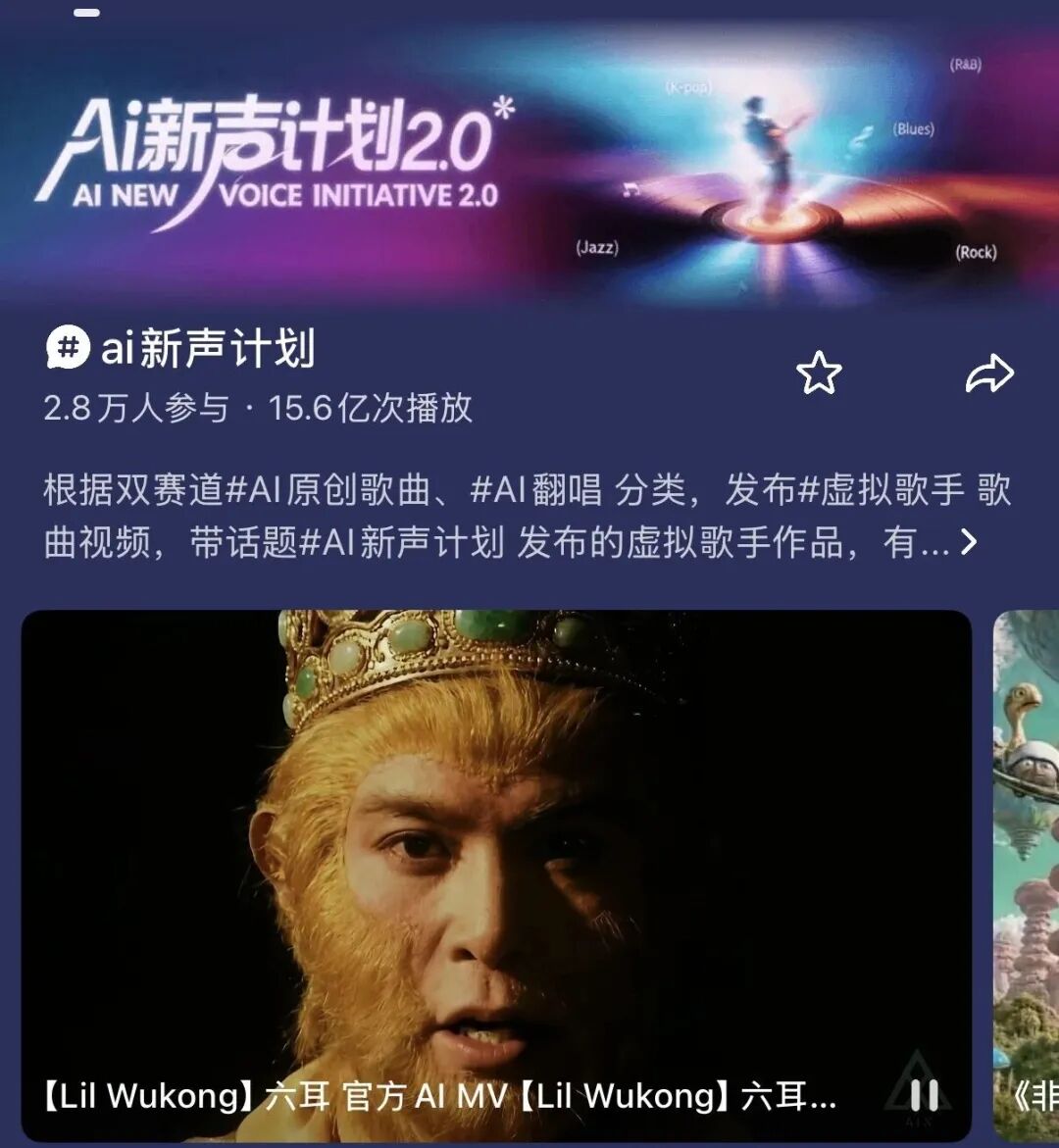
What makes this mechanism distinctive is its timing: traditional A&R judges before a work reaches the market, while a platform's judgment continues after release. "莫忙" ("Don't Rush"), a song by Rural Low Frequency, is the canonical case — launched with zero promotion, it grew organically; only after the heat appeared did the creator rush to produce a music video. Users then went further, adopting the Shi Mancang avatar and interacting in the comments in character. The audience moved from "hearing a song" to "recognizing a character," and recommendations, comments, fan works, and avatar use became a real-time market-verification mechanism. For the mass of individual AI creators, the truly scarce resource is not the model but the gateway into rights, distribution, live performance, and brand partnerships — and platform support is likewise extending from single-song promotion toward long-term IP operation.
The same positioning battle is unfolding across platforms. Bilibili's "AI Idol Debut Season" drew nearly 10,000 participating creators and 160 million views in its first stage. NetEase Cloud Music's second million-yuan AI music creation competition launched in June 2026, attracting more than 20,000 creators and over 160,000 submissions, with a total prize pool of 1 million RMB across AI song and AI MV tracks (China Daily). An earlier signal came from the market itself: Yuri, the virtual singer incubated by AI.TALK, debuted in June 2025, and her single "Surreal" surpassed 7 million plays across platforms, with The North Face sponsoring her debut — 36Kr's report notes that brands have already begun pricing AI singers' attention.
Platform-as-A&R is not cost-free, however. A platform that both allocates traffic and runs discovery and incubation is player, referee, and stadium at once — an advancement mechanism weighted heavily toward data performance naturally favors whatever ferments in the algorithm, not necessarily what has long-term value. The platforms' self-reported participation and play counts (such as the 28,000 participants and 1.56 billion plays above) also lack third-party verification. Whether this discovery apparatus can truly replace a professional A&R's ears remains an open test.
Conclusion: The Great Migration of Scarcity
Put all the evidence together and a clear migration path emerges: the music industry's scarcity is moving away from "the ability to generate" toward three older capabilities — judgment (knowing what is good), verification (letting the market tell you what works), and operation (turning a moment of visibility into a durable character and IP).
AI has not canceled the logic of quality; it has only pushed execution costs toward zero. The Deezer and Suno numbers prove that merely adding supply creates no value by itself — of ninety thousand daily uploads, only a low single-digit percentage is ever truly heard. Meanwhile, the legal foundation is still moving, fraudsters are polluting trust, and listeners' informed acceptance hangs in the balance. The decisive move in this race is not generating more; it is performing the oldest step in the craft within infinite supply — picking out, from the mass of possibilities, the one worth remembering.
And this race has only just begun.
Sources
- 音乐先声 (Music Frontier): "When AI Music Enters the 'Infinite Supply' Era, the Next Race for Virtual Singers Begins" (original article, in Chinese)
- Deezer Newsroom: AI Music Exceeds 50% of Daily Uploads
- Forbes: AI Music Platform Suno Reaches 2 Million Subscribers as Industry Backlash Grows
- Music Ally: Suno is 'far beyond' 2m subscribers and $300m of annual revenue
- Business of Apps: Suno Statistics
- Billboard: AI Artist Xania Monet Debuts on the Adult R&B Airplay Chart
- Billboard Pro: AI Artists Breaking Rust & More Hit Country Music Chart
- NPR: Breaking Rust Is a Hot New Country Act on the Billboard Charts. It's Powered by AI
- U.S. DOJ (SDNY): North Carolina Man Sentenced to 18 Months in Prison for AI-Assisted Music Streaming Fraud
- Music Business Worldwide: US appeals court rejects fair use defense over AI training
- CNR (央广网): Nearly 10,000 Creators Flock to AI Star-Making as Bilibili's "AI Idol Debut Season" Defines the Future Idol (in Chinese)
- ifeng Tech (凤凰网科技): NetEase Cloud Music's Second Million-Yuan AI Music Creation Competition (in Chinese)
- China Daily: AI Music Creation Competition Prize Structure
- 36Kr: Sponsored From Episode One — the Story Behind an AI Singer's Debut (in Chinese)